
Version control is more than file management or administrative housekeeping. It’s a core part of brand governance that determines which content gets used, seen, and published.
Without it, brands risk inconsistency, inefficiency, and non-compliance. This can erode brand equity and consumer trust, and risk penalties in regulated markets.
Here’s how and why governance-first brands automate version control so changes to digital assets are controlled, recorded, and auditable.
What you need to know
- Version control is the practice of recording changes to a digital asset over time
- It makes sure everyone can confidently identify the most up-to-date version of an asset to use, and enables an audit trail of changes to digital assets
- Many organizations treat version control purely as an administrative task, leading to ad hoc and fragmented execution
- However, it is actually an essential part of the brand governance process
- Failure to manage version control appropriately is a significant risk, particularly in regulated industries
What is digital asset version control?
Digitla asset version control is the practice of tracking and recording changes to a digital asset throughout its lifecycle, so teams can be confident they are using the correct and most up-to-date version.
Digital assets aren’t static. They are updated, refined, approved, localized, and sometimes retired as business needs change. Version control ensures these changes are recorded and traceable, creating a clear history of how each asset has evolved.
- A fashion brand selects and refines final images from a photoshoot for different campaign rollouts across regions
- A healthcare provider updates a patient information leaflet to reflect new clinical guidance and approved wording
- A financial services firm revises an explainer animation to align with updated product details and regulatory requirements
Without version control, teams risk working from outdated files, duplicating effort, or publishing incorrect information. With version control, there is a clear record of what changed, when it changed, and which version is approved for use.
Why is version control important for digital assets?
As brands produce and distribute more content across more channels, the number of asset versions grows quickly. The same asset might be adapted for different regions, audiences, formats, and campaigns — often by multiple teams working in parallel.
Without strong version control, brands experience version drift, when it becomes unclear which version is current, which one was approved, and how different copies relate to each other. This drift is often gradual and hard to spot in the moment, but at scale it creates real operational and brand impact, including:
- Inconsistent brand output across teams, channels, and regions
- Outdated or incorrect content being published without visibility
- Duplicate work as teams recreate assets they can’t find or don’t trust
- Time lost checking what version is current instead of producing work
- Conflicting versions circulating at the same time with no system of record
- Teams relying on personal copies or shortcuts instead of shared systems
- Gaps in compliance and approval processes, particularly in regulated environments
Version control helps prevent this by ensuring there is always a single, trusted source of truth for each asset. It gives teams visibility over what has changed, what is approved, and what should be used — so content can be created and distributed with confidence at scale.
Why is version control increasingly important in AI workflows?
Version control is becoming increasingly important as AI becomes embedded in working practices.
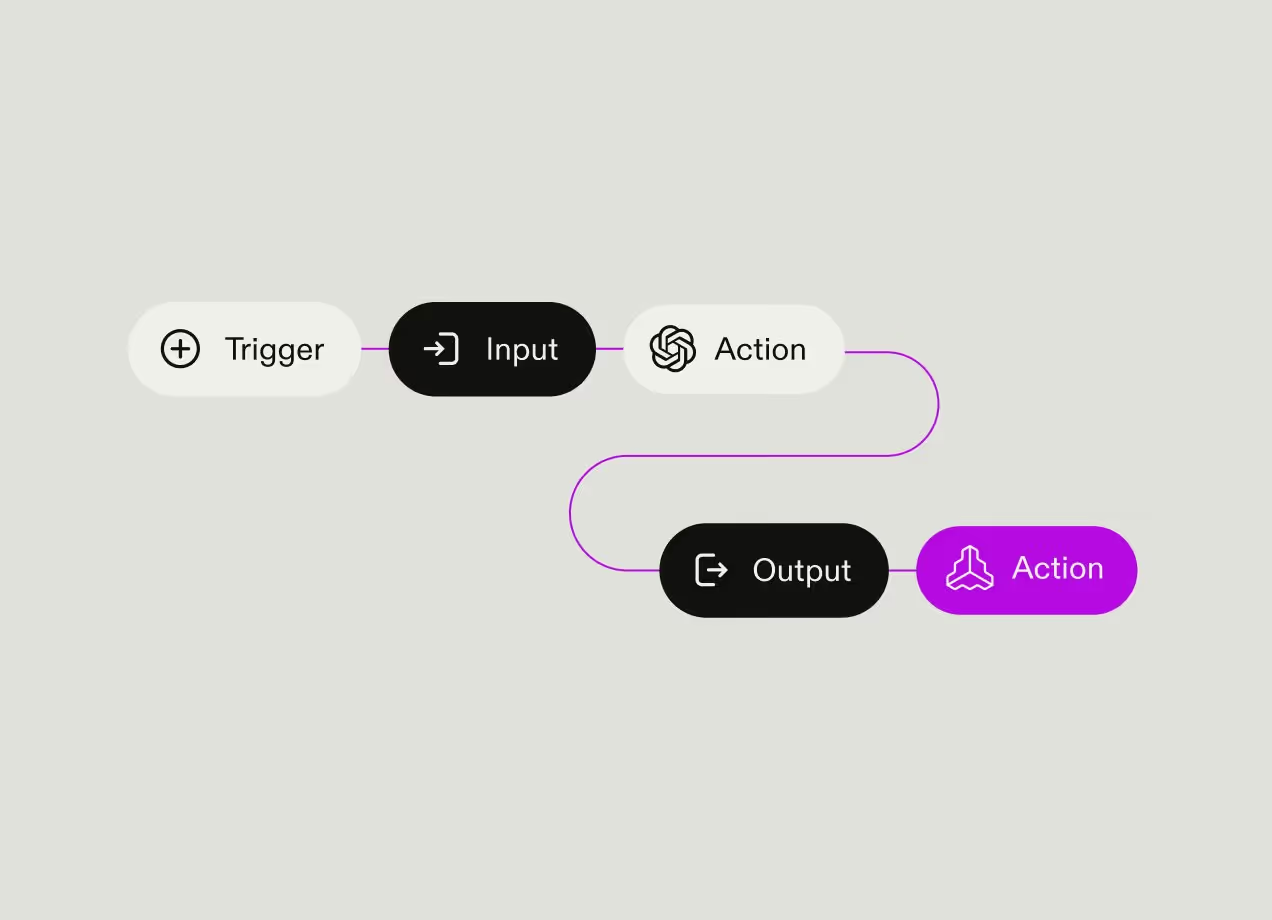
AI-enabled workflows allow teams to create content faster and at greater scale than traditional production processes. While this can significantly improve efficiency, it also leads to a rapid increase in the number of asset versions being created, reviewed, and shared across the organization.
Generative AI is also putting creative capabilities into the hands of more teams. Marketing, sales, HR, and other functions can now create branded content independently, often without relying on specialist creative resources. While this increases output, it can also result in assets being created outside established governance processes.
Taken together, these trends create a governance challenge. Organizations risk ending up with large volumes of content being produced at speed, with limited visibility into how it was created, which version is approved, and which version should be used.
Why is version control especially important in regulated industries?
This challenge exists in most organizations, but it becomes more critical in regulated industries like financial services and healthcare, where governance is not optional.
In these environments, even small inconsistencies can have real consequences — whether on patients’ outcomes or clients’ financial wellbeing. Because of this, teams need a clear way to show what version of an asset was used, when it was approved, and whether it met the required standards at the time.
Version control provides that structure. It ensures there is a clear, auditable record of how assets have changed over time, including what was updated, who approved it, and which version was published. This makes it easier to maintain compliance standards and demonstrate accountability when needed.
Whether content is created through traditional workflows or via AI, the right version must always be identifiable, approved, and in use. Version control helps make that possible by giving teams a reliable source of truth for every asset.

How do brands typically manage version control?
Many organizations mistakenly treat version control as an admin task. Just something to make it easier to find things. This underestimates the core governance function of version control – and it creates unnecessary risk. No judgment, but do any of the following sound familiar?
- File names
This is when version control is performed through file naming convention alone. When someone amends a digital asset, they tag a version number at the end of a file name. If you’ve ever come across a file called something like ‘Leaflet_v2b_Final version_use this one_v3.pdf’ you’ll understand why this approach isn’t accurate, appropriate, or scalable.
- Folder structures
Some teams try to solve the problem through structure, using shared drives with folders like “final” and “archive.” But this relies on manual processes and people remembering to move files correctly. Over time, it breaks down, and different versions start to exist in multiple places at once.
- Notifications
Perhaps the least effective form of version control is sending people the final version of an asset. Files are circulated as email attachments or shared in Slack conversations. This makes it difficult to track what is current, and often results in people saving local copies that quickly become outdated.
These approaches all rely on manual effort and individual commitment to the process. That’s where things start to break down, because version control only works when it is consistently applied.
What’s the best way to manage version control?
The best way to manage version control is to remove that manual effort and human input. When organizations use a digital asset management (DAM) system, version control is automated.
When an asset is updated, the DAM:
- Makes the latest approved file the default one users see in the system
- If required, updates the asset where it is in use (eg ecommerce storefronts)
- Maintains a full history of previous versions for reference and audit purposes
This means teams don’t need to understand complex conventions, navigate sprawling folders, or email chains. There is a single source of truth where the most up-to-date version is always the one being accessed and used.
This becomes even more important as AI is introduced into content production workflows. As content is created and adapted at greater speed and scale than before, it is essential that version control is automated.
Integrating AI tools into your DAM – rather than using them separately – is valuable here, as it ensures AI-generated and edited assets stay within governed workflows, rather than existing outside them. This is governance-first AI by design.
How Frontify version control strengthens brand governance
Frontify recognizes that each digital asset is a living thing, not a static file. Each time an asset is updated, a new version is captured automatically, with a complete history of changes preserved in the background. Teams always see the latest approved version by default, while previous versions remain accessible when needed.
This removes the need for manual work, file naming conventions, folder structures, or informal sharing between teams. Instead of relying on people to track what is current, the system handles it directly.
More importantly, especially as AI becomes embedded in content production, version control is no longer something that sits alongside governance — it is part of the brand infrastructure that enables it. This ensures that what gets used across campaigns, channels, and regions is controlled, consistent, and approved.