
When you’re comparing DAM vendors, most companies don’t publish their pricing. Instead, you have to contact them, and even once you get a number, it’s hard to compare vendors as product tiers don’t line up and it’s hard to know which functionality comes at an added cost.
DAM pricing is genuinely complex, and the subscription fee — the number vendors share after those initial conversations — isn’t even that useful for decision-making. Most DAM pricing tells you what the platform costs to license, but nothing about what it costs to implement, train your organization, manage every day, or scale with your business needs.
Total cost of ownership is the most useful lens to look at DAM pricing through. Here’s how to assess different pricing models, hidden costs to know about, and questions to ask vendors.
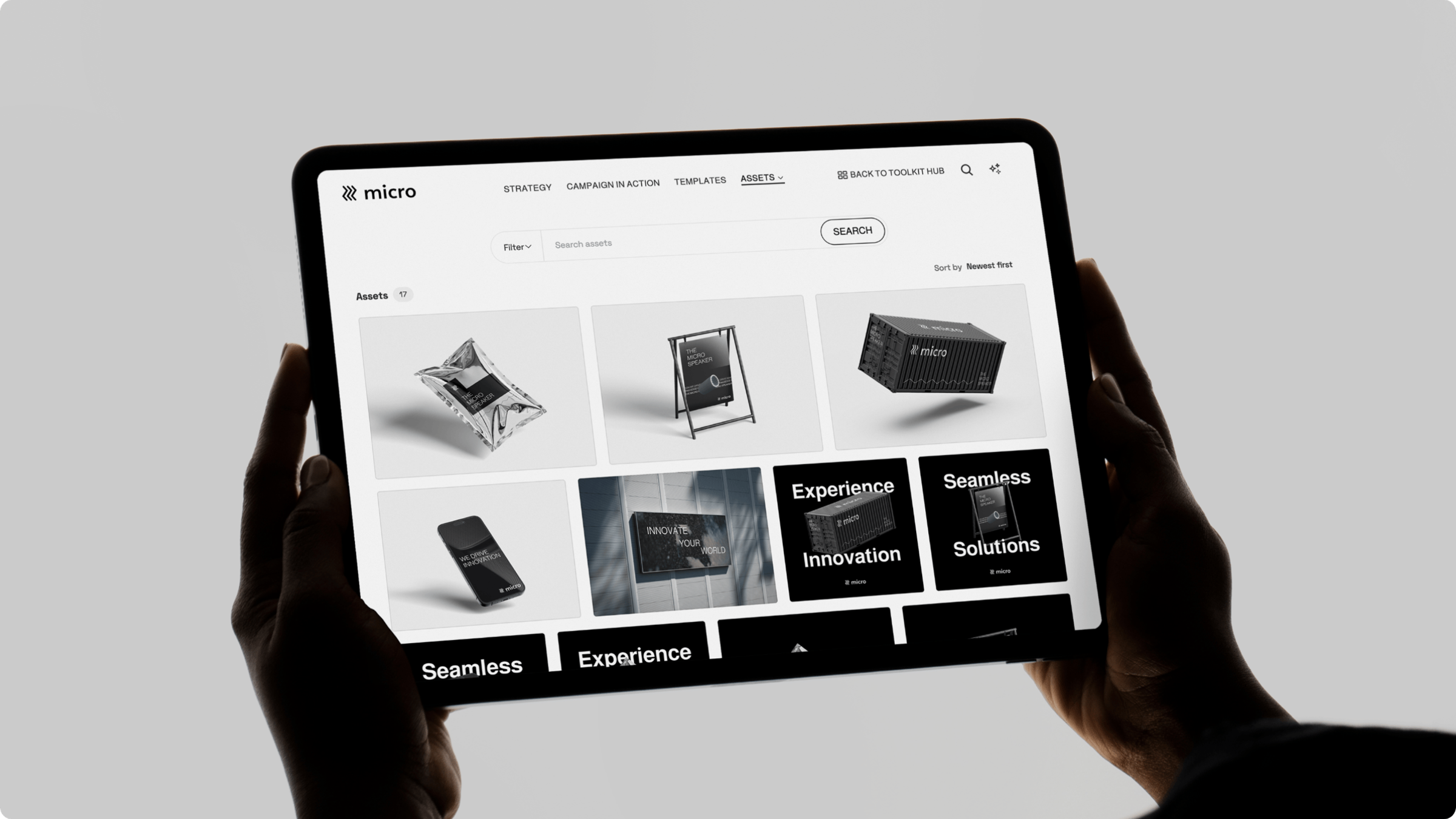
How much does a digital asset management platform cost?
DAM pricing spans from a few thousand dollars a year for lightweight tools to well into six figures for full enterprise deployments. So the honest answer to how much a DAM platform costs is: it depends. There are many variables that determine what your organization will pay, including:
- Number of users. Whether you're licensing per seat or paying for monthly active users, the size of your user base is typically the biggest cost lever.
- Asset volume and storage. The size of your library matters. Most platforms build storage into their pricing, but they also set limits — and overages cost extra.
- Features and functionality. Basic DAMs cost less than platforms with built-in brand guidelines, templating, AI-powered search, or design systems. The more functionality you need, the further up the pricing tiers you go.
- Deployment model. Cloud-hosted SaaS solutions are the norm today, but some enterprise buyers still require on-premise deployments, which carry different pricing structures and implementation costs.
- Integrations. Connecting a DAM to your CMS, creative tools, marketing automation platform, or PIM isn't always free. The number and complexity of integrations can result in additional costs.
Most vendors don’t publish prices on their website at all. Instead, you need to book time for a product demo or pricing conversation. This is so the vendor can understand your company’s unique requirements in terms of asset and user volumes, and deployment complexity, so they can put together a custom quote. A 100-person European company will have very different requirements than a 10,000-person global business, and the price of their DAM software will vary accordingly.
So when you’re comparing vendors, instead of focusing on subscription costs, it’s more useful to understand how you'll be charged and what that cost actually includes.
Common DAM pricing models
The right pricing structure is the one that matches how your organization will actually use the platform over time. A model that works at launch but penalizes your growth over time, isn’t likely to be a good fit, even if it looks like the best value option on paper. Here's how the most common pricing models work, and what each one means for your total spend.
Per-user pricing
The most common DAM pricing model charges a fixed fee per licensed seat. You know exactly what you'll pay each month, which makes budgeting straightforward.
However, a DAM's value is fundamentally tied to how widely it's used. Every additional employee, agency partner, or regional team that can find and use approved assets is a return on the investment. But per-user pricing disincentivises widespread adoption, because every time you expand access, your bill goes up.
This pricing model isn't inherently bad, but it does mean you need to think about both your launch headcount (to understand the immediate costs) and your real adoption targets (to understand your potential future costs).
Monthly active user (MAU) pricing
MAU pricing is a direct response to the per-seat adoption problem. Instead of charging for every account provisioned, you pay only for users who actually log in during a given month. Dormant accounts don't cost you anything.
That distinction matters most at two moments:
- At rollout, a typical DAM deployment has a long tail of accounts that have been set up but not yet fully activated while teams wait on training, or regions are still being onboarded. Under a per-seat model, you pay for all of them from day one, but with MAU pricing, you don’t start paying for them until they start using the platform.
- In mature deployments, DAM usage naturally ebbs and flows. For example, you might have a campaign peak in Q4, then a quieter period in Q1, with a whole department that dips in and out depending on the project cycle. MAU pricing adjusts with that fluctuation rather than charging you for every user each month.
At its core, the MAU pricing model aligns the cost of your DAM with the value the platform is actually delivering. As more people use it, and it brings greater benefits to your business, the price increases accordingly.
Unlimited-user pricing
Some vendors charge a flat fee regardless of how many people use the platform. This removes the main structural barrier for achieving company-wide adoption, as headcount growth stops becoming a cost driver. You don’t have to do per-seat calculations before you add another team or bring a new region onboard, which removes the trade-off between keeping costs down and getting people into the platform.
This model suits organizations where brand consistency depends on every team, market, and external partner working from the same approved library, such as in highly regulated industries. But if the vendor offers unlimited users, it’s worth paying attention to what isn’t included in that fee. For example, storage limits, feature tiers, and support levels can still vary.
Usage- and storage-based pricing
Some DAM platforms tie their fees to what you consume rather than who you are — charging based on storage used, bandwidth, API calls, or processing credits. It's a model that originated in developer-focused infrastructure tools and has migrated into parts of the DAM market, particularly platforms built around media transformation, CDN delivery, or high-volume asset processing.
For organizations with genuinely unpredictable or low-volume needs, that flexibility can be a reasonable fit. But for most enterprise businesses, the model is so unpredictable it creates budgeting challenges. Finance either needs to over-reserve budget that sits unused in quiet months, or under-reserve and absorb the overage.
Custom enterprise pricing
For larger deployments, most DAM vendors move away from published rates entirely and into custom quotes built around your specific requirements — user volumes, storage needs, integrations, support levels, and contract length.
Enterprise DAM is inherently complex, and global businesses are likely to need a wider range of features than SMBs — like custom integrations, advanced security, brand portals, and a multi-brand architecture. Go into vendor conversations with a clear picture of your user base, integration requirements, brand architecture, and your anticipated three-year growth trajectory. The more specific you are, the easier it will be to build a quote that meets your real business needs, so you won’t need to negotiate further add-ons down the line.
The future of DAM pricing
The pricing models above assume something that is quietly becoming less true: that users access a DAM by logging into it.
As generative AI tools become the primary environment where marketing and creative work happens, the DAM increasingly operates in the background. Assets are retrieved via API, brand guidelines are queried by an AI assistant, and templates are pulled by an integration, not a person clicking through a portal.
When that's how a platform gets used, seat-based pricing models don’t align with how companies use the platform. Instead, pricing will shift to be built around consumption rather than access: API calls made, assets requested, tokens processed, or outputs delivered. Some DAM vendors are already moving in this direction, particularly those with developer-first architectures.

The true cost of a DAM goes beyond the subscription
When you’re comparing DAM platforms you likely spend a lot of time comparing each vendors’ subscription costs. But they’re not the only DAM-related costs your organization is likely to face.
Implementation, training, driving adoption, and extra costs for additional features are all costs that don’t appear in your initial quote. But they all affect your total cost of ownership. Understanding your total cost of ownership, including all these added costs, is the only way to fairly compare platforms when cost is a significant factor in your decision-making process.
Implementation costs
Implementation costs fall into three categories:
- Professional services costs which DAM vendors charge for enterprise-level implementation support
- Implementation timeline, as every month between signing a contract and having a fully operational platform is money spent without getting any value in return
- DAM setup, as someone has to migrate your existing assets, design the DAM taxonomy, and do the initial tagging and metadata to make assets findable. That work comes from your internal teams, taking their time and focus away from their core role.
While some of these costs are hard to quantify, it’s important to understand how just implementing a DAM can cost your business money — especially if the rollout takes a long time. A DAM rollout that goes live in two to three weeks delivers a meaningfully different return than one that takes six months, even if the license fee is identical.
Training and onboarding
DAM training carries two kinds of cost:
- Direct costs include paid onboarding sessions, vendor-supplied training materials, and any external support needed to get administrators and power users up to speed. Some are likely included in your subscription, but some elements may be billed separately.
- Indirect costs are harder to quantify: training takes people away from productive work, and for a company-wide rollout, lost time multiplies across teams, regions, and seniority levels. It also recurs, as every new hire who joins after the initial rollout needs to be brought up to speed.
Adoption or re-platforming costs
Adoption costs accumulate when a platform fails to become part of how people actually work. They include licenses paid for users who never log in, and internal time spent managing workarounds when teams bypass the DAM in favor of shared drives or email.
In the worst cases, they also include the cost of a second DAM purchase, when the organization accepts that the first platform didn't stick and starts the process again. A cheaper DAM with low adoption routinely costs more than an expensive one that gets used.
Adoption should be weighted as a hard cost driver in your evaluation, rather than a soft implementation consideration. A platform that is genuinely easy to use for everyday users — not just for administrators and digital asset managers — removes the single biggest risk in a DAM investment.
Staffing and administration
Some DAM platforms require dedicated headcount to function effectively — a digital asset manager or platform administrator whose job is to own the taxonomy, manage governance, handle day-to-day uploads and metadata, and keep the system organized as the library grows.
For many organizations, that ongoing salary is the biggest cost associated with their DAM, but it would never appear in a vendor quote. This is important as it’s a cost most companies don’t consider or budget for at the point of purchase. A DAM that needs a dedicated administrator becomes much more expensive than one that your existing team can manage as part of their regular workloads.
Integrations, add-ons, and storage overages
Integration costs are the fees that accumulate when connecting your DAM to the rest of your technology stack turns out to be more expensive than the pricing page suggested. They include integrations that are only available on higher tiers, third-party middleware required to bridge tools the DAM doesn't connect to natively, and developer time spent building or maintaining custom connections.
Companies sometimes have to pay additional costs for features like video support, AI capabilities, or brand portals that appear to be part of the platform but are priced separately. Then, you may have to pay for extra storage, when your asset library grows past the limits built into your tier.
These costs are effectively invisible at the point of purchase. The configuration and capacity your organization actually needs only becomes clear after implementation, when your team’s using the tool every day. The quoted price and the actual amount you pay are often two different numbers, and companies should prepare for that reality by thinking of vendors’ quotes as the starting point, not the final number.
Does the pricing model scale with your use?
Scaling costs are the additional charges that compound as your DAM succeeds — as more users adopt the platform, your asset library grows, you expand into new markets, or add new teams.
For example, under a per-user pricing model, every increase in adoption triggers a corresponding increase in cost, which means the pricing structure works against you when the platform is delivering its intended value. Storage-based models carry a similar dynamic: the more embedded the DAM becomes in your workflows, the larger your library grows, and the higher your bill climbs.
Scaling costs are easy to underestimate because evaluations almost always happen at a snapshot in time. Buyers model cost against today's headcount, asset volume, and integration requirements. But the DAM you're buying isn't just for the organization you are now, it's for the one you'll be when the platform is fully embedded and adoption has spread beyond the brand team.
Before finalizing any vendor comparison, model your three-year costs at realistic growth projections. Don’t just run numbers on your current headcount and storage, model the user base you're actually trying to reach and the library volume that represents genuine, mature usage. Do these calculations for each platform you're evaluating to get a total cost of ownership figure you can compare across vendors. A pricing model that scales with the value the platform delivers is a far better investment than one that charges more for the same thing as you grow.
What to ask vendors before you buy
The questions below are designed to surface costs that standard vendor conversations don't produce unprompted. Bring them to every platform you're evaluating, to help uncover potential hidden costs of different DAM platforms.
A vendor confident in their total-cost story will answer these questions directly and specifically. If they can’t, or they reframe the conversation to provide generic answers rather than your specific needs, that’s a signal that they’re not confident their platform will deliver value as your business and usage grows.
How Frontify approaches DAM pricing
Pricing model
The Frontify pricing model is based on monthly active users, rather than a traditional per-user model. That means your bill is based on real engagement and added value, and you’re not disincentivized to add new users into the system. Calculations use six-month averaging to smooth out fluctuations and give you stability and predictability, even as you grow.
Multi-functional platform
Frontify offers more than a standalone DAM. It’s a brand-building platform that combines digital asset management, interactive brand guidelines, digital and print templates, AI-powered brand intelligence, and design systems in one central location.
If you’re comparing a traditional DAM against Frontify, you’re often comparing one line item against three or four of them, since teams typically pay separately for guidelines tools, template platforms, and design-system hosting. Many companies realize savings from consolidating multiple tools into one, which should be factored in to your total cost of ownership calculations.
Company-wide adoption
As we’ve seen, low or slow adoption is one of the biggest hidden costs of a DAM platform. Frontify drives company-wide adoption through its approach to user experience:
- Uber has grown adoption to more than 20,000 employees on the Frontify platform, with about 12% of the company creating, managing, and sharing assets through the centralized hub every month.
- Spring Health’s previous DAM was so complex that publishing a single template took 3-6 weeks. After moving to Frontify, it takes them just 10 minutes to perform the same task. Senior Manager Connie Bravo explained that Frontify “has essentially paid for itself with the time-savings and self-service aspects.”
- Brenntag increased brand adoption after a brand relaunch. More than 1,200 Brenntag users work with Frontify’s tools monthly, with over 12,000 registered users on the platform.
The Frontify platform separates the administrative back-end from tailored brand portals designed for everyday users, like marketers, sales departments, and different regional teams. This means users are only shown the content and navigation that’s relevant to them, and they don’t have to sift through tons of irrelevant brand content just to find the single file they need.
Implementation and staffing
Frontify typically gets organizations operational within two to three weeks — much faster than other services-heavy enterprise platforms where implementation can take several months.
As the platform is very user-friendly, most companies don’t need a dedicated DAM manager to run Frontify. Rather, it’s managed by the brand or marketing team as part of their normal workloads. One example is Bosch, who have a team of only 4 people managing the entire Bosch brand for over 100k users and customers worldwide.