The benefits of digital asset management systems are well-documented: centralized storage, smarter search, stronger governance, and improved brand consistency. But it’s harder to find proof that these systems deliver on those promises at scale, across thousands of users, dozens of markets, and fast-growing asset libraries.
Enterprise brand and marketing teams need a system that’s more than a basic file repository — they need the governance model, taxonomy structure, and workflow infrastructure based around it, providing structured systems not just storage. This article shows what effective DAM looks like at that scale, with real-world examples from enterprise, global brands.
What makes a strong digital asset management system?
A strong DAM system helps companies improve asset structure and organization, governance, content production, and workflows, at the scale and volume required by enterprise companies.
Structured taxonomy and metadata
When asset libraries span multiple campaigns, regions, and product lines, teams struggle to find what they're looking for. So they request new assets instead of reusing existing ones, because there's no consistent logic organizing them. Duplicate files multiply and search results return too many results to be useful.
Structured taxonomy and metadata fix this by giving every asset a consistent address in the library. A global brand might structure its library along the lines of Brand → Region → Campaign → Asset Type, so a designer in the EMEA market isn't wading through assets built for the North America region or other use cases.
Controlled vocabularies standardize the language used to describe assets, preventing the drift that happens when different teams tag the same file as "product photo," "product image," and "product shot". Custom metadata fields then capture business-specific attributes: usage rights, expiration dates, market restrictions, or product line associations.
Integrated brand guidelines
When brand guidelines live in a separate PDF or on a different platform from the assets themselves, the connection between the two breaks down. Teams download assets without checking the rules that govern them. Partners use logos at the wrong size or in the wrong context, and regional teams apply brand standards inconsistently, because the guidance isn't there when they need it.
Modern DAM platforms solve this by embedding guidelines directly in the asset environment. Usage rules, do's and don'ts, and contextual guidance live alongside the assets they govern. In practice, this means that when a team member downloads a logo, the correct usage instructions — minimum size, clear space rules, prohibited backgrounds — are already in front of them, rather than in a PDF they'd have to locate separately. Brand standards update in real time, so distributed teams and external partners are always working from the current version without anyone having to chase down stale documents.
Teams don't need to remember to check the guidelines because the guidelines are part of the process. Companies see stronger brand governance, reduced misuse, and more consistent brand execution across teams and markets.
On-brand content creation and templates
Creative teams become a bottleneck when every branded asset — a sales deck, a social post, a regional flyer — has to pass through them. The requests are often simple, but they accumulate. Designers spend significant time producing low-complexity work that other teams could handle themselves, if they had the right tools to do it within brand parameters.
A DAM with built-in templating connects editable layouts directly to the approved asset library, so teams can self-serve without going off-brand. Designers build master layouts controlling typography, color, spacing, and core brand elements — and crucially, decide what's locked versus what's editable. A regional flyer template might lock the logo, brand colors, and font choices while leaving the headline, body copy, and imagery slot open for local teams to adapt. Marketing, sales, HR, and external partners can then customize within those boundaries without a designer reviewing every output.
This helps global teams increase content output without sacrificing brand quality or consistency. Content production scales because the creative team is no longer the bottleneck — and off-brand materials decrease because the template enforces brand standards rather than relying on individual users to remember them.
Workflow and approval automation
Most organizations manage asset approvals through a combination of email threads, chat messages, and shared spreadsheets. But at enterprise scale, that process breaks down. Stakeholders miss review requests, feedback arrives on outdated versions, and nobody has a clear picture of where an asset is in the production cycle.
Structured workflow and approval tools replace that ad hoc system with a defined process. A typical enterprise campaign might move through creative sign-off, legal review, and regional approval — each stage with a named owner, triggered automatically when the previous step is complete. Version control ensures reviewers are always working on the latest file, and audit trails record every action taken, which is especially valuable for regulated industries or organizations with complex compliance requirements.
The entire workflow lives within the same environment as the assets themselves, so governance is built into how the file is created and approved. Enterprise teams are able to launch campaigns quicker, with fewer bottlenecks in the creative process.
5 real-world digital asset management system examples
A DAM platform helps companies manage multiple brands, maintain brand consistency, standardize asset use across regions, and many other benefits. Each of these companies use their DAM to accomplish different goals, with the platform bringing different benefits to each organization.
Bosch: Scaling DAM across a global engineering brand
The Bosch Group is a leading global supplier of technology and services, made up of roughly 470 subsidiaries and regional companies in 60 countries.
Before adopting a DAM, its brand files were stored on local servers and shared drives, which caused major challenges at this scale. It was almost impossible for team members across multiple divisions to find the right asset in its massive catalog. Brand and marketing teams had to respond to thousands of individual email requests for core assets like logos or icons, coming in from industrial, consumer, and automotive divisions in dozens of global markets.
Bosch took a phased approach to rolling out the Frontify DAM. In 2019 its first priority was to build out an Icon Library to standardize icon use across the organization. Then it gradually expanded Frontify access to other subsidiaries and regional brands. In 2023, it built an online marketing toolbox in Frontify that houses all the marketing assets and templates for Bosch Professional and its ecommerce retailer brands.
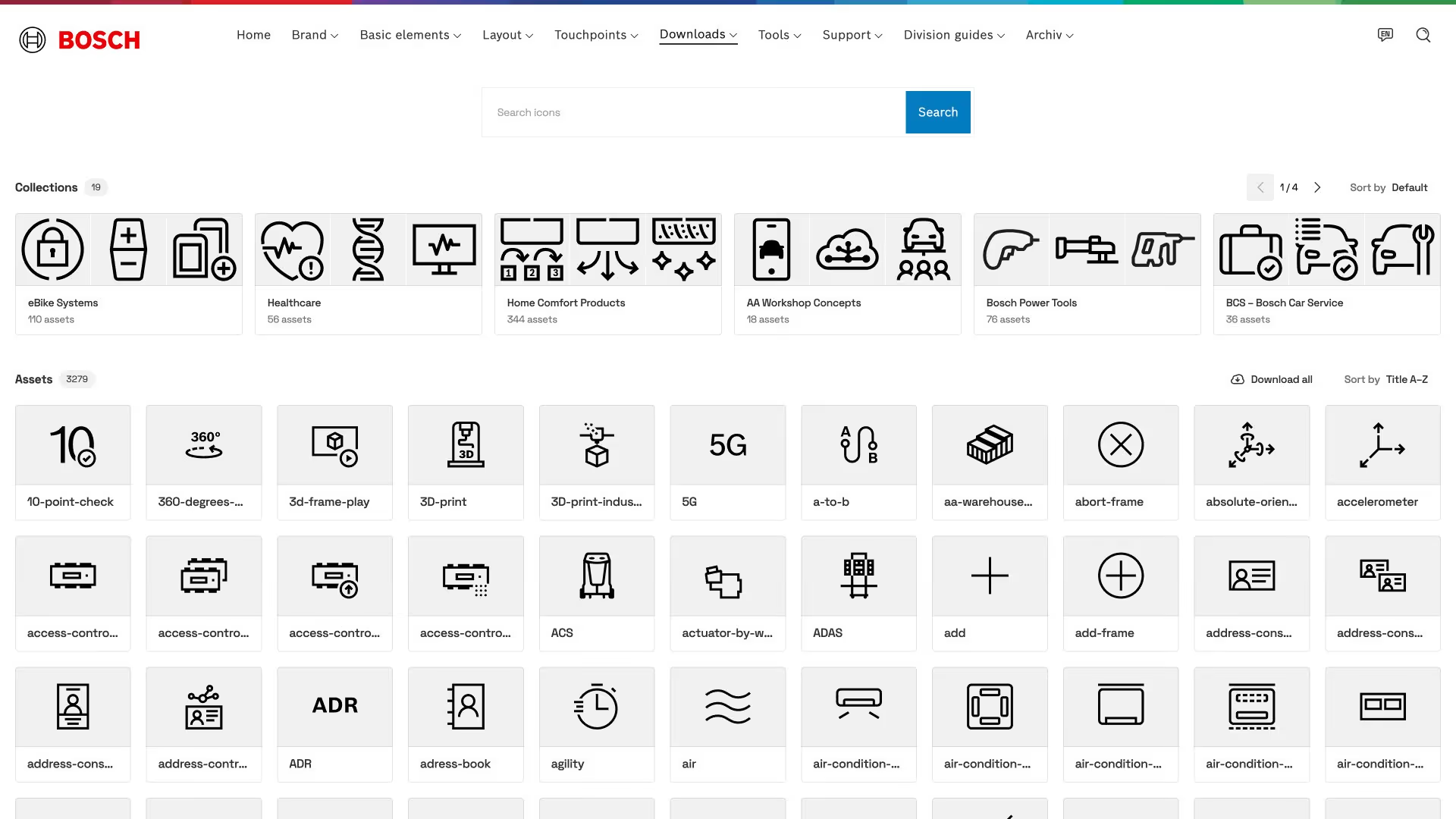
Today, the Bosch brand hub is home to its guidelines, assets, and design system, all accessible via one central portal. Bosch has experienced a significant rise in brand engagement and efficiency across the 25+ brands managed centrally in the Frontify platform:
- More than 2 million page views of the Bosch brand portal per year
- Over 170k brand assets stored in the DAM, including 3,200 icons
- More than 15k monthly active users — and growing
- Only 4 people manage the entire Bosch brand design space for over 100k users worldwide.
Mercedes-Benz: Maintaining brand precision at scale
Mercedes-Benz is one of the world’s most successful automotive companies, recognized globally as a high-end brand, thanks to innovative and forward-looking technologies, the safety and quality of the vehicles, and its commitment to brand excellence.
The Brand Design System team at Mercedes-Benz implemented a system to transform the way they managed and implemented the brand. But after several years, the team started hitting the limitations of their old system. Driven by the need for more customization possibilities, more integrations, and the desire to push the boundaries of UX and consistency even more, they switched to Frontify in April 2023.
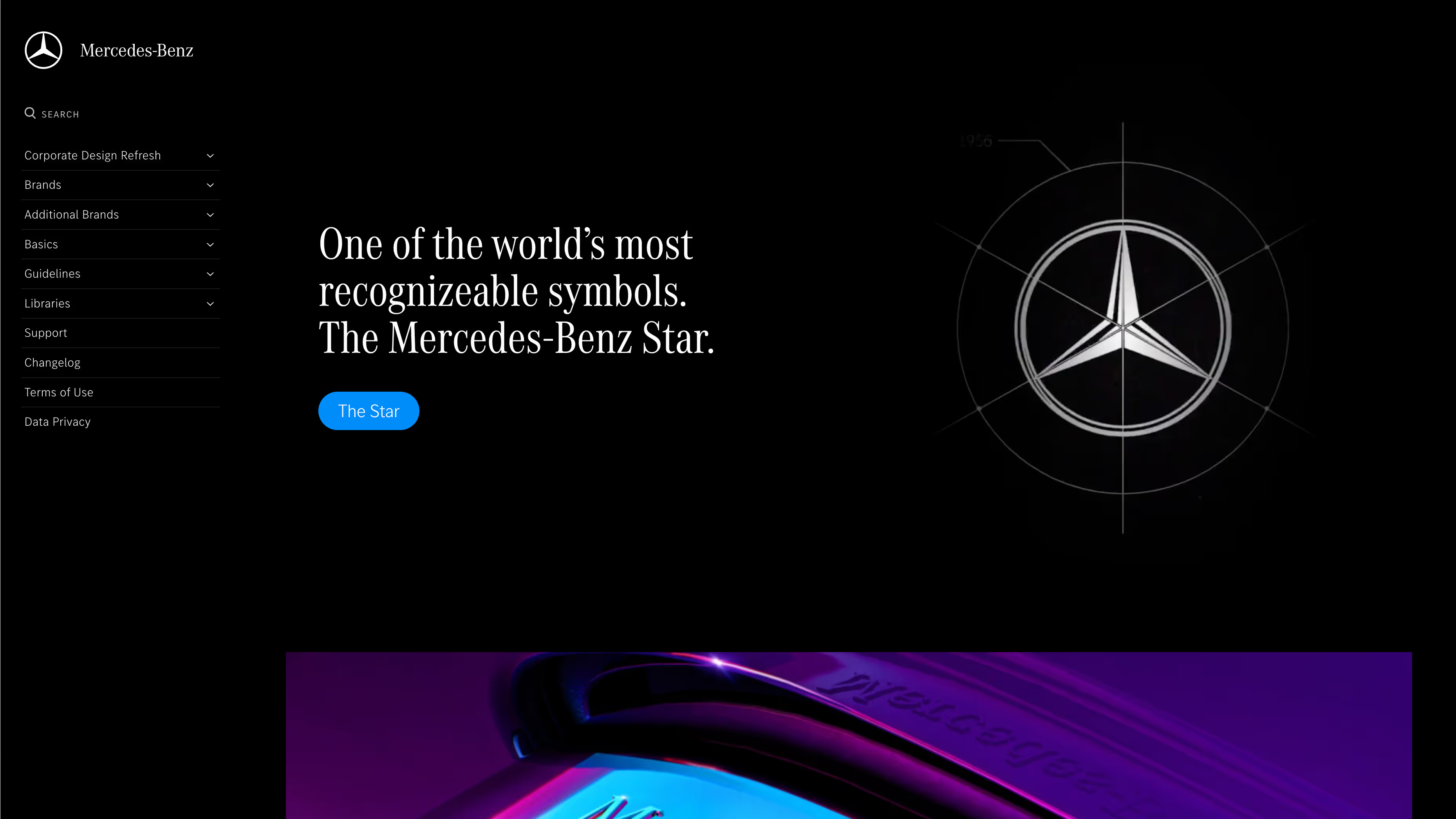
Mercedes-Benz uses the Frontify DAM to store, organize, and share all their brand assets seamlessly. For the first time in the brand’s history, Mercedes-Benz has all its icons stored in one central location, making it easy for users to find the correct ones to use in just a few clicks. Additionally, Mercedes-Benz is able to manage all its brands and entities in one unified Brand Design System, making it easier to roll-out updates or find relevant assets quickly.
Since April 2023, Mercedes-Benz has seen the following results from the Frontify brand portal:
- Used by over 46,000 people globally
- Over 6 million asset downloads from the DAM
- Over 750,000 pageviews of the Mercedes-Benz brand guidelines
- Dedicated libraries storing all icons, fonts, and logos in one place for the first time in the brand’s history
- Desktop app increases brand adoption, used exclusively by 25% of users.
Uber: Managing rapid global expansion
Uber is a fast-growing brand, operating in over 72 countries and 10,500 cities. Rapid international growth, driven by acquisitions, meant the Uber brand team needed a system to help them enforce consistency, without showing teams down.
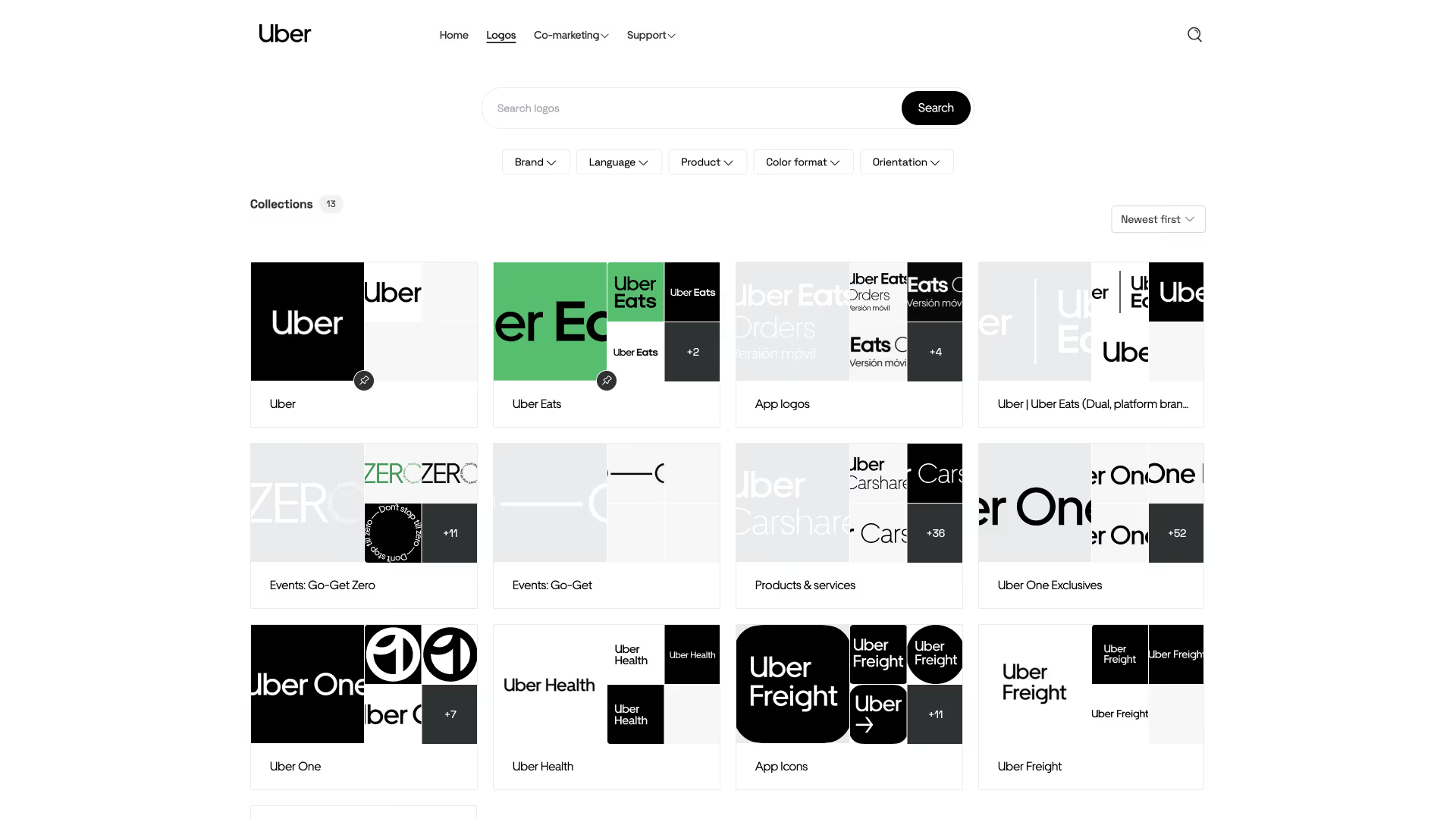
Uber needed a central hub that provided consistency, accessibility, scalability, and flexibility, supporting their international teams while maintaining alignment across constantly evolving campaigns and brand updates. Frontify provided Uber with that space for all its brands to thrive while allowing the company to scale globally — as one brand.
The Frontify DAM enables Uber to centralize assets, optimize workflows, seamlessly integrate with its design tools, and collaborate to create powerful on-brand messages that shape the brand’s future. Uber has embraced the flexibility and customization options available in Frontify to create a platform perfectly suited to its unique brand needs.
Volkswagen Group: Coordinating multi-brand complexity
The Volkswagen Group is one of the world’s leading automobile manufacturers, made up of 10 individual brands including Volkswagen, Audi, Porsche, and ŠKODA. Each brand has its own distinct identity, but the Group wanted to keep them connected through shared infrastructure and workflows.
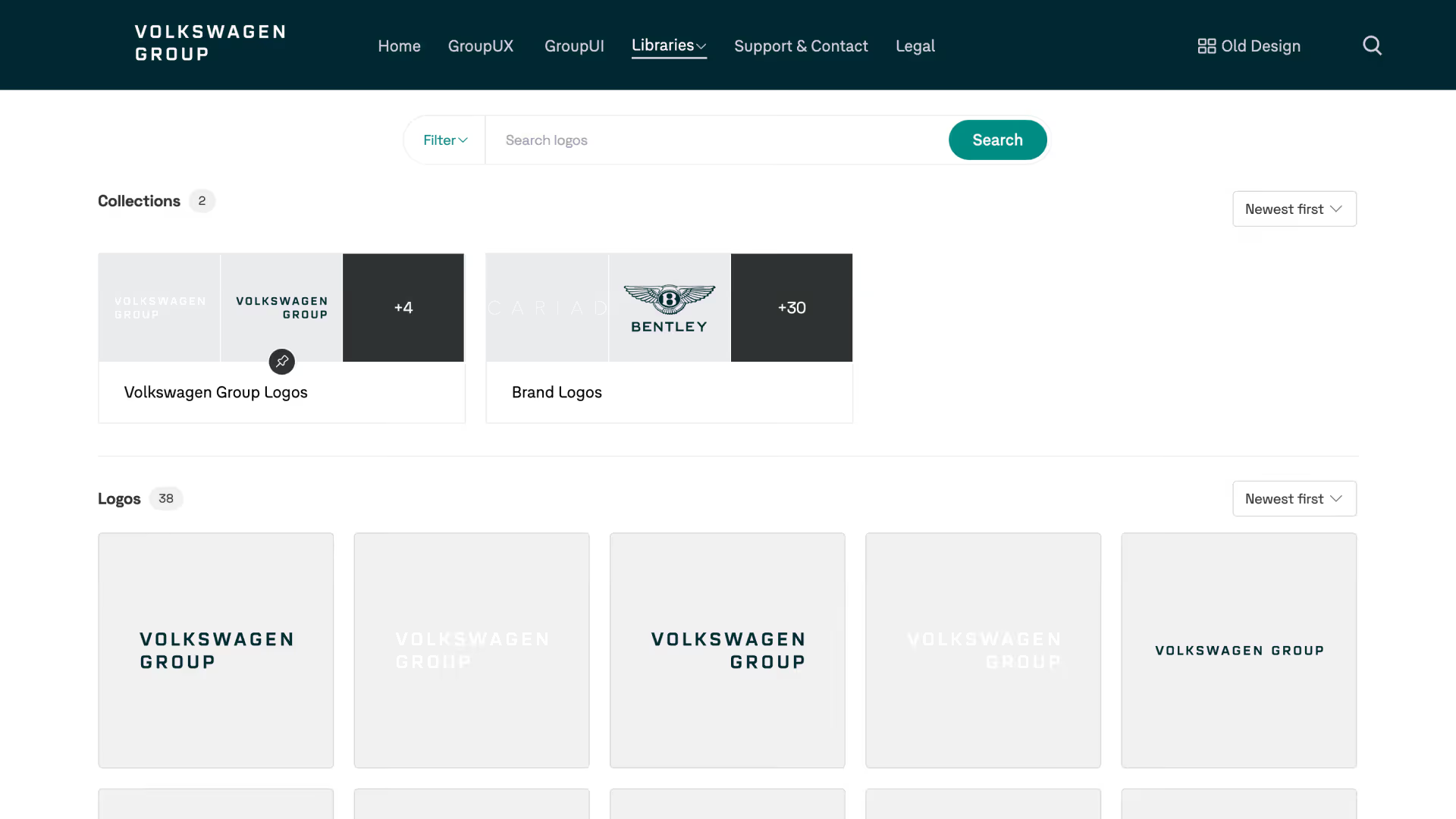
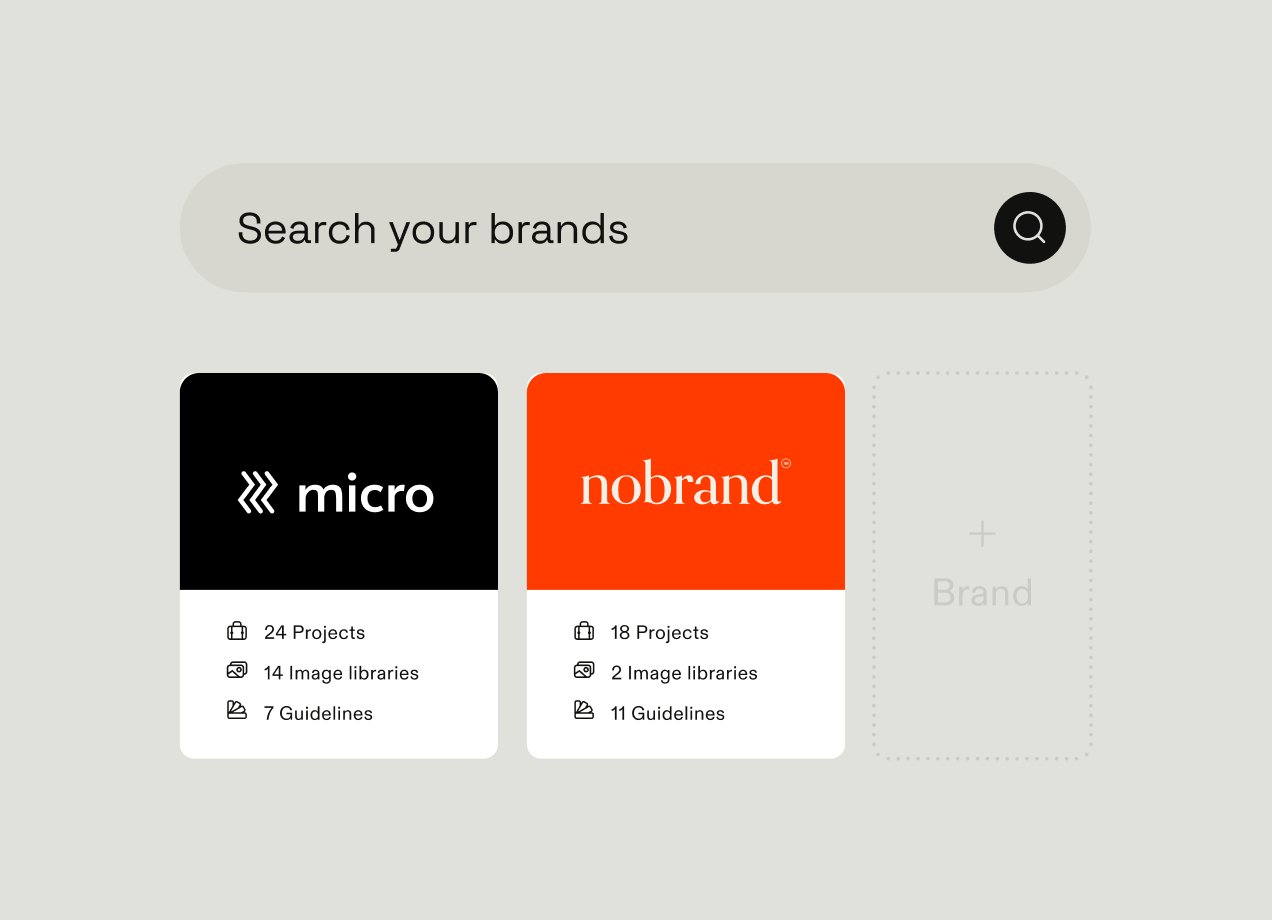
They needed a DAM that would let them manage multiple brands within one system — something highly scalable and designed for a multi-brand architecture. Their DAM needed to separate brands to avoid asset cross-contamination, while connecting them through unified systems and processes.
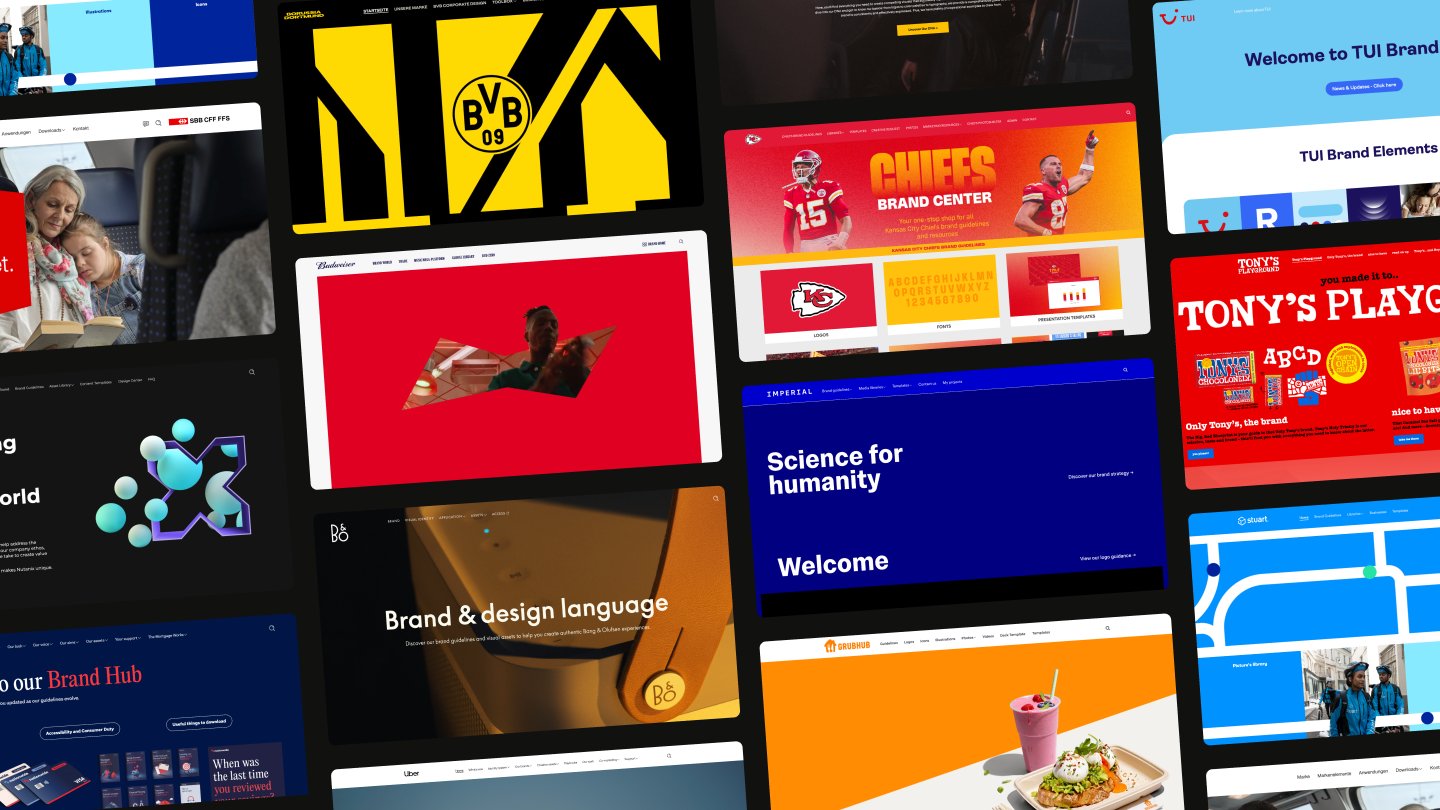
The Volkswagen Group built their Corporate Design Portal in Frontify to provide a central home for their guidelines and reusable templates. They have also integrated their Group UI Design System into their portal, adding web components, CSS framework, and design token documentation. By making the design system part of their portal, Volkswagen Group has created a standardized brand language, naming conventions, taxonomy, and toolkit for the whole creative process and asset, from design to digital development.
Lufthansa: Standardizing assets across regions
Lufthansa is one of the world's largest and most recognizable airlines. They used to manage their brand in an old brand portal, which had a complicated frontend. The portal was extremely time-consuming to update and very inflexible, making it difficult to manage the Lufthansa brand and assets on a global scale.
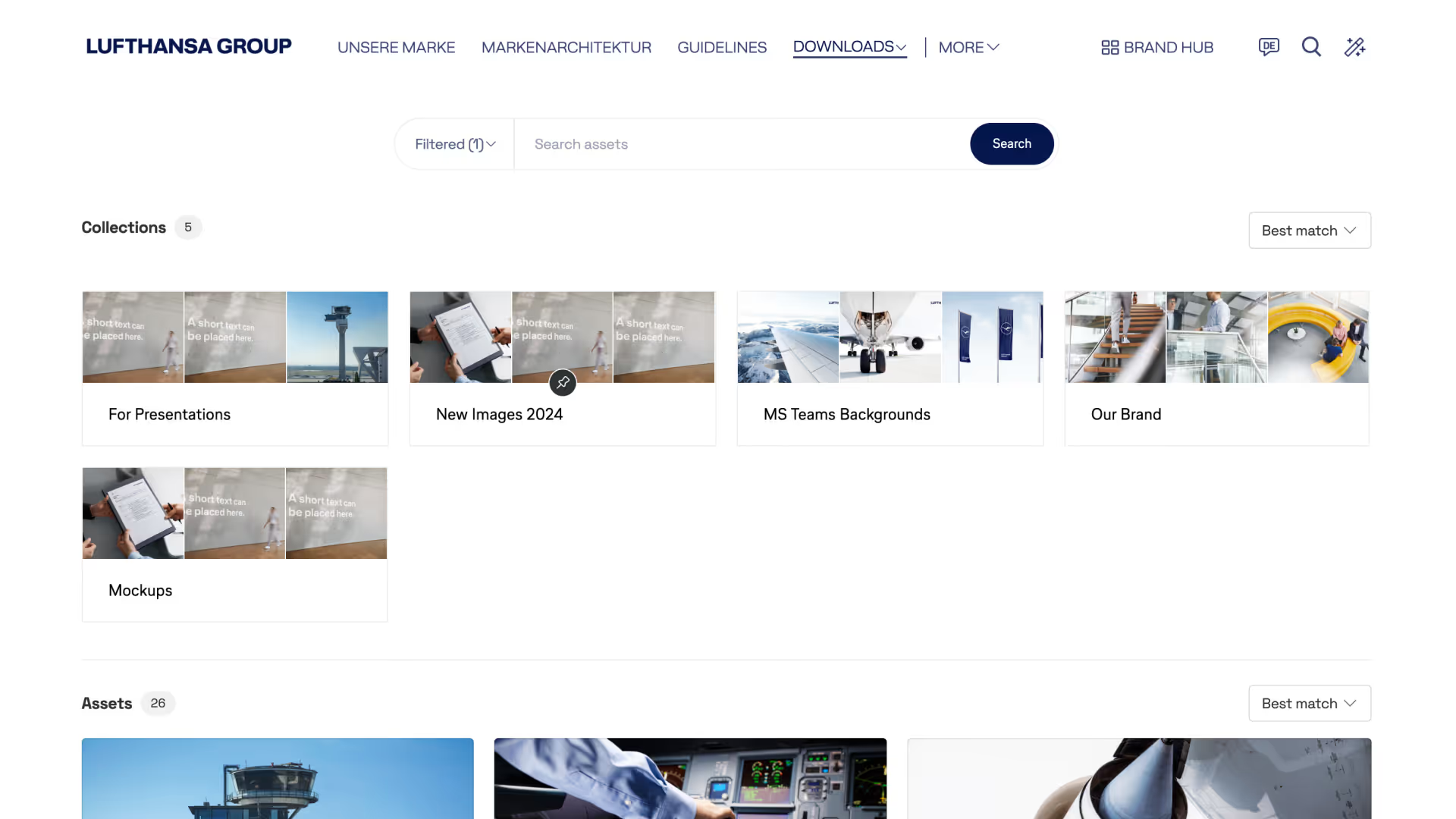
Aviation brands like Lufthansa operate under strict compliance and safety communication requirements, which adds further governance demands beyond usual brand and asset management requirements.
The Frontify DAM provided Lufthansa with a single source of truth for its brand. By implementing Frontify, Lufthansa was able to increase the communication quality through a higher brand consistency, and strengthen individual work due to better access to brand information, resources, and assets. The platform helped Lufthansa standardize assets across global teams while maintaining regulatory compliance.
What these digital asset management system examples have in common
The organizations covered in this article operate in different industries and with different brand structures. But three underlying principles determine whether their DAM system works at enterprise scale: how assets are governed and structured, how workflows are embedded into daily operations, and whether the platform can grow with the organization.
Governance and metadata architecture
When implementing a DAM, companies often treat governance as a separate set of rules enforced after the fact, rather than built into how the system works. At enterprise scale, that approach breaks down due to the high volumes of assets and number of people working with your system.
Without structured metadata, DAM searches don’t provide the right results, while ineffective governance leads to duplicate assets, outdated files, and wasted production budgets.
The most successful enterprise DAM implementations, like the examples above, embed governance into the system architecture itself:
- Library structure reflects how the organization operates — a logical hierarchy like Brand → Region → Campaign → Asset Type scales as new brands or markets are added without requiring a full restructure
- Controlled vocabularies standardize metadata and prevent inconsistent tagging across teams
- Naming conventions follow a consistent pattern — for example, [Brand]-[AssetType]-[Market]-[Version] — so assets are identifiable before they're even opened
- Role-based access and regional permissions ensure team members only see assets relevant to their market and role
- Brand guidelines are embedded within the asset environment so they're visible at point-of-use
- Usage rights and expiration dates are added to all assets to prevent misuse
When governance and metadata work together, your DAM platform and asset library scale with your organization, rather than breaking down as asset and user volumes increase. Asset search stays reliable as volume grows, duplicate production drops, and outdated files are properly retired at end-of-life.
Workflow automation and operational adoption
When planning a DAM rollout, companies invest significant time and budget planning for implementation and initial deployment, but far less on ongoing use. Enterprise DAM success depends on workflow orchestration and company-wide adoption, not just asset storage. Adoption often stalls because the system sits outside the tools and workflows teams rely on every day, so they work around it rather than in it.
The most effective enterprise DAM platforms become fully embedded into daily creative and marketing operations, rather than operating as passive libraries. One approach that we’ve seen work well in practice: Mercedes-Benz pre-loaded their DAM as a desktop app for all new starters, making it a default part of the working environment from day one rather than something employees had to seek out themselves.
Integrations with tools teams already use, like design software, CMS platforms, or project management tools, remove the friction of switching contexts to find or upload assets. Designers can access brand assets during production without switching tools. Marketing teams retrieve approved content without submitting requests, and agencies collaborate within shared environments rather than exchanging files over email.
Approval workflows replace long sign-off chains and manual approvals so assets move through review cycles faster, with a full audit trail behind them. Automated workflows:
- Standardize review and approval processes
- Clarify stakeholder responsibilities
- Maintain version control
- Provide audit trails
- Manage asset lifecycle stages.
Global scalability
Enterprise companies often outgrow their DAM systems if the platform isn't designed to scale. They need governance models that support regional customization without fragmentation, customizable permission structures, and systems that maintain performance with large asset volumes.
The brands covered in this article operate across multiple markets, languages, and brand portfolios. They succeeded because they made deliberate architectural decisions early:
- Taxonomy structures were designed to be expandable, so adding a new brand, market, or product line didn't require restructuring the entire library
- Permission models were built for enterprise scale from the start, with region-specific access layers that give local teams independence while keeping them connected to the global brand
- Metadata schemas were kept configurable, so as the business evolved, the way assets are classified could evolve with it.
In practice, this means the Volkswagen Group can manage ten distinct brands — each with its own asset environment, guidelines, templates, and workflows — within a single platform without asset cross-contamination. And Bosch's DAM serves users across 60 countries, with regional permissions ensuring each market only sees what's relevant to them, while a team of just four people manages the entire brand design space centrally.
What enterprise DAM success really looks like
The gap between a DAM system that works and one that doesn't rarely comes down to features or storage capacity. It comes down to how well the DAM platform supports the structure, oversight, and scalability your organization needs to manage its brand operations — at pace, across markets, and without losing control as you grow.
The brands that see the most value from their DAM investments, like Bosch or Lufthansa, design their DAM platform and workflows to fit their specific team distribution and brand architecture. They treat the platform as operational infrastructure, embedding guidelines, workflows, and taxonomy into how their teams work, rather than asking teams to work around a system that sits alongside their existing processes.
Learn more about how the Frontify DAM platform supports enterprise businesses with workflows that support consistent brand experiences, and make cross-team collaboration easier.
FAQs