

In one way, fair enough. It IS a term that started life as being about a singular mark, a symbol of ownership. Since then, it’s evolved as a concept but also been a bit abused as a term.
Depending on the organisation it can mean everything, or practically nothing of daily relevance.
In the work we do with organisations, the most valuable role of brand is rarely just the bit that shows up in the world. It’s what joins things up. It gives people a shared sense of what the organisation is here to do, why it matters, how it behaves, how it makes decisions and how it lives internally. Less a badge. More a meaningful system to live by.T
hat might sound a bit grand. But often the briefs that come to us are really asking for this, even when they start somewhere much more specific.
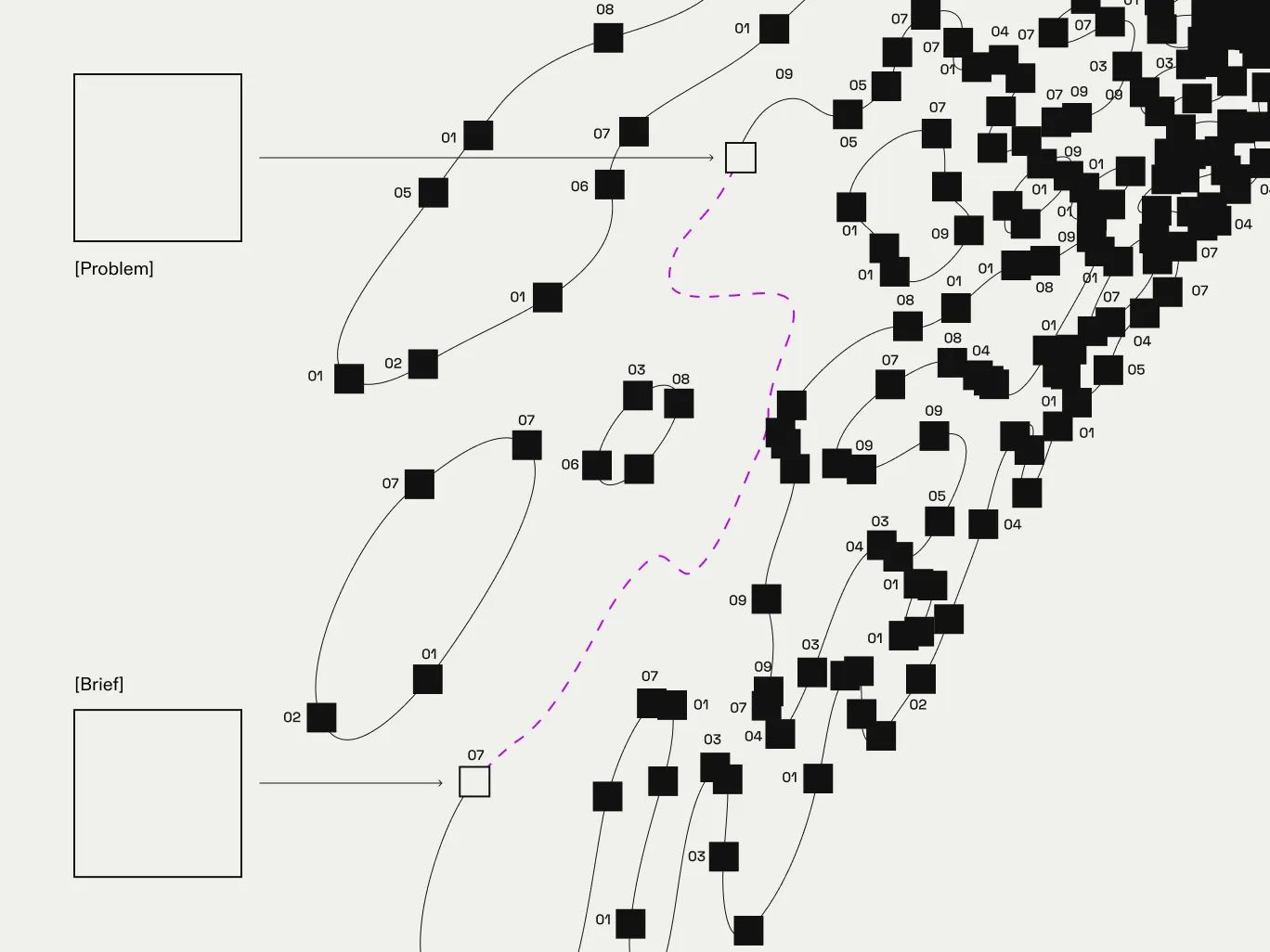
A brand positioning brief might actually be about a leadership team (or teams speaking to different audiences) not quite agreeing on what the story they’re telling really is.
An ‘employer brand’ brief (there’s another funny phrase, but that’s for another article) might actually be about a gap between the promise the brand makes to the market and the relevance to its peoples’ everyday internal experience.
A ‘new website’ brief ends up betraying the need for a fresh visual identity and brand storytelling.
A brand architecture brief might actually be because customers, teams and markets are all navigating the business in different ways. So, the starting point can be “we need a new X”, but the deeper need is often “we need to feel more joined-up”.
And that matters, because inside many organisations things naturally drift apart. Teams create their own stories (and sometimes logos!). Markets adapt things in different ways because ‘we’re different here’. HR/People have one language, marketing has another. Leadership has another. Customer experience is trying to deliver something else again.
None of this is usually because people are doing crap work. It’s because they’re working from different versions of the same organisation. Different assumptions, priorities, interpretations of what matters. That’s when brand becomes diluted. Not because the logo is being used incorrectly, but no one meaning or set of associations is being reinforced.
The opportunity is to treat brand as the red thread (or whatever colour your brand is… respecting branding of course).
When you see and treat brand as a living system, it helps on all of the big questions:
What are we here to do?
What do we believe?
What do we want people to feel or do?
How should we behave?
What should we say yes to?
What should we say no to?
How should this come through in our products, services, experiences, culture and communications?
Brand as a living system is where brand becomes much more valuable. Not just a set of assets or guidelines or language only a few teams making content care about, but a practical organising force (something ‘organisations’ often lack): a common language, bridging internal and external worlds.
When an organisation is aligned around a clear meaning, you can feel it: the story is sharper, the experience is more consistent, the culture is more believable, the creativity has more direction, the business has more confidence.
This is why brand belongs to more than the brand team. Brand and marketing might steward it. Leadership might set the ambition. But the organisation has to live it.
This doesn’t mean everything has to become rigid or uniform. In fact, the best brand systems create freedom. They give people enough shared understanding to move with confidence in their own areas of work. The point is not control. The point is coherence.
To get to this living system takes finding the disconnects…
Where does the inside not match the outside?
Where do teams tell the story differently?
Where do values fail to show up in behaviour?
Where does innovation drift away from purpose?
Where does the customer experience contradict the promise?
This is where we can help. To challenge and find those disconnects and shape brand to bridge them. Then we can unlock the real value of brand as we believe it should be today… far from the singular definition of old. Not just how an organisation presents itself, but how an organisation understands itself. And when that understanding is shared, alive and used every day, brand transcends branding.
It becomes a living system… and a system to live by.
Originally posted on Dragon Rouge.