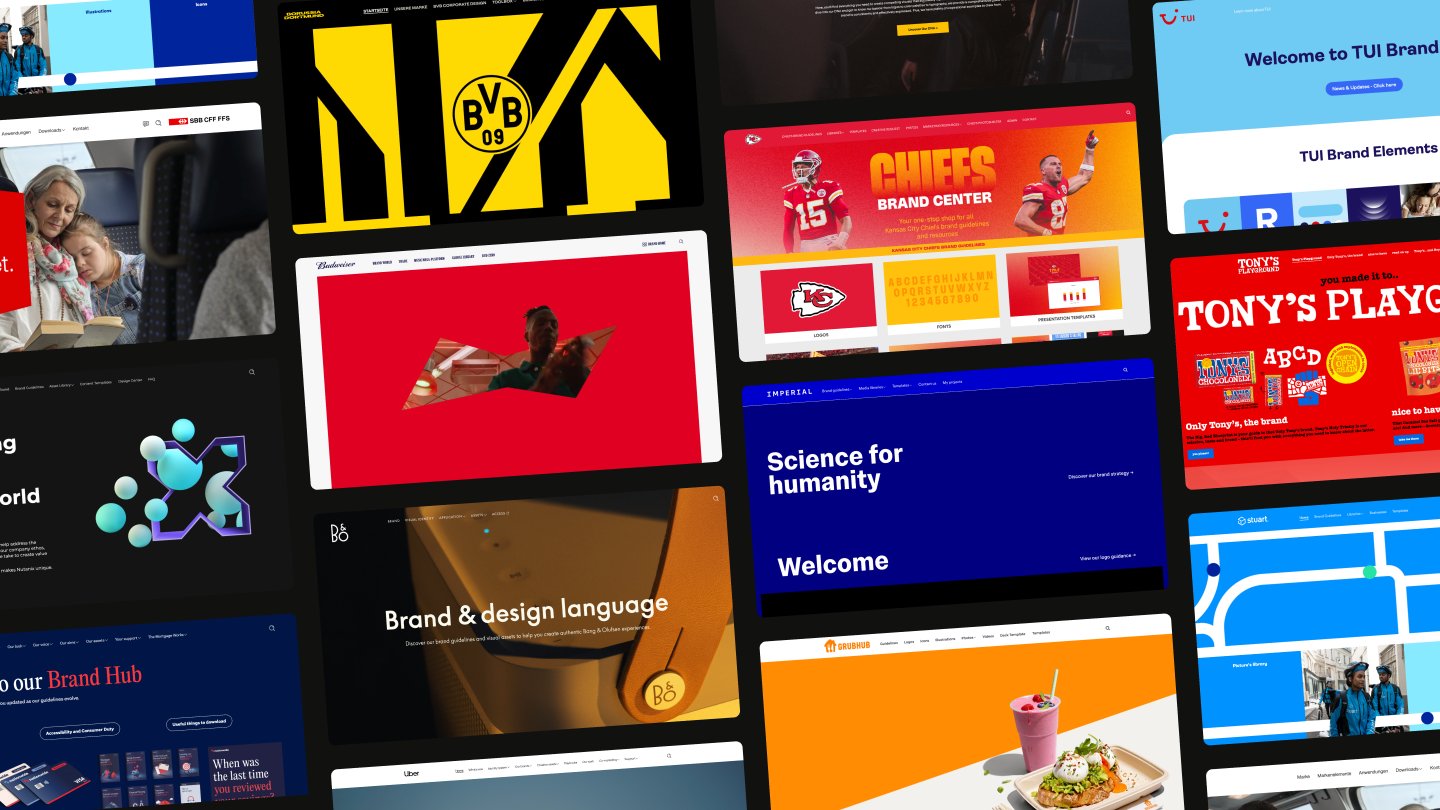


When managing brands across multiple territories, agencies face a fundamental tension: central teams strive to ensure brand assets are used consistently, while local teams must create compelling outcomes that resonate with their markets. "The aim is to manage both sides adaptively, so that tension doesn’t occur," explains David Fresneau, Director Digital Solutions at Peter Schmidt Group, Germany’s leading brand and design agency.
When assets, guidelines, or messaging are scattered across different systems, inconsistencies and inefficiencies quickly emerge, leading to fragmentation. Before using Frontify, the agency’s clients experienced the pain of static guidelines that required constant redistribution whenever updates were needed—a key obstacle to maintaining version control and creating truly up-to-date brand experiences.
The challenge lies in finding the right balance between global consistency and local relevance. "Every market has its own cultural, linguistic, and regulatory context," explains Fresneau. "Brands need to adapt locally without losing their core identity."
Three Peter Schmidt Group clients demonstrate the reality of this process from different perspectives. Automotive brand AUMOVIO launched globally in 10 months; energy giant E.ON underwent a Europe-wide repositioning in just three months; and Deutsche Telekom—the world's most valuable telecommunications brand—needed a consistent brand experience for its hundreds of millions of customers.
Each project demonstrates how the right infrastructure—combining centralised platforms, ready-to-use templates, and human expertise through Brand Service Desks—can transform complexity into competitive advantage.
Launching at speed: AUMOVIO
When Continental spun off its automotive group sector, Peter Schmidt Group was tasked with developing and launching a new brand globally in less than a year. AUMOVIO was born.
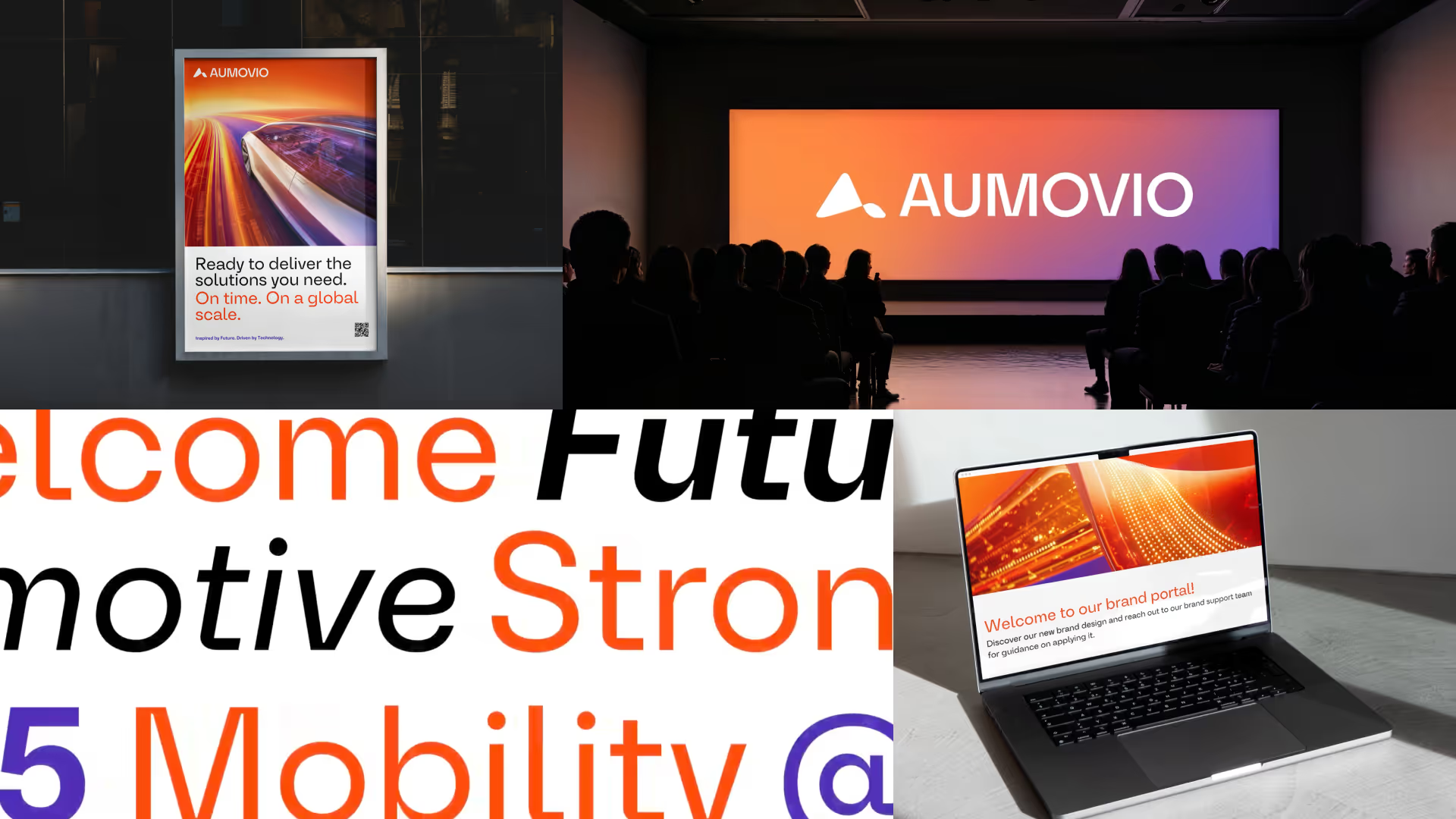
The solution? "A fully integrated system that combines accessibility, clarity, and support," explains Laura Monschein, who manages the client relationship in her role as Director Consulting. All essential brand elements were consolidated in Frontify as a central hub, complemented by ready-to-use templates that provided a clear framework for implementation, while allowing flexibility for local adaptation.
For complex assets like AUMOVIO's signature orange-to-purple gradient—designed to convey movement and adaptability—templates weren't enough. "This is where human expertise comes in," adds Monschein. "Via an integrated Brand Service Desk, special use cases can be reviewed, approved, or corrected if necessary."
The platform's phased access proved critical. "Through Frontify, we could provide early access to guidelines for specific teams, which accelerated preparation and reduced bottlenecks during implementation," reveals Monschein. This combination of centralised resources, practical templates, and on-demand expertise empowered local markets to hit the ground running.
“The very effective combination of a Frontify-based infrastructure with Peter Schmidt Group’s Brand Service Desk was decisive for the roll-out,” explains Urs Weidermann, Senior Marketing & Brand Manager at AUMOVIO. “It was of utmost importance to establish a reliable source for all brand-related information. Of course, we have plans to grow AUMOVIO – and with it also our brand’s infrastructure.”
Repositioning at scale: E.ON
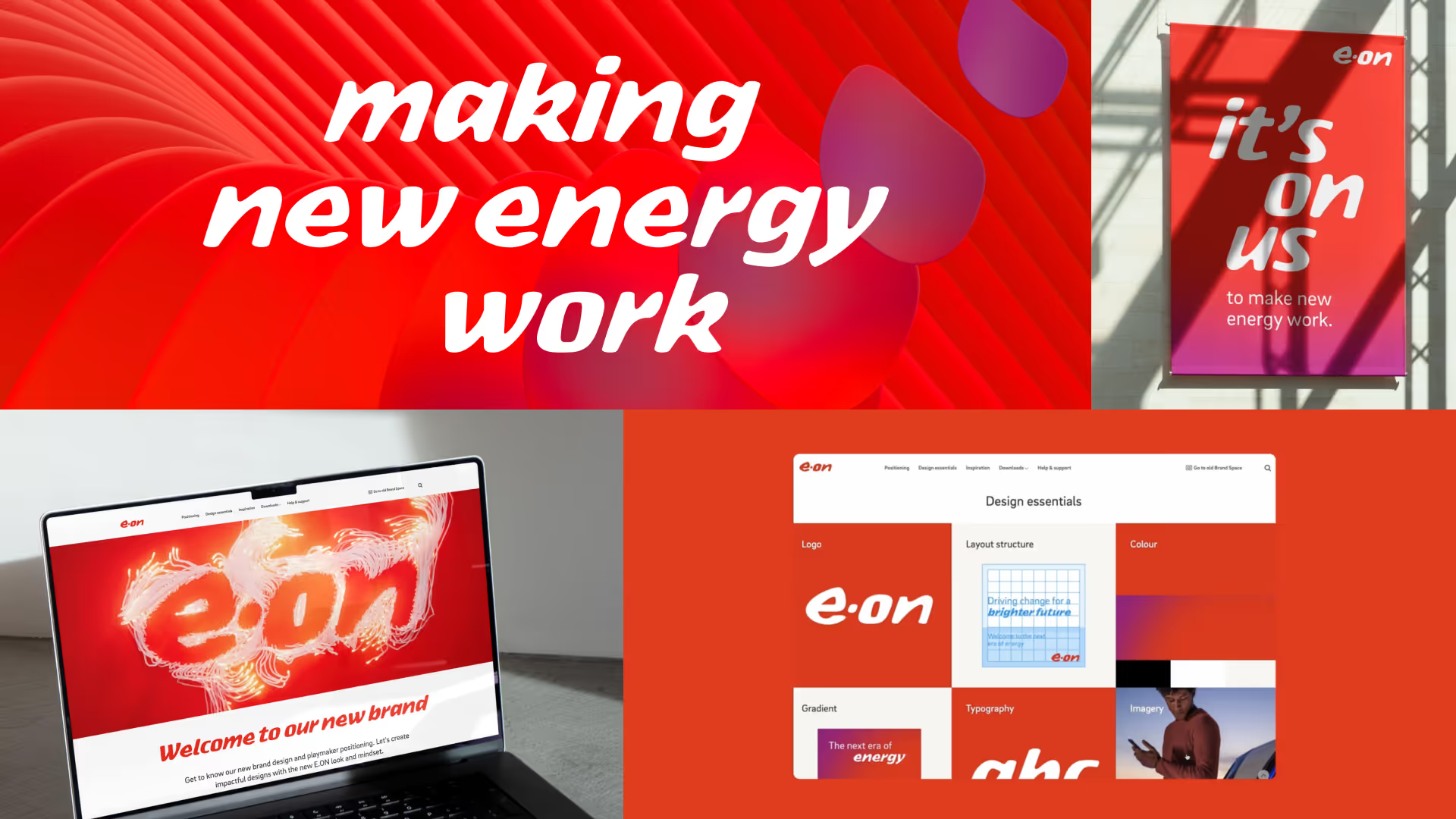
While AUMOVIO demonstrated how a new brand can be launched at speed, E.ON required rapid transformation of an established brand. The energy company's strategic repositioning—from traditional utility to "playmaker for change" in renewable energy—needed to roll out across Europe in just three months.
"In 2023, the affordability of energy dominated the public debate,” explains Frauke Lucja, Global Senior Brand Manager at E.ON. “At the same time, energy transition remained an urgent topic. Consumers expected energy companies to lead the way, and we needed to send out a strong signal quickly."
Multiple agency partners coordinated on the project: Peter Schmidt Group modernised the brand design, distilling it to its strongest assets and developing a new corporate font, while BBDO handled the launch campaign. The strategy, and key touchpoints such as fair stands, were developed in tandem by other partners.
The key challenge to achieve this was orchestration. "Together with E.ON, we onboarded all agency partners early, providing top-level guidelines that made the new principles easy to understand," explains Peter Schmidt Group’s David Fresneau. "At the same time, we delivered ready-to-use templates so teams could start working immediately without losing time on interpretation."
Frontify's dynamic capabilities proved essential. "The ever-growing digital asset management system enabled us to add new materials seamlessly throughout the process," adds Fresneau. Rather than front-loading all assets, the system evolved organically as the repositioning progressed—enabling an 'always beta' approach.
Strategic inclusivity was essential to meet the ambitious rollout timeline. "From the outset, we included everyone working with the brand, ensuring early involvement and transparency," Fresneau recalls. "Strong commitment from E.ON's brand management provided the necessary momentum, while making the brand visible and accessible to every employee created a sense of ownership and engagement."
According to Lucja, E.ON’s new brand portal was very well received. “Users appreciate the integrated tools and the overall experience,” she reveals. “Since the relaunch, we’ve recorded a 470% increase in visits."
Maintaining global consistency: Deutsche Telekom
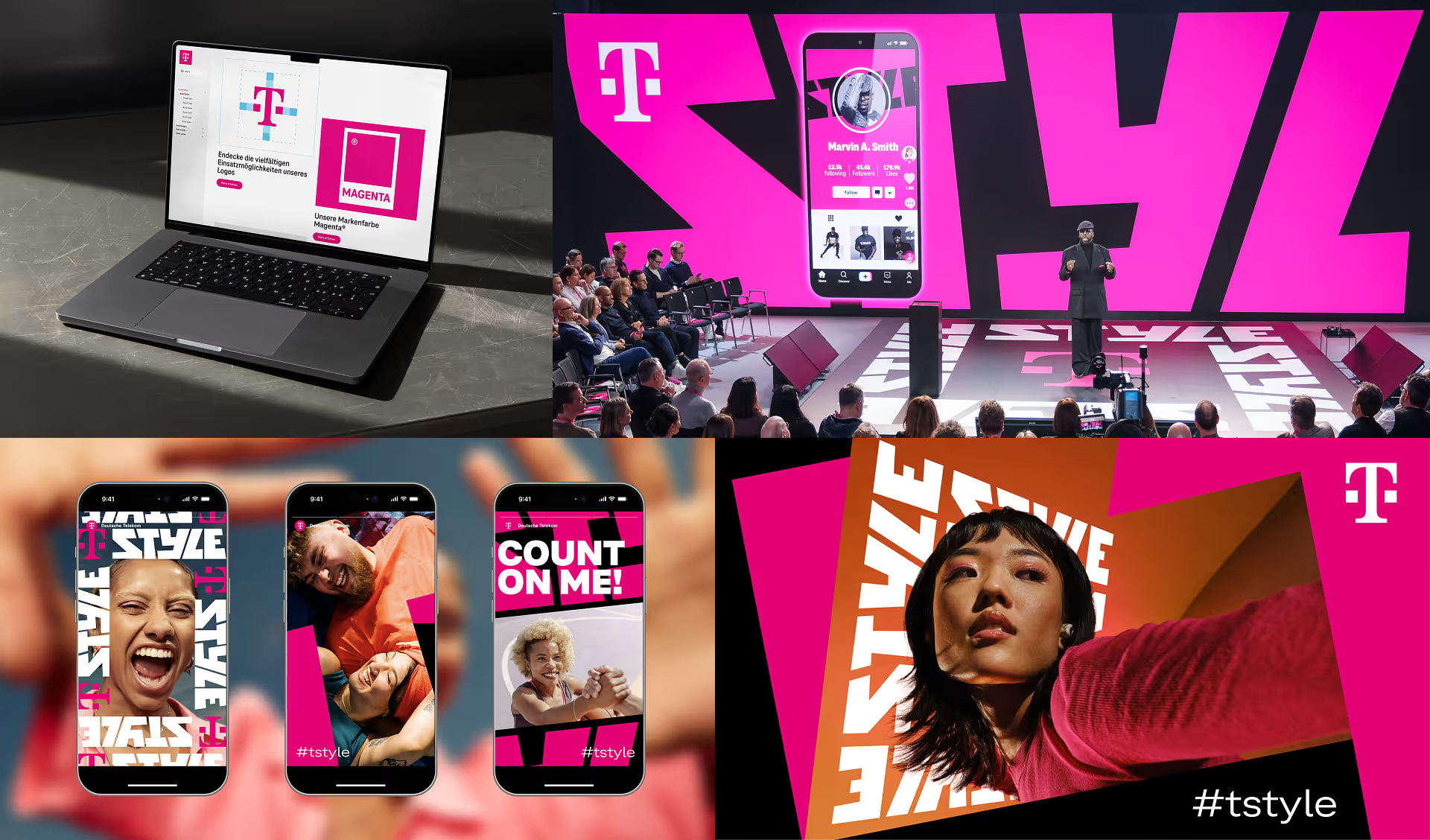
Rather than speed, Deutsche Telekom was a test of endurance: maintaining consistency for an established brand at massive scale over time. With 261 million customers across multiple countries, the threats to brand drift are constant.
Peter Schmidt Group’s approach prioritises systematic transparency. "Regular meetings with representatives from all markets ensure that all future topics and developments are communicated transparently," explains Alexander Engelhardt, Deutsche Telekom’s Vice President Brand Management. This helps smooth stakeholder alignment even when priorities conflict across regions. Beyond coordination, the team provides extensive advisory and operational support to local markets—ensuring teams have expert guidance when they need it.
Frontify serves as the backbone for this distributed model. Teams across regions access the same up-to-date assets, while features like Brand Guidelines and the Media Library empower them to independently create and adapt materials for local campaigns while staying aligned with global brand standards.
"With the continued integration of Template Libraries, Brand Assistants, and additional Telekom tools, the Brand Portal is evolving into a true single source of truth," adds Fresneau. "This ensures quality, prevents brand drift, and enables teams to work flexibly without compromising brand integrity."
Providing a framework for freedom
These three distinct challenges share a common philosophical thread. "Brand management on a global scale balances freedom with framework," says Fresneau. "By transforming processes, leveraging a proper brand management system, and closely collaborating with markets and stakeholders, you can ensure consistency and efficiency globally while maintaining the ability to adapt to local demands."
Success isn't just about the initial setup—it requires ongoing evolution. By continuously listening to market needs and enhancing the platform with additional guidance, content, and templates, brands can maintain efficient collaboration rather than creating tension between central and local teams.
The key is building systems that enable both control and flexibility—where templates provide starting points rather than straitjackets, where Brand Service Desks offer expertise rather than gatekeeping, and where centralised platforms facilitate access rather than create bottlenecks.
Brands must move faster, across more markets, and coordinate more stakeholders than ever before—and the right infrastructure is your competitive advantage.