Choosing the best DAM software in 2026
Companies today have more digital assets and files to keep track of than ever before. A shared drive might work well for a while, but eventually, you'll need a solution that's better suited for managing assets at scale. That's where digital asset management (DAM) software comes in.
Many DAM providers offer similar-sounding features, which can make it hard to compare. We've hand-selected some of the top DAM tools you'll want to know about. For each one, we've identified its best features based on the company websites and looked for common themes in their customer reviews and testimonials. G2 and GetApp ratings are accurate as of December 2025 and may change.
What makes the best DAM software?
The best DAM software depends on your organization's size, content complexity, workflows, and growth plans. A smaller creative team will have very different requirements from a global enterprise managing multiple brands, markets, agencies, and channels.
The strongest DAM platforms now do more than store and organize files. They help teams find content intelligently, govern its use, adapt it for different channels, and deliver it into the tools and experiences where it is needed.
| Capability | What to look for | Why it matters |
|---|---|---|
| Intelligent search and metadata | Automated metadata suggestions, OCR, natural-language search, similar-asset discovery, transcription, and duplicate detection. | Teams can find and reuse content without relying on exact filenames or extensive manual tagging. |
| Media transformation and delivery | Dynamic resizing, cropping, format conversion, renditions, video optimization, and CDN-backed delivery. | Assets can move from the library into channels faster, with less repetitive production work. |
| Integrations, APIs, and creative connectivity | Native integrations with creative tools, CMSs, PIMs, ecommerce platforms, and productivity apps, plus APIs, SDKs, webhooks, and embeddable asset pickers. | Approved content becomes available inside the tools where teams create, publish, and distribute it. |
| Governance, rights, and AI controls | Granular permissions, approval status, version history, licenses, expiration dates, download controls, audit trails, and reviewable AI output. | Organizations can increase self-service access while maintaining control over content and its use. |
| Enterprise and multi-brand scalability | Multi-brand structures, localized portals, granular access, flexible governance, and support for multiple markets and languages. | The DAM can grow with the organization without creating separate content silos. |
| Adoption, analytics, and measurable value | An intuitive user experience plus reporting on searches, failed searches, downloads, reuse, adoption, and content gaps. | Teams can measure value, improve findability, and identify where content or enablement is missing. |
10 top DAM systems to consider
The best DAM software depends on your organization's size, content complexity, workflows, and growth plans. Use this shortlist to identify which platforms are most relevant, then compare their capabilities in more detail below.
| Platform | Best for | Core strength |
|---|---|---|
| Frontify | Growing brands and global, multi-brand organizations | Scalable enterprise DAM and brand orchestration |
| Bynder | Enterprise marketing teams | DAM and content distribution |
| Aprimo | Complex content operations | Workflow and governance depth |
| Storyteq | Distributed creative teams | Content adaptation and automation |
| Air | Creative teams | Visual collaboration |
| MediaValet | Video-heavy enterprise teams | Video management and media distribution |
| Cloudinary | Developer-led organizations | API-first media delivery |
| Acquia DAM | Acquia and Drupal users | DAM connected to digital experience workflows |
| Brandfolder | Marketing teams using Smartsheet | DAM and work-management connectivity |
| Filecamp | Smaller, budget-conscious teams | Simple, affordable DAM |
Most enterprise DAM vendors use custom pricing, while Air and Filecamp publish entry-level plans. Detailed pricing is included in each vendor profile below.
1. Frontify
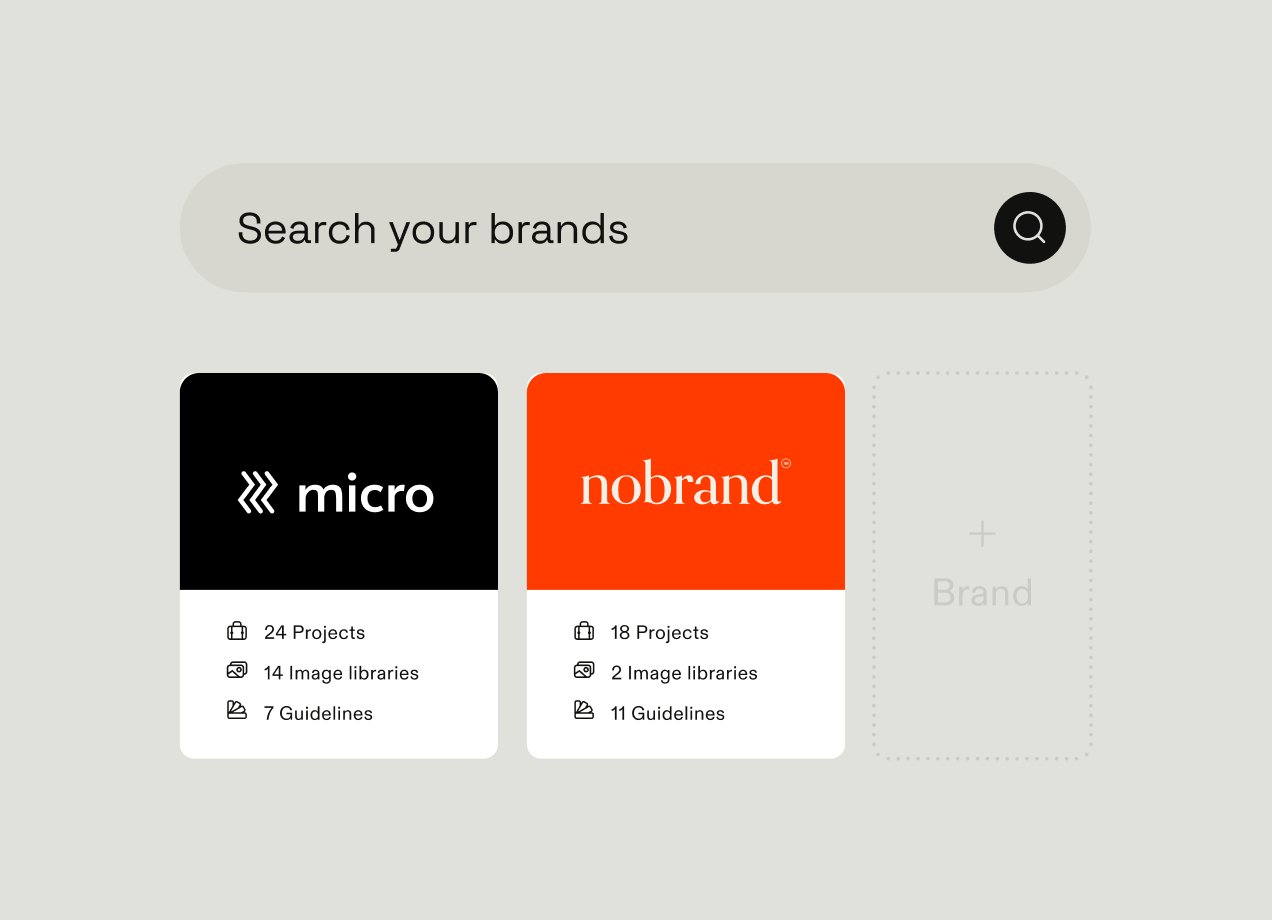
Frontify is a scalable enterprise digital asset management and brand orchestration platform. It supports growing brand teams as their content, users, markets, and governance requirements become more complex, while also meeting the needs of global, multi-brand organizations.
Its DAM combines AI-assisted metadata, OCR search, duplicate detection, version control, rights management, granular permissions, dynamic asset transformations, and media delivery. Creative APIs, integrations, and developer capabilities make approved assets available inside the systems where teams create, publish, and distribute content.
Frontify extends enterprise DAM beyond asset storage by connecting content with brand intelligence, guidelines, templates, workflows, and governance. This enables organizations to orchestrate how assets and knowledge are accessed, adapted, and activated across the business.
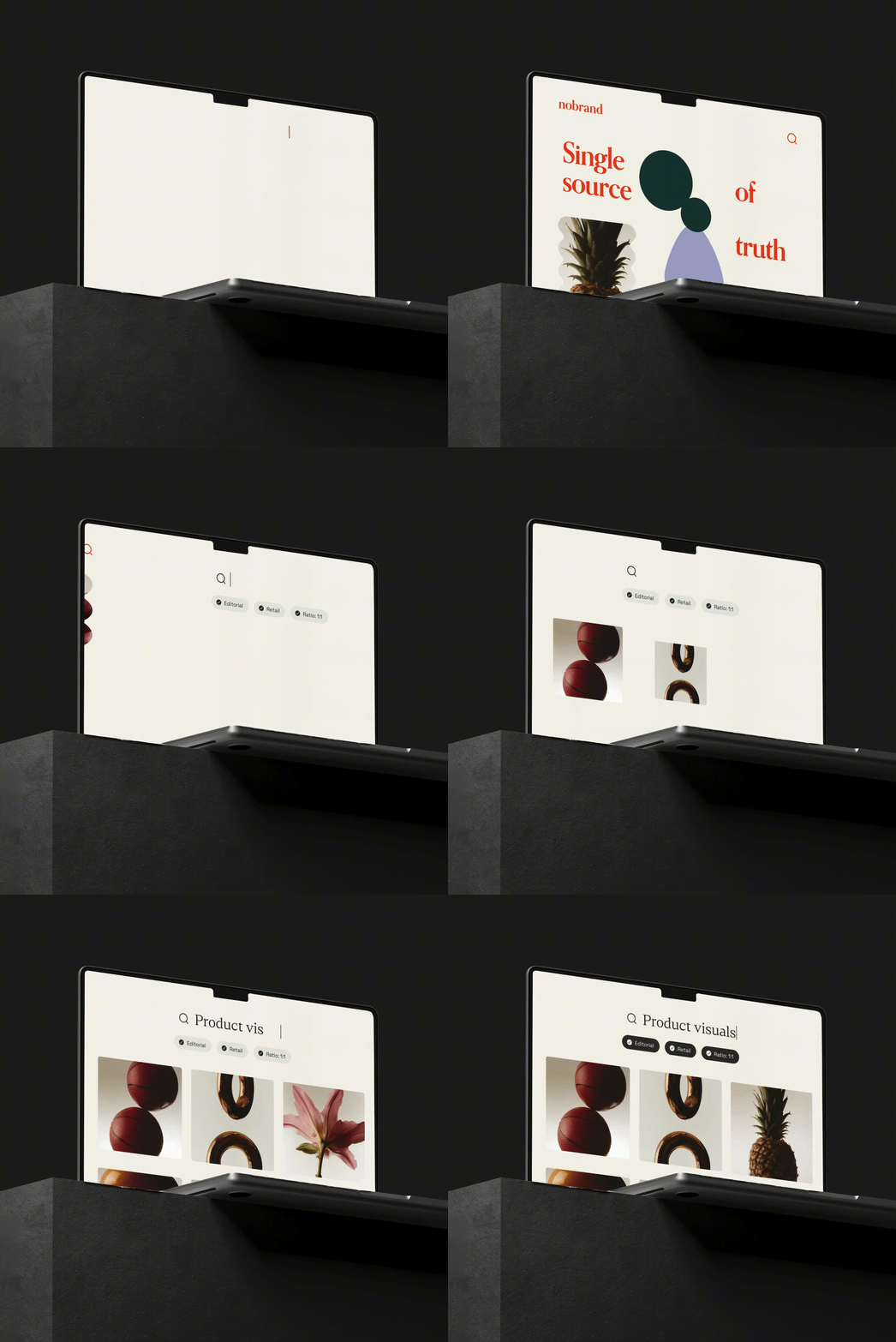
For AI-enabled workflows, Frontify supports intelligent search and organization while keeping governance in the loop. Suggested metadata can be reviewed, permissions remain enforceable, and brand intelligence can extend into external tools through capabilities such as Brand Assistant and MCP connectivity.
Why it stands out:
Frontify scales with growing brands while providing the enterprise DAM and brand orchestration capabilities needed for global complexity.
"I've used many asset management systems over the years, and Frontify's platform is far and away the best tool I've worked with to date. It's incredibly intuitive and easy to use, both from a user and developer standpoint. The number of available features and functionalities is astounding."
— Leah Palmquist, Creative Director at Caribou Coffee
Top features
- Enterprise digital asset management: Centralized libraries, advanced search, metadata, versioning, permissions, rights management, approvals, and secure external sharing.
- AI-powered asset intelligence: Automated metadata suggestions, OCR-based search, duplicate detection, intelligent discovery, and governed AI-assisted workflows.
- Dynamic media transformation and delivery: Resize, crop, convert, and deliver channel-ready media while preserving the governed source asset and reducing unnecessary duplication.
- Creative APIs and integrations: Connect approved assets with creative tools, CMSs, PIMs, productivity platforms, AI tools, and custom applications.
- Multi-brand governance: Support multiple brands, markets, languages, portals, user groups, and permission structures within one enterprise platform.
- Brand orchestration: Connect assets with brand intelligence, templates, guidelines, workflows, and activation across teams and channels.
Pricing:
Custom pricing is available on request. Pricing is based on monthly active users, so organizations pay for the people actively using their brand assets.
2. Bynder
Bynder was one of the first DAM solutions on the market. Since its launch in 2013, it has developed more comprehensive brand management functionality, including brand guidelines and creative templates. It serves enterprise and mid-market companies.
"Bynder had the main things we were looking for - a searchable database so people could find what they were looking for and permissions and expiration features that provided protection and tracking for our assets."
— Lauren Lewis, Director of Marketing & Communications at Five Guys
Top features:
- Store and organize your brand files
- Control access and usage rights
- Share files internally and externally
- AI-powered metadata and duplicate detection
- Download files in your desired format
- Seamlessly integrates with your entire martech stack
Pricing:
Custom pricing available on request. Bynder's pricing is based on three product tiers:
- Digital asset management (DAM)
- DAM + Scale content production: gives you access to other features, such as content workflows and print brand templates.
- DAM + Enhance digital experiences: provides access to all the features in the "scale" tier, plus additional functionality to create a more connected brand environment, such as an integration marketplace and partner network.
3. Aprimo
Aprimo is a combined digital asset management and content operations platform. It's used by companies of all sizes looking to scale their content management while maintaining brand consistency. It provides essential features for organizing, retrieving, and sharing assets efficiently. Aprimo also offers robust search capabilities, metadata management, and basic analytics to streamline your asset management workflows.
"Within the Aprimo DAM, we now have this very clean one asset system, but when we're distributing to retail sites, Aprimo will automatically replicate the file using whichever naming convention we need"
— Rina Mody, Senior Product Analyst at Hachette Book Group
Top features:
- Organize and find your brand files
- Share files internally and externally
- Creative review and approval workflows for collaborating on new assets
- Metadata automation including smart tagging, video summaries, and OCR
- AI-powered search
- AI-supported image editing including asset resizing and auto-cropping
- Basic analytics functionality to track and measure asset use
Pricing:
Custom pricing available on request. Aprimo's enhanced AI functionality is available as an optional add-on to its standard DAM package, requiring additional budget to access its more advanced features.
4. Storyteq
Storyteq's Content Marketing Platform gives marketers one place to find, adapt, and collaborate on content, across every channel and format. Its platform offers extensive AI capabilities, from smart metatagging to the organization of data. It allows real-time visibility of content performance and joins teams across markets, enabling fast adaption and adoption of content for increased brand consistency.
"With Storyteq, we can not only share templated creative assets that our local branches use for quick adaptation, but also 'lock' some template elements that we believe should be left untouched in order to maintain the brand consistency that we are after."
— Mentos
Top features:
- One central platform to organize brand content, guidelines, and templates
- Customizable templates with locked elements to maintain brand consistency
- AI-powered search and advanced filtering to speed up asset discovery
- Basic analytics functionality to track asset usage and user behavior
- AI-supported image editing including asset resizing and auto-cropping
- Feedback and approval workflows
Pricing:
Custom pricing available on request. Storyteq doesn't share any information around pricing tiers or packages without booking a demo with their team.
5. Air
Air is a platform for teams to store and organize visual content. It provides space for working together and allows you to manage collaboration, feedback, and approvals all in the same place. Its visual workspace makes it easy to find assets in cluttered libraries, while its intuitive search lets users find files using natural language.
"Air has made the graphic design team's life easier, especially with us being fully remote. This visual server has been so helpful in searching for graphic templates, files, and images."
— Hayley Lane, Art Director at TOGETHXR
Top features:
- Organize and find your brand files
- Native desktop app
- Enterprise-grade security
- AI-powered auto-tagging
- AI-generated chapters and summaries
- AI-powered image editing tools
- Automated video and audio transcription
- Customizable user permissions to control asset access and usage
Pricing:
Air offers 4 pricing tiers:
- Creator: great for individuals (1 user), $20/month
- Pro: best for growing businesses (10 users), $600/month
- Business: designed for creative teams (15 users), $1100/month
- Enterprise: for established organizations, custom pricing on request.
6. MediaValet
MediaValet is an enterprise digital asset management solution that serves as a single source of truth for brand, campaign, and product-related assets. The platform empowers organizations to streamline workflows, enhance collaboration, and drive real results with their digital content.
"MediaValet has been a crucial part of modernizing how we share our digital tools with our customers."
— Melanie McLean, Melanie McLean Agency
Top features:
- Advanced search and filtering to find brand assets quickly
- AI-powered auto-tagging, color recognition, and facial recognition
- Experience Portals for documenting online brand guidelines
- Granular permissions and access levels for different teams and users
- Customizable templates to maintain brand consistency
- Proofing tools to streamline the feedback and approvals process
- Analytics functionality to track asset usage
Pricing:
Custom pricing. Users must submit a pricing request to the MediaValet team to learn more about their pricing and packages.
7. Cloudinary
The Cloudinary image and video platform is a developer-focused tool for image, video, and digital asset management. It provides an API-first, AI-powered DAM that extends beyond traditional DAM storage and workflow management solutions. Like Frontify, Cloudinary is a forward-thinking vendor building the next generation of asset management tools.
"As a 50-year old company, we have a lot of legacy that we want to bring along with us, and Cloudinary's DAM has allowed us to do so. We also really like the way we can keep on flexing the Cloudinary APIs to suit our business needs."
— Nish Patel, Web Development Manager at Paul Smith
Top features:
- API-first DAM providing seamless file uploads and connections to any application through integrations, APIs, and widgets
- Upload assets from anywhere such as commonly used applications or custom partner portals
- Customizable metadata and tagging, supported by AI
- Granular user roles, permissions, and asset management
- AI-powered search to improve asset findability
- Customizable feedback and approval workflows
- Customizable media sharing and brand resource portals for internal teams and external contributors
Pricing:
Custom pricing available on request.
8. Acquia DAM
Acquia DAM is an enterprise digital asset management solution that helps companies manage and distribute assets across teams, tools, and channels. Acquia DAM is available standalone or as part of the Acquia Digital Experience Platform (DXP). It's a popular choice for enterprise companies that already use other products in the Acquia Digital Experience Platform, such as the Drupal content management system.
"I like that Acquia DAM (Widen) is versatile enough to support different upload profiles for various brands and areas within our company, which helps in organizing our assets efficiently. I appreciate how it accommodates different user profiles, allowing us to specify access and visibility, so each user only sees what they need to."
— Brianne S. via G2
Top features:
- Asset libraries to organize, find, and use assets across your business
- Branded portals to share assets and guidelines with external teams
- Templates for creating on-brand materials at scale
- Flexible workflows to streamline asset creation, approval, and release
- AI-powered tag, description, and transcription generation, color detection, text extraction, and translations
- Analytics functionality to track asset usage
Pricing:
Custom pricing on request. Acquia DAM has three different pricing tiers:
- Workgroup: for up to 50 users
- Enterprise: unlimited users
- DAM + PIM: up to 50 users with additional product information management functionality.
Acquia DAM also has several add-ons to its DAM, which companies can choose for an additional cost.
9. Brandfolder
Brandfolder is a digital asset management solution that was acquired by Smartsheet, an enterprise work management platform, in 2020. Since this acquisition, Brandfolder has expanded its collaboration capabilities and DAM functionality.
"Brandfolder has made us a lot more efficient in our work. We are a global company, so by having our marketing assets in Brandfolder, we can share them internationally very quickly."
— Ben Peters, President at Zeal Optics
Top features:
- Organize and find your brand files
- Digital rights management to control asset usage
- Share files internally and externally
- Creative workflows for collaborating on new assets
- Integrations with creative and other tools, including Smartsheet
- Analytics data to track and measure asset use
Pricing:
Custom pricing available on request. Brandfolder offers three pricing tiers:
- Core DAM package
- Premium for organizations that are looking for a more scalable, intelligent digital asset management platform
- Enterprise for large-scale deployments that have significant storage, user, and distribution requirements.
10. Filecamp
Filecamp is a lightweight digital asset management system that helps creative businesses share and collaborate on digital files. It's a popular choice for smaller companies looking for a lightweight and budget-friendly DAM solution, though it's not designed to handle enterprise levels of complexity so may not be the top choice for large global businesses.
"Filecamp has allowed my team and those we collaborate with internally and externally to share all formats of files seamlessly. It has streamlined our file sharing and digital asset management system, keeping us organized and increasing productivity. The ability to adjust permission levels for users and to customize folder access for individuals has been extremely useful."
— Alexa Corcoran, VF Corporation (VFC)
Top features:
- Different levels of user access
- Customizable metadata and auto-tagging for files
- Folders and collections to organize files
- Flexible options when downloading assets
Pricing:
Filecamp offers three pricing tiers:
- Basic: limited functionality for small businesses, 20GB storage included, $29 per month
- Advanced: enhanced features and 50GB storage included, $59 per month
- Professional: full features and functionality, 100GB storage included, $89 per month.
Customers then have to pay extra for additional storage, ranging from an extra $10 per month for 10GB, to $3500 for 20TB extra storage capacity.
Discover the next generation of DAM tools
Modern DAM software should do more than store content. It should help enterprises govern assets, enrich them with intelligence, transform and deliver media, connect with creative and publishing systems, and orchestrate how content is activated across the organization.
Frontify combines enterprise DAM with brand orchestration. It gives global organizations a governed foundation for managing assets while connecting them with brand intelligence, templates, workflows, media delivery, and the tools teams use every day.
The right DAM should fit your operating model, support adoption across different user groups, and scale with your brands, markets, channels, and technology stack.