
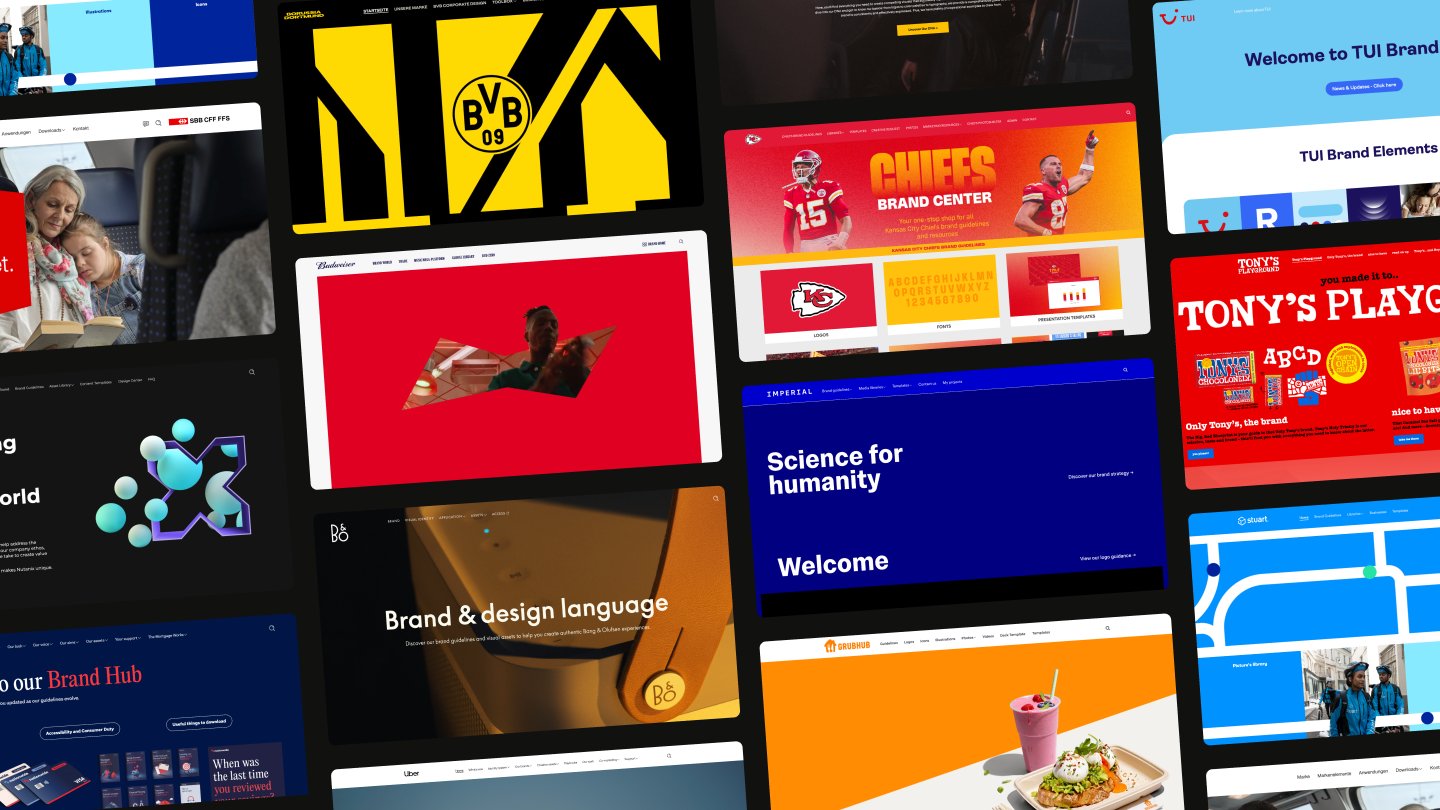


'What are the best Cloudinary alternatives?' is a tricky question to answer because Cloudinary serves two distinct purposes – media transformation and delivery on one hand, digital asset management on the other. That means the right Cloudinary replacement depends on the functionality you need.
Cloudinary customers could be developers looking for lightning-fast media delivery to ecommerce sites; marketing teams struggling to find assets as media libraries grow; or brand managers trying to reclaim control over fragmented workflows.
Whoever you are and whatever your reason for considering Cloudinary alternatives, we've rounded up the ten of the best to help you find the right fit.
What is Cloudinary?
Cloudinary is a cloud-based service – hence the name – that helps websites and apps manage, transform, and distribute images and videos.
It originally started as a tool for developers. The main idea was to make it easy to:
- Upload media (like images and videos) from users or apps
- Store it in the cloud instead of on your own servers
- Transform it automatically (resizing images, changing formats, etc)
- Optimise delivery so images and videos load fast on any device
- Speed up load times through fast global networks (CDNs)
That’s the developer-led media transformation and delivery element. The ‘developer’ part is key, as it often uses coding to automate the processes above.
Later, Cloudinary added digital asset management functionality, aka DAM. DAM is concerned with centralizing digital assets to make them easier to find, access, identify, use, and manage throughout their lifecycle – from first upload and ongoing use, to retirement and archiving.
The right Cloudinary alternative for you will depend on which of these functions you’re looking for. Below, we’ve divided our recommendations according to use case, to help you jump to the right sections.
Why do teams look for Cloudinary alternatives?
Teams typically look for Cloudinary alternatives because they want to double down on one specific element of Cloudinary’s offer. This divides into two camps – developers vs creatives.
- Developers sometimes outgrow Cloudinary’s tech core and look for alternatives that offer higher performance, self-hosting, a leaner stack, or more specific functionality (for example, ecommerce tools)
- Creatives – like marketers, brand managers, designers – often find Cloudinary doesn’t meet their advanced needs for digital asset management, brand governance, and production workflows.
Plus, because Cloudinary was built primarily for engineers, much of the routine asset work requires developer time. This leaves brand and marketing teams waiting on engineering for things they could self-serve in other platforms.
Finally, there’s pricing. It’s not that any one platform offers better value than another. It’s more the lack of clarity that teams struggle with. Cloudinary’s credit-based model bundles bandwidth, storage, and transformations into a single metric. This makes costs hard to predict and manage, which isn’t ideal when budgets are always under the microscope.
Ultimately, the most expensive switch is the one that doesn’t deliver the functionality you need. Choosing the wrong platform doesn’t just blow your budget; it wastes time, effort, and goodwill on migrating to a tool that won’t work. That’s why picking a Cloudinary alternative needs to be based on Jobs To Be Done, not just features and finances.
The best Cloudinary alternatives for digital asset management and brand teams
Frontify: Best for brand-governed DAM
What is Frontify?
Frontify is the brand orchestration platform that helps organizations make their brand usable, scalable, and consistent across every team, tool, market, and channel. Its DAM sits at the core, bringing digital assets together with interactive brand guidelines, digital and print templates, design systems, approval workflows, and AI agents in one governed system.
Frontify's DAM gives teams version control, rich metadata, clear usage rights, advanced search, and role-based permissions, so people can quickly find approved images, videos, logos, and other assets. Those permissions let teams control access across departments, regions, and external partners, so everyone gets the assets and guidance they need without opening everything up.
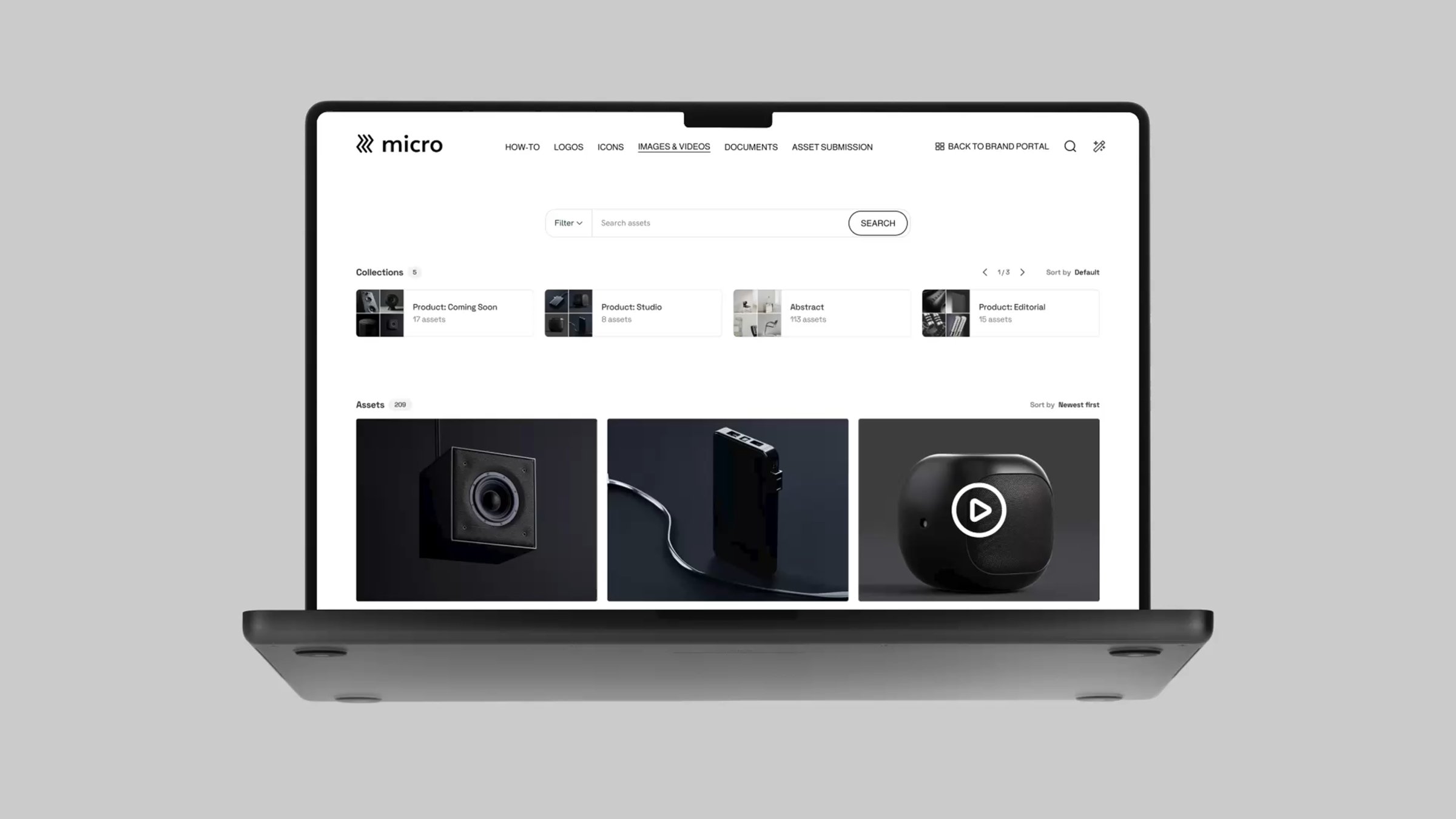
Around that DAM core, Frontify helps organizations:
- Centralize, organize, locate, use, and govern their brand assets securely
- Feed AI tools the brand context they need to produce on-brand work, not generic output
- Keep every piece of content consistent with brand guidelines, whether made by people or AI
- Scale on-brand content creation safely, with humans and AI working from the same source of truth
Because guidelines, assets, and templates live in one connected system, Frontify becomes brand context AI can actually read. Frontify's MCP server connects AI tools like Claude, ChatGPT, and Cursor directly to brand assets, guidelines, and templates, so AI outputs stay on-brand without anyone hand-feeding context (a brand-intelligence connection Cloudinary's media API does not offer).
Frontify's Brand Assistant lets teams query their brand guidelines in natural language, so anyone can get answers on brand rules without digging through documentation. For global organisations, multilingual support means the same brand knowledge is available across regions and languages.
Brand teams can create dynamic, self-serve brand portals that make guidelines interactive, always up to date, and readable by both people and AI. This removes the confusion and version issues that come with static PDFs, cutting day-to-day support requests and keeping teams on-brand.
Designers can build locked templates in tools like Sketch, InDesign, Figma, or Storyteq, so marketers and other non-designers can create on-brand content quickly, without the risk of altering logos, colours, fonts, or layouts. Paired with AI, those same guardrails keep automated content on-brand too.
Why is Frontify a strong Cloudinary alternative?
Frontify is a strong Cloudinary alternative for teams that need brand governance, advanced digital asset management, and a better way to activate brand assets, and AI, across the organisation.
The key difference is that Frontify solves a different job from Cloudinary's developer core. While Cloudinary is designed to transform and deliver media at pace, Frontify is designed to help organisations manage, govern, and apply their brand consistently at scale, across every team, tool, and AI.
For teams that have ended up with a tool built around technical media workflows, Frontify provides a different approach: interactive brand guidelines instead of static PDFs, locked templates instead of constant design requests, and brand context AI can read instead of assets it can only guess at.
Crucially, that doesn't mean trading away delivery. Frontify runs a real-time media engine that optimizes and serves images and video on the fly: smart cropping, adaptive compression, next-gen formats, and pixel-perfect responsive sizing, delivered through a global CDN and available via a developer API. So teams get fast, high-performance media delivery and the governed, AI-ready brand context that keeps every output on-brand at scale.
Who is Frontify best for?
Frontify is best suited to midsize and enterprise brand and marketing teams (roughly 200 to 1,000+ employees) managing multiple brands, regions, or partner networks.
It is particularly useful in environments where consistency, governance, and cross-team brand adoption are key. By bringing brand infrastructure, digital assets, and templates together in a single platform, Frontify empowers people and AI tools to create on-brand, compliant, and consistent content.
What should buyers keep in mind when comparing Frontify and Cloudinary?
When comparing Frontify and Cloudinary, buyers should keep in mind that Cloudinary offers deeper developer transformation tooling for teams building media-heavy digital products. That is its core, and specialist platforms tend to go furthest on their core.
Frontify does support real-time media optimization and delivery, through its media engine, developer API, and CDN, but its primary purpose is helping organisations manage their assets and apply their brand consistently.
Bynder: Best for standalone DAM
What is Bynder?
Bynder is one of the better-known digital asset management systems on the market, targeting large businesses and enterprises. It offers core DAM functionality – storing, organizing, managing, sharing, and facilitating use of brand assets – alongside more advanced tools for asset transformation and automation.
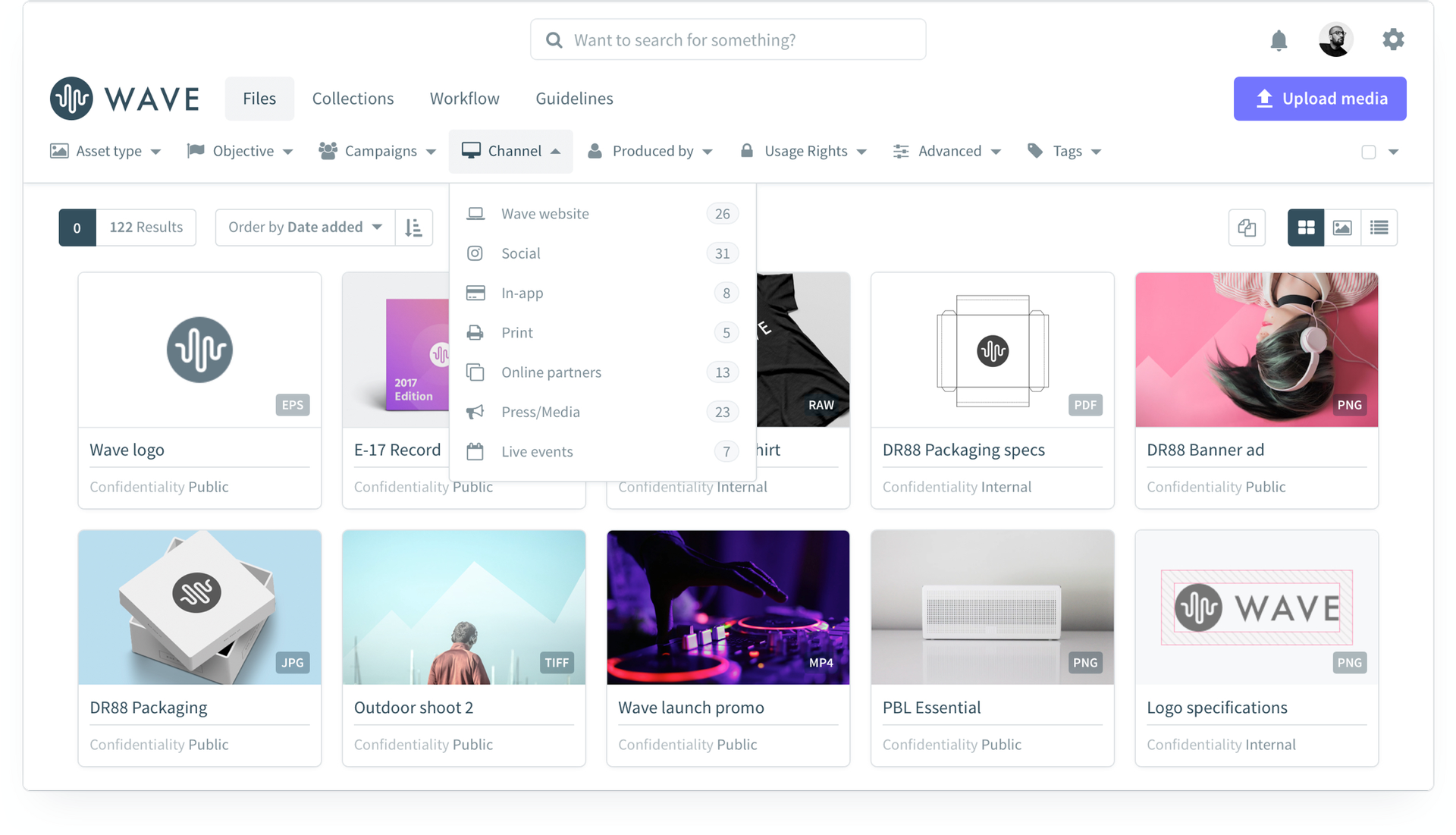
Why is Bynder a strong Cloudinary alternative?
Bynder is a strong Cloudinary alternative for brands that have outgrown Cloudinary's DAM functionality as they've scaled. Cloudinary excels at transforming and delivering media, but its DAM offer is supplementary rather than core. Bynder, in contrast, is a dedicated, standalone DAM, with a strong focus on asset governance, taxonomy, and organization.
Who is Bynder best for?
Bynder is best for large and/or distributed teams that need centralized control of their digital assets in a dedicated DAM. Bynder solves a common problem faced by many enterprise or global marketing teams: how to ensure everyone in the organization uses approved, up-to-date digital assets to reflect the business.
By providing intuitive self-serve access to assets for internal teams and external partners – as well as advanced controls to admin users behind the scenes – Bynder helps even the biggest businesses control the complexity of their content.
What should buyers keep in mind when comparing Bynder and Cloudinary?
Bynder is primarily a standalone DAM and not a media transformation or delivery API, so customers looking for a delivery engine may be better served by the alternatives later in this article. As a dedicated DAM, it offers a large functional footprint and extensive customisation, which means more implementation, admin, and financial overhead than lighter-weight options. Teams that want DAM and brand governance in the same system, rather than a DAM on its own, should weigh that against a brand orchestration platform like Frontify.
Orange Logic: Best for large-scale media libraries
What is Orange Logic?
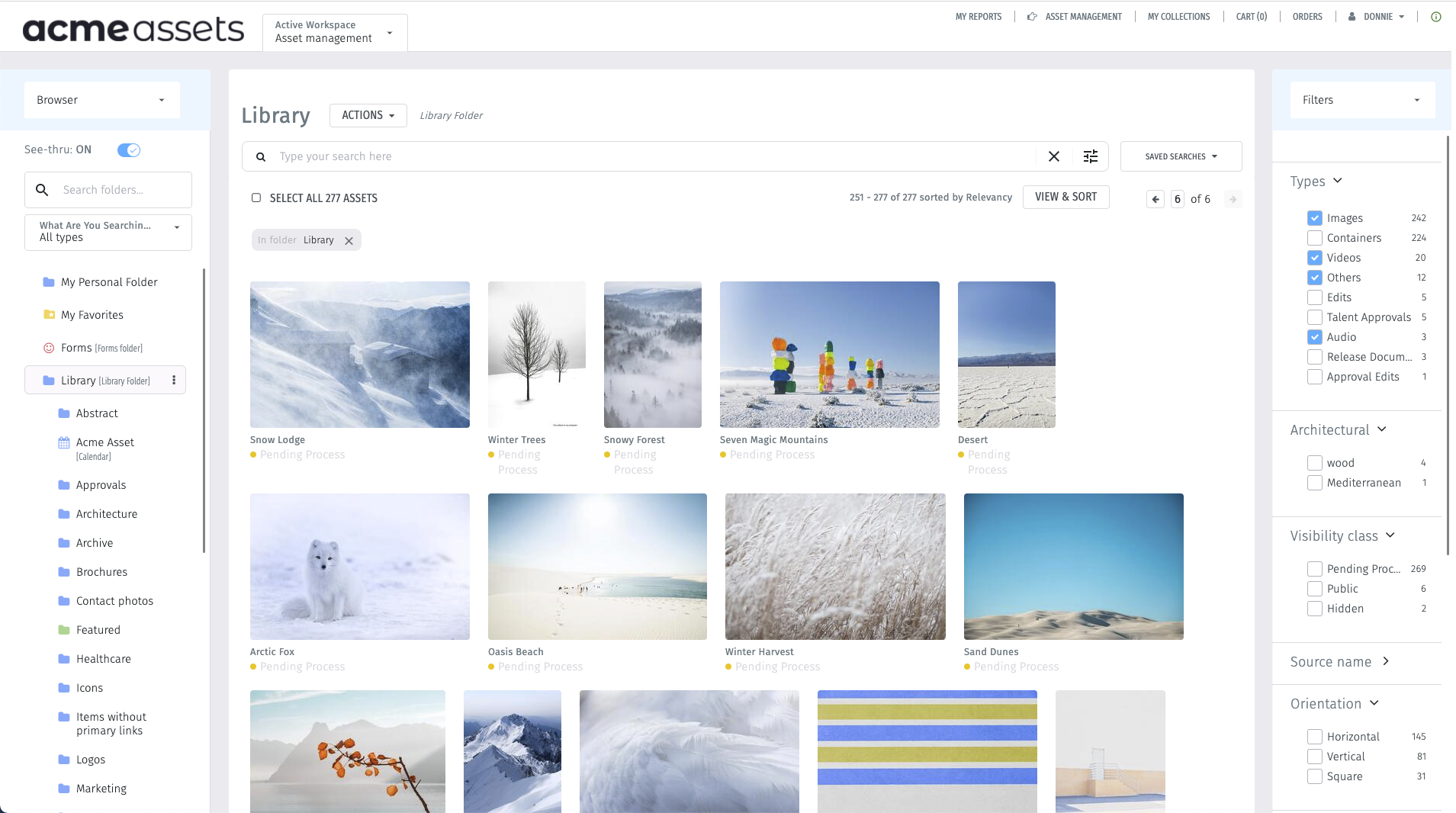
Orange Logic is an enterprise digital asset management platform, built around its Cortex product, designed for organizations managing very large and complex media libraries. It goes beyond core DAM to combine media asset management, digital rights management, workflow tools, and long-term preservation in a single system.
It is built for scale, handling high volumes of images, video, documents, and 3D assets, with AI-powered search, automated tagging, granular permissions, and extensive integrations across the wider tech stack. This makes it a common choice for content-heavy and regulated sectors such as media and entertainment, healthcare, financial services, museums, and NGOs.
Why is Orange Logic a strong Cloudinary alternative?
Orange Logic is a strong Cloudinary alternative for enterprises that need to manage and deliver large volumes of media without giving up governance. Like Cloudinary, it is built to handle high volumes of assets at scale. Unlike Cloudinary, its focus is on structured asset management, rights, and governance across the entire content lifecycle, rather than transformation and delivery alone.
For organizations that have outgrown Cloudinary's DAM functionality but still need serious media-handling capacity, Orange Logic offers depth on both fronts: the scale to manage millions of assets and the governance controls to keep them organized, compliant, and secure.
Who is Orange Logic best for?
Orange Logic is best for large enterprises and institutions with substantial, complex media libraries and strict governance requirements. It suits organizations that need to manage assets as structured, rights-managed content across many teams and departments, and that value deep customization and extensive integrations over out-of-the-box simplicity.
What should buyers keep in mind when comparing Orange Logic and Cloudinary?
When comparing Orange Logic and Cloudinary, buyers should keep in mind that Orange Logic is an enterprise DAM rather than a developer-first media delivery platform. It offers significant scale and customization, which also means more implementation effort and a heavier setup than lighter-weight tools. For teams whose core need is programmatic transformation and delivery, a developer-focused option may be a better fit.
Aprimo: Best for regulated industries
What is Aprimo?
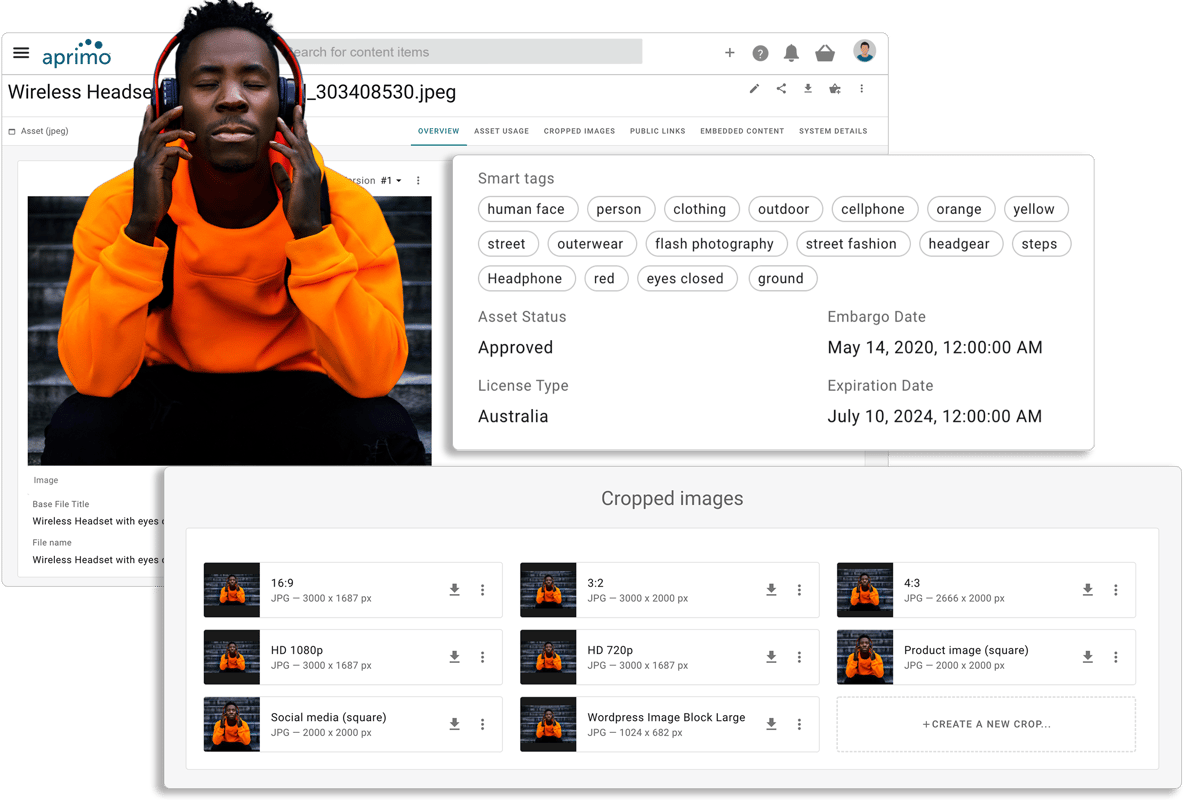
Aprimo is an enterprise content operations platform with digital asset management at its core. Alongside DAM, it includes planning, workflow automation, marketing spend management, and personalization, designed to manage content across its lifecycle rather than storage alone.
Its focus on governance, permissions, audit trails, and compliance makes it a common choice for regulated sectors such as financial services, healthcare, and insurance. It has recently added agentic DAM features, where AI agents assist with tasks like tagging, compliance checks, and content variants under human oversight.
Why is Aprimo a strong Cloudinary alternative?
Aprimo is a Cloudinary alternative for organizations whose challenge is content governance rather than media delivery. Cloudinary focuses on transforming and delivering media. Aprimo focuses on controlling content across its lifecycle: how it is planned, produced, approved, governed, and reused, with the audit trails and compliance controls regulated teams need.
For teams with strict governance requirements, Aprimo covers ground Cloudinary does not. For teams that mainly need fast media transformation and delivery, it is a heavier fit.
Who is Aprimo best for?
Aprimo is best for large enterprises in regulated industries such as finance, healthcare, and insurance, where content must meet strict governance and compliance standards. It suits organizations that need to manage content at scale across many campaigns, channels, and regions while maintaining tight control and traceability.
What should buyers keep in mind when comparing Aprimo and Cloudinary?
When comparing Aprimo and Cloudinary, buyers should keep in mind that Aprimo is an enterprise content operations platform rather than a developer-first media delivery tool. Its governance depth comes with more implementation effort and cost than lighter-weight options. Teams whose core need is programmatic media transformation and delivery may be better served by a developer-focused platform.
Acquia: Best for integration into your martech stack
What is Acquia?
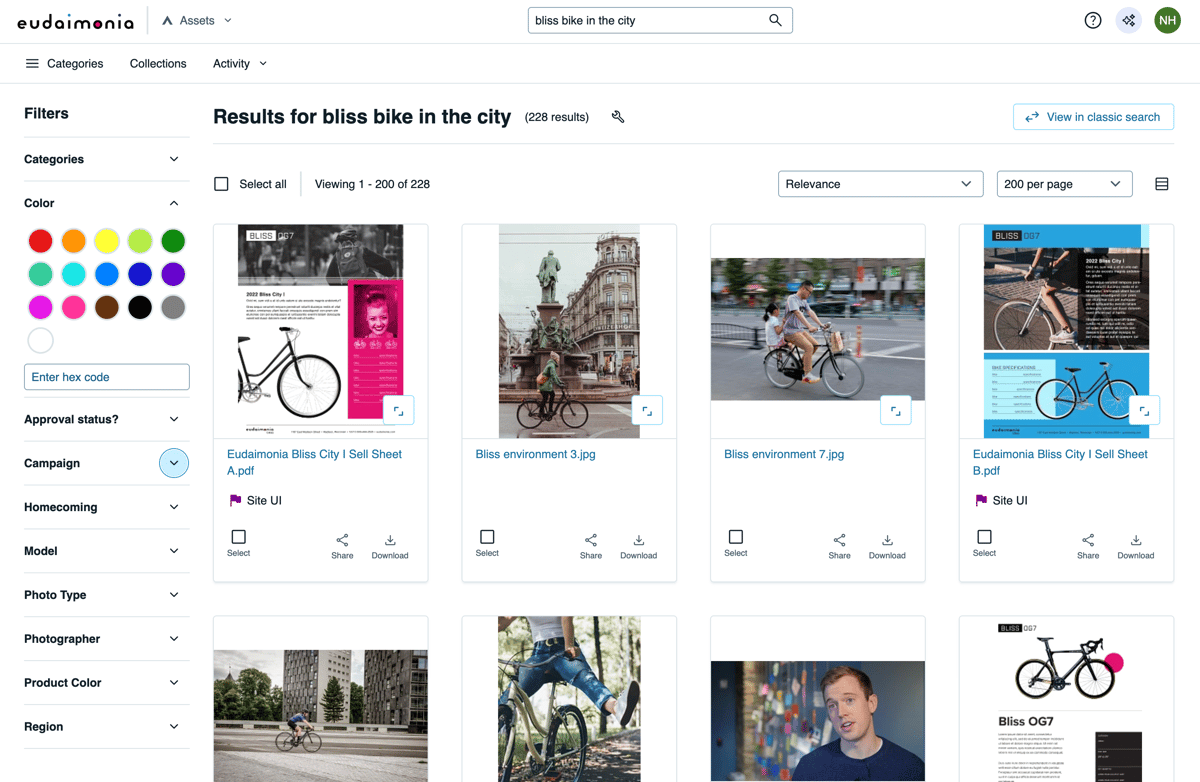
Acquia (formerly Widen) is an enterprise digital experience platform. It offers a wider range of functionality than Cloudinary and the other platforms in this section, combining DAM, CMS, PIM, content operations, website governance, Drupal integration, and more.
The DAM functionality is designed for organizations that need to manage assets as structured data, maintaining integrity and governance across a range of platforms and departments. Assets are accompanied by metadata and other information to ensure they can be identified and used appropriately as they travel through the digital ecosystem.
To support this, Acquia includes AI tagging, product information management functionality, and 200+ integrations across relevant tools in the wider martech ecosystem – including ecommerce, marketing, and CRM.
Why is Acquia a strong Cloudinary alternative?
Acquia is a strong Cloudinary alternative for brands that want a single control centre for their entire digital ecosystem – from AEO and AI content creation to website development and digital asset management. With a heavy focus on AI and automation, it's ideal for brands looking to scale operations through human-AI hybrid workflows.
Who is Acquia best for?
Acquia is best for enterprise teams that need deep integrations and robust asset governance within a broader tech ecosystem. It is especially well-suited to retail and ecommerce thanks to PIM functionality and storefront integrations.
What should buyers keep in mind when comparing Acquia and Cloudinary?
When comparing Acquia and Cloudinary, buyers should note that this is the heaviest lift from our choice of DAMs. It requires more IT involvement and time to implement. And like the others in this section, Acquia is not primarily a media transformation platform.
The best Cloudinary alternatives for developers: content transformation and delivery
ImageKit: Best overall for developers
What is ImageKit?
ImageKit is a developer-first platform for real-time media optimization, transformation, and delivery – much like Cloudinary. It sits in the delivery layer of the stack and focuses on real-time transformation and distribution of visual assets through a global CDN. It also has an integrated digital asset management system to help marketing and brand teams manage and work with visual assets.

Why is ImageKit a strong Cloudinary alternative?
ImageKit is a strong Cloudinary alternative because it is the closest like-for-like comparison in terms of functionality – but with a lighter-weight setup and simpler pricing structure.
While Cloudinary is positioned as a full-stack media platform with more extensive functionality, ImageKit focuses on doing one thing very well – namely, fast media optimization. It makes it easy for developers to integrate high-performance image and video using URL-based transformations and simple APIs.
Who is ImageKit best for?
ImageKit is best suited to web and mobile teams that want Cloudinary's developer capabilities with lower complexity and more predictable pricing. It is ideal for startups, scaleups, and engineering-led teams that want high performance without the high price tag. It's particularly valuable to teams where web performance and Core Web Vitals are critical KPIs.
What should buyers keep in mind when comparing ImageKit and Cloudinary?
When comparing ImageKit and Cloudinary, it's worth looking beyond their developer tools to their digital asset management capabilities too. Cloudinary includes a more comprehensive DAM, with stronger support for asset governance like version control. ImageKit's DAM is tailored specifically towards storage for media delivery and therefore lacks depth in governance capabilities.
Imgix: Best for high-performance enterprise delivery
What is imgix?
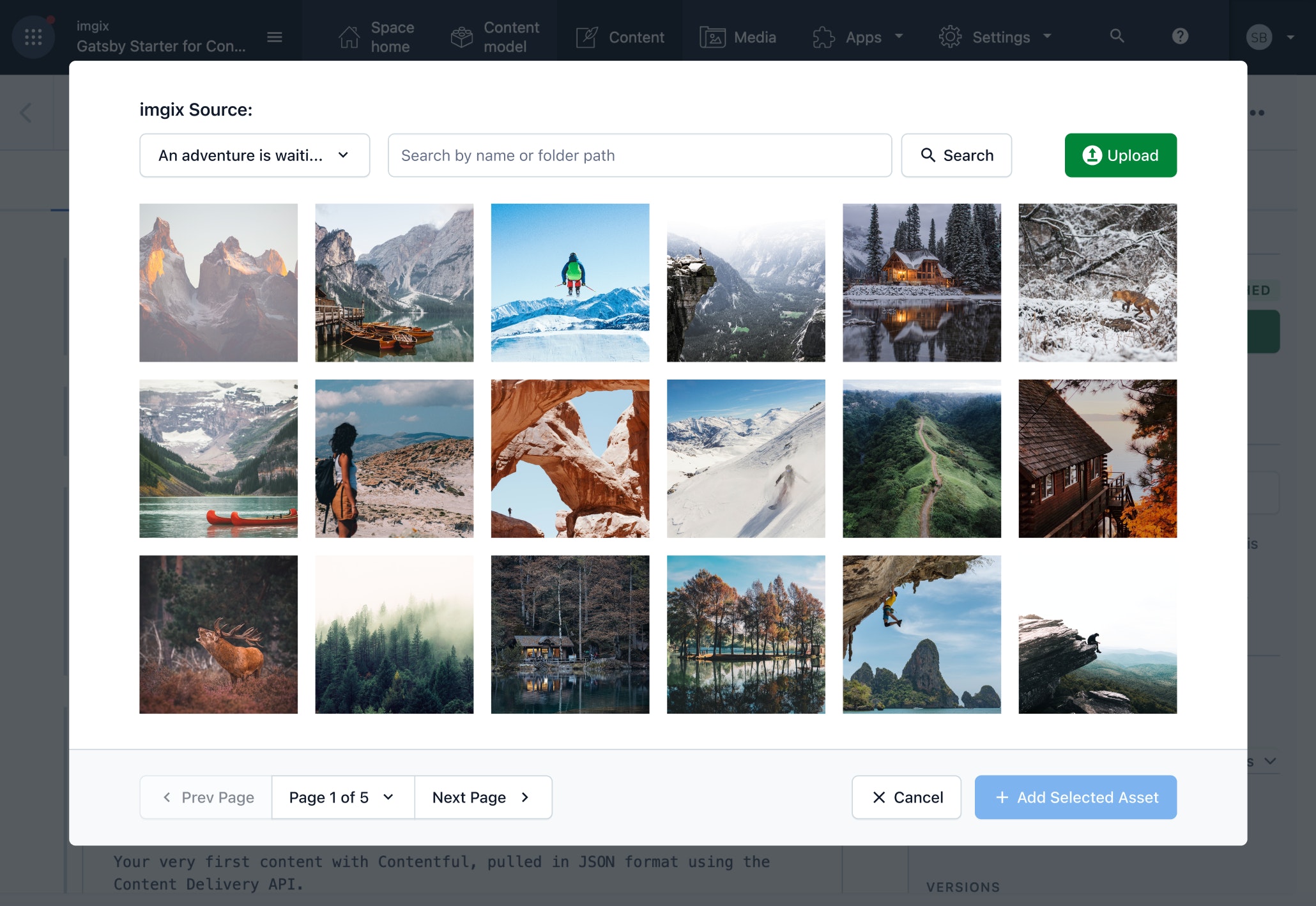
Imgix is another delivery-focused platform that is optimized for engineer-led teams. Like Cloudinary and ImageKit, it enables media-rich businesses to transform, optimize, and deliver images to devices and platforms, fast.
As one of the pioneers of URL-based image transformation, imgix is especially strong in this area. Video functionality has recently undergone a major upgrade (July 2026), moving imgix from a narrower focus to broader appeal.
Behind-the-scenes, automatic optimization means code-free conversions, while AI-powered transformations generate visuals in seconds. On the delivery side, imgix boasts 99.99% uptime, high-density POPS, and 50ms average response time for cached content.
Why is imgix a strong Cloudinary alternative?
Imgix is a strong Cloudinary alternative because it offers similar visual asset transformation and delivery tools but with one major advantage: speed at scale. Imgix offers the usual transformation and optimization capabilities as other platforms – such as background removal, focal point crops, and automatic compression – but with backend and customer-facing performance as the priority.
Who is imgix best for?
Imgix is best suited to enterprise organisations and engineering-led teams serving high volumes of visual content, where performance, reliability, and scalability are critical. It's particularly well suited to businesses that need to deliver media quickly across multiple devices and regions without compromising quality.
What should buyers keep in mind when comparing imgix and Cloudinary?
When comparing imgix and Cloudinary, buyers should keep in mind that imgix remains more specialist, despite broadening functionality. It is the go-to for high-traffic, image-heavy, developer-oriented use cases. It is also worth noting that pricing complexity is similar to Cloudinary, whereas ImageKit is considered more straightforward.
Sirv: Best for ecommerce and rich media
What is Sirv?
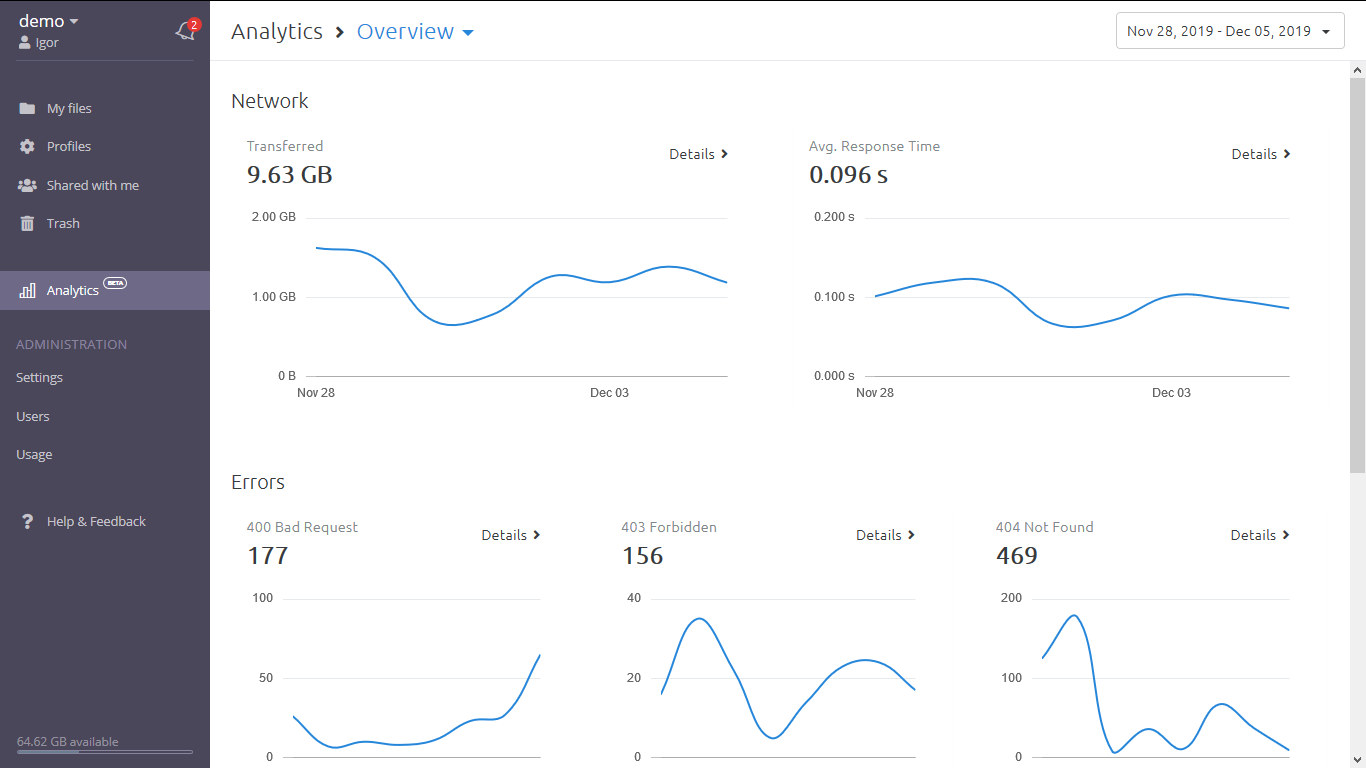
Sirv is a media platform that specializes in rich visual media for online stores. The ecommerce focus is reflected in Sirv's core functionality, which includes the usual image processing, resizing, and optimization, but also offers product visualization functionality including 360° spins and deep zoom. Much like the other platforms in our round-up, Sirv prioritizes media transformation and delivery but also includes delivery-focused digital asset management features.
Why is Sirv a strong Cloudinary alternative?
Sirv is a strong Cloudinary alternative because it combines high-performance media optimisation with ecommerce-specific visual processing. Small file sizes are ideal for apps and mobile commerce, lazy loading improves page performance, and responsive images automatically adapt to every device. This enables retails to create richer product experiences and convert more customers. It also includes delivery-focused digital asset management tools.
Who is Sirv best for?
Sirv is best for retailers and ecommerce brands because of its product-specific transformations. Not only that, but it also offers integrations with key ecommerce platforms including Shopify, WooCommerce, BigCommerce, PrestaShop, and Salesforce Commerce Cloud, to create a streamlined retail stack.
What should buyers keep in mind when comparing Sirv and Cloudinary?
When comparing Sirv and Cloudinary, buyers should keep in mind that although Sirv has a strong ecommerce focus, its transformation tools are equally applicable to other sectors. So don't be put off if your use case doesn't involve spinning sneakers or deep zoom. Sirv is well-suited to any visually rich application where fast, responsive media delivery is a priority.
Cloudflare Images: Best for predictable pricing at scale
What is Cloudflare Images?
Cloudflare Images is a managed image storage, transformation, and delivery service built on Cloudflare's global network. It provides core media capabilities including image storage, resizing, format conversion, and CDN delivery. For teams that also need video support, Cloudflare offers Cloudflare Stream as a separate product.
Why is Cloudflare Images a strong Cloudinary alternative?
Cloudflare Images is a strong Cloudinary alternative for teams that want reliable media delivery at scale with a simpler pricing model.
Like Cloudinary, it handles image transformations and delivery automatically, reducing the need for teams to build their own media pipeline. Its key difference is the simplicity of its pricing approach, which can make costs easier to forecast for high-volume use cases.
Who is Cloudflare Images best for?
Cloudflare Images is best for engineering teams that need managed image infrastructure at scale, particularly organizations already invested in the Cloudflare ecosystem. It is a strong fit for high-volume applications where performance, reliability, and predictable costs matter more than advanced media workflows.
What should buyers keep in mind when comparing Cloudflare and Cloudinary?
Cloudflare Images covers the core media delivery job well, but its transformation capabilities are narrower than Cloudinary's broader media platform. Also, because video is handled through Cloudflare Stream rather than Cloudflare Images, organizations needing a broader set of media workflows might find Cloudinary offers a more comprehensive solution.
imgproxy: Best open source, self-hosted option
What is imgproxy?
imgproxy is an open-source image processing server designed for fast, on-the-fly image transformation. It handles core image delivery tasks such as resizing, cropping, and format conversion, allowing teams to run their own media processing pipeline rather than relying on a fully managed service.
Why is imgproxy a strong Cloudinary alternative?
imgproxy is a strong Cloudinary alternative for teams that want control over their media infrastructure. Unlike the managed platforms in this section, imgproxy allows organizations to host and operate the image processing layer themselves. This can be valuable for teams with specific requirements around infrastructure control, data ownership, or operating costs at scale.
Who is imgproxy best for?
imgproxy is best for engineering teams that want a self-hosted media pipeline and have the technical capability to manage their own infrastructure. The trade-off for self-hosting is that teams take responsibility for running the system themselves – including infrastructure, storage, security, and delivery through a CDN.
What should buyers keep in mind when comparing imgproxy and Cloudinary?
When comparing imgproxy and Cloudinary, buyers should note that imgproxy does not provide the broader video capabilities, DAM functionality, or managed infrastructure offered by Cloudinary. Plus, the trade-off of self-hosting is that teams take responsibility for running the system themselves – including infrastructure, storage, and security.
How to choose the right Cloudinary alternative
The first step to choosing the right Cloudinary alternative is relatively simple – and it should be clear from the comparisons above. Ask yourself: do you need programmatic media delivery, or digital asset management and brand governance?
Once you've answered that question, you can immediately discount many of the options above. A brand team struggling with asset adoption does not need the same tool as an engineering team optimizing image delivery for millions of requests.
From there, the right choice comes down to a few practical considerations.
Pricing model and predictability
Look beyond the headline price and understand how costs behave as usage grows. Some platforms like Cloudinary use credit or usage-based pricing, where costs can increase with storage, bandwidth, transformations, or delivery volume. This makes costs difficult to predict. Others use tiered or subscription models that may be easier to forecast.
Platform ownership and ongoing maintenance
Consider who will actually use and manage the platform day-to-day. Developer-focused tools often assume engineering ownership, which makes sense for media delivery workflows. But if the main users are marketers, designers, or brand teams, a technical platform may create unnecessary bottlenecks.
Delivery and performance requirements
For developer-focused use cases, performance is often the deciding factor. Consider:
- How much traffic do you need to support?
- How quickly do assets need to load?
- Which formats and transformations do you need?
- How important are CDN performance and global availability?
A platform that works well for a small website may not be the right choice for a high-volume application.
Brand governance needs
For marketing and brand teams, the question is less about delivery speed and more about control. Consider whether you need simple storage or more advanced functionality like:
- Brand guidelines and portals
- Templates for self-service content creation
- Approval workflows
- Permissions controls
Customization and migration effort
Some platforms offer significant functional footprint and customization opportunities – with a price tag to match. But do you need all of the capabilities on offer? The more complicated the system, the higher the effort to implement it. If you plan to grow into the system you buy, this could simply be the cost of futureproofing your investment. But if a system offers more than you'll ever need, look for a better fit to avoid unnecessary overheads.
Don't forget… do the demos
Feature lists rarely tell the full story. The best platform is the one that fits how your teams actually work – not simply the one with the longest list of capabilities. Test the tools with your own use case wherever possible.
How Frontify fits brand-led teams
If you've read this far and realised your challenge isn't media delivery but asset management, Frontify is worth a closer look.
Frontify isn't simply a digital asset management platform. It's the brand orchestration platform: a DAM at its core, wrapped in the guidelines, templates, and governance that keep every asset on-brand. Most DAMs store and distribute assets. Frontify does that and makes them usable by every team, tool, and AI.
That last part matters more every day. AI tools are only as good as the brand context they're given. Point them at a folder of raw assets and they'll produce off-brand work at scale. Frontify solves this by making your brand machine-readable:
- Interactive brand guidelines replace static PDFs, so rules stay current and accessible to people and AI alike
- Locked digital and print templates let non-designers create on-brand content without routing every request through your studio
- Digital assets sit alongside guidelines and templates, giving AI tools the full picture, not just the pixels
- Frontify's MCP server connects tools like Claude, ChatGPT, and Cursor straight to your brand assets, guidelines, and templates, so AI outputs stay on-brand with no one hand-feeding context
This makes Frontify the brand-context layer your AI workflows draw from. Not a platform with AI bolted on, but the platform effective AI workflows are built on.
Frontify is ideal for midsize to enterprise teams managing multiple brands, regions, or partner networks, where consistency and adoption decide the outcome. It takes two to three weeks to implement with low technical lift, so Frontify could be working for your brand by next month.