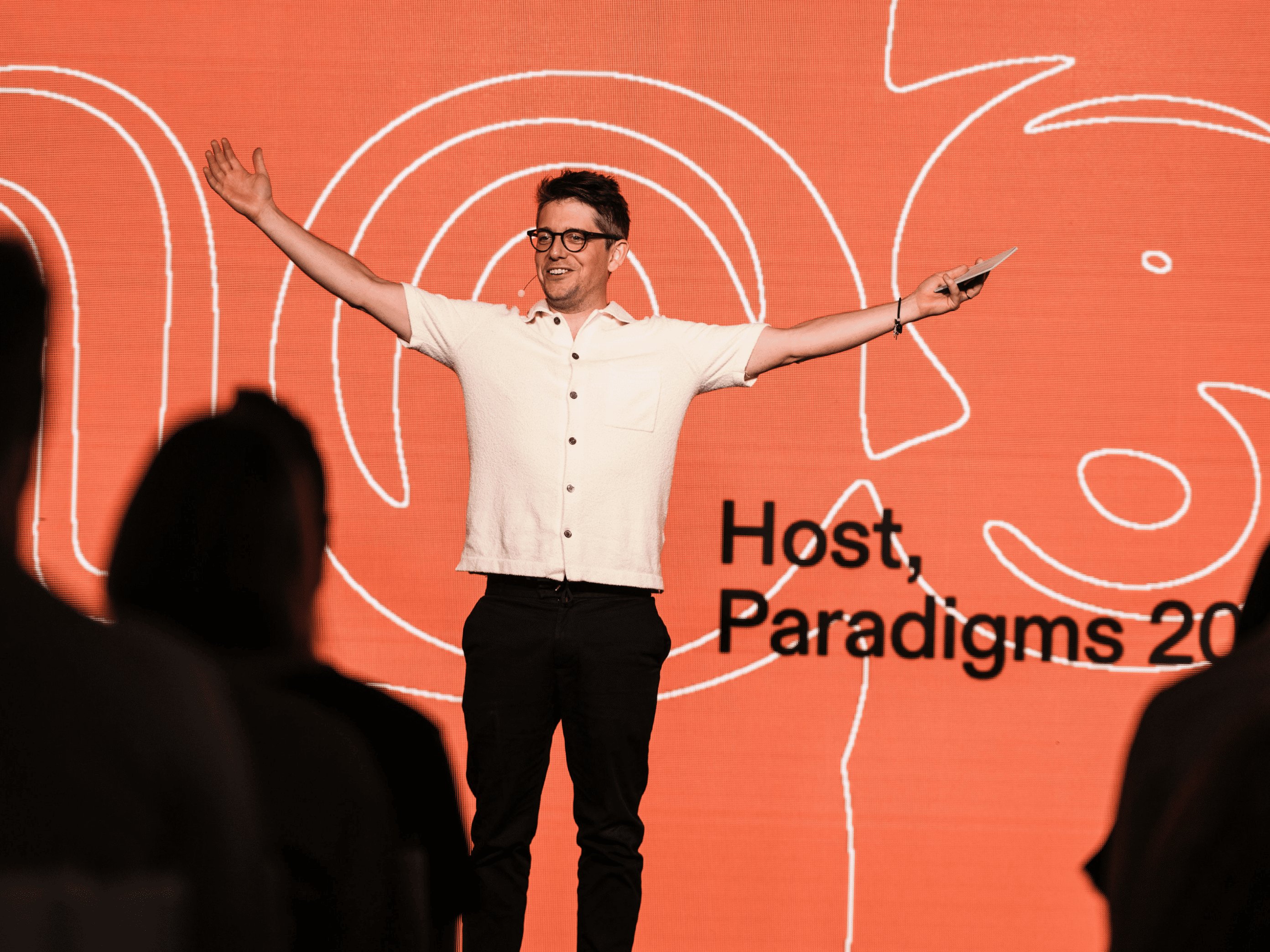
Standing out is our role
We were asked to be courageous from the start, with Jay Curley from Ben & Jerry’s providing ample evidence of the trust, loyalty and commercial value derived from supporting social causes and making bravery a discipline, not a stunt.
Courage of a slightly different type was at the heart of a passionate call to arms from Max Ottignon of Ragged Edge, who argued that creativity had become a dirty word. He encouraged us to be bolder and to persevere with work that generated an emotional response, however it manifested. To paraphrase the Spotify quote he used, no one gets annoyed about something to which they are indifferent.
Chris Nott and Connie Wemyss from Studio DRAMA expanded on this the following day, showing that in the world of type, distinctiveness isn’t just creative — it’s memorable too. As they pointed out, individuality isn’t simply chasing attention, it’s building recognition.
Boldness was at the heart of so much of the work we saw. BT and Uncommon Creative Studio’s antidote to the great telco ‘sameageddon’. J.P. Morgan and NotReal adding emotion to the otherwise functional finance space. Bayer and Design Bridge consciously challenging the all-too-familiar pink palette of women’s health. Tosh Hall’s truly distinctive approach to sharing JKR’s work for KFC. All dared to be different.
“Design hasn’t lost its voice, it’s lost its regional accent.”
— Brian Collins, COLLINS
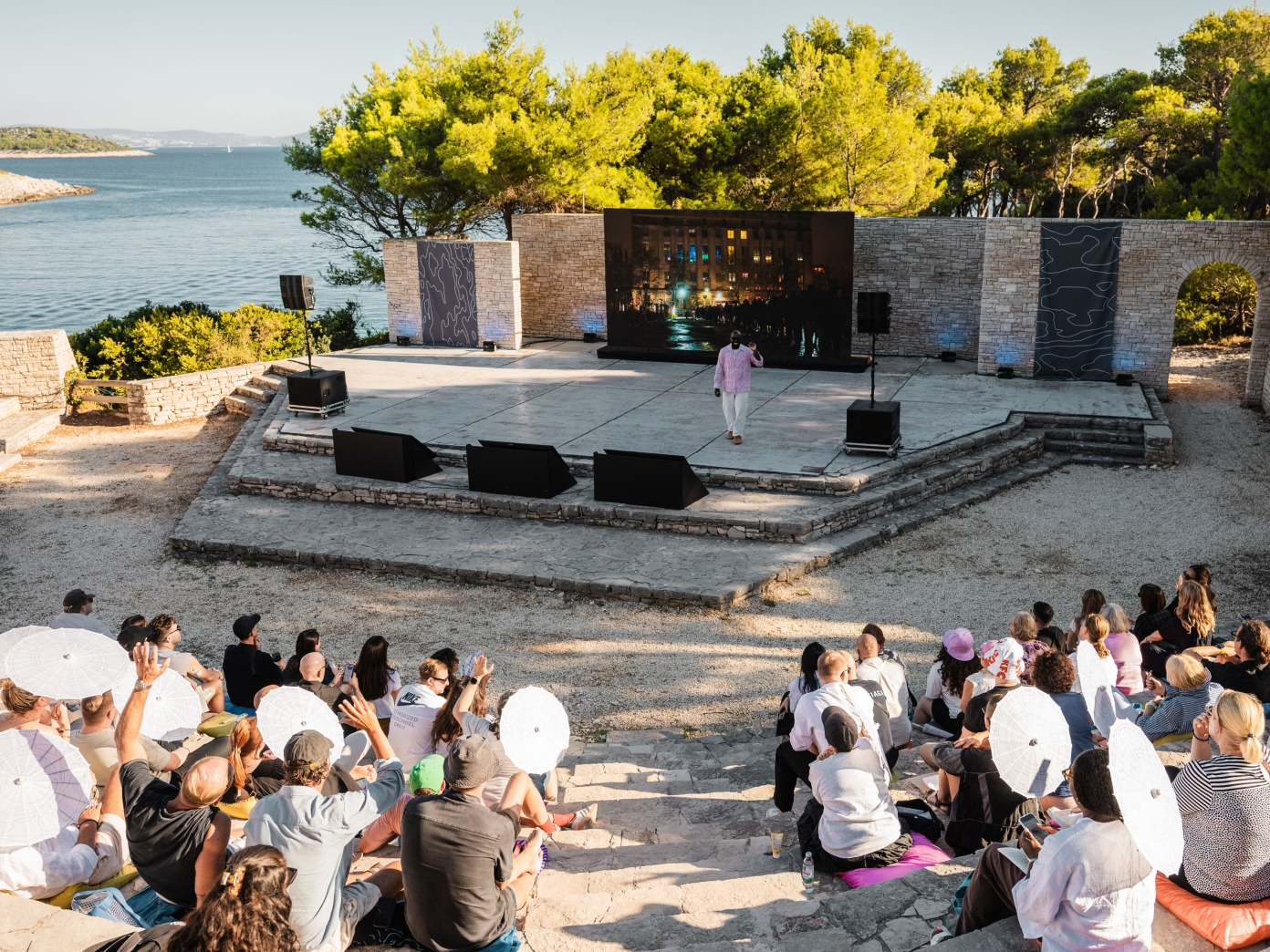
Engaging with communities is crucial
Room for Magic’s Nu Goteh reminded us of the critical role community plays in forming taste, and in doing so flagged the importance of boundaries in developing that most critically human element of design — discernment.
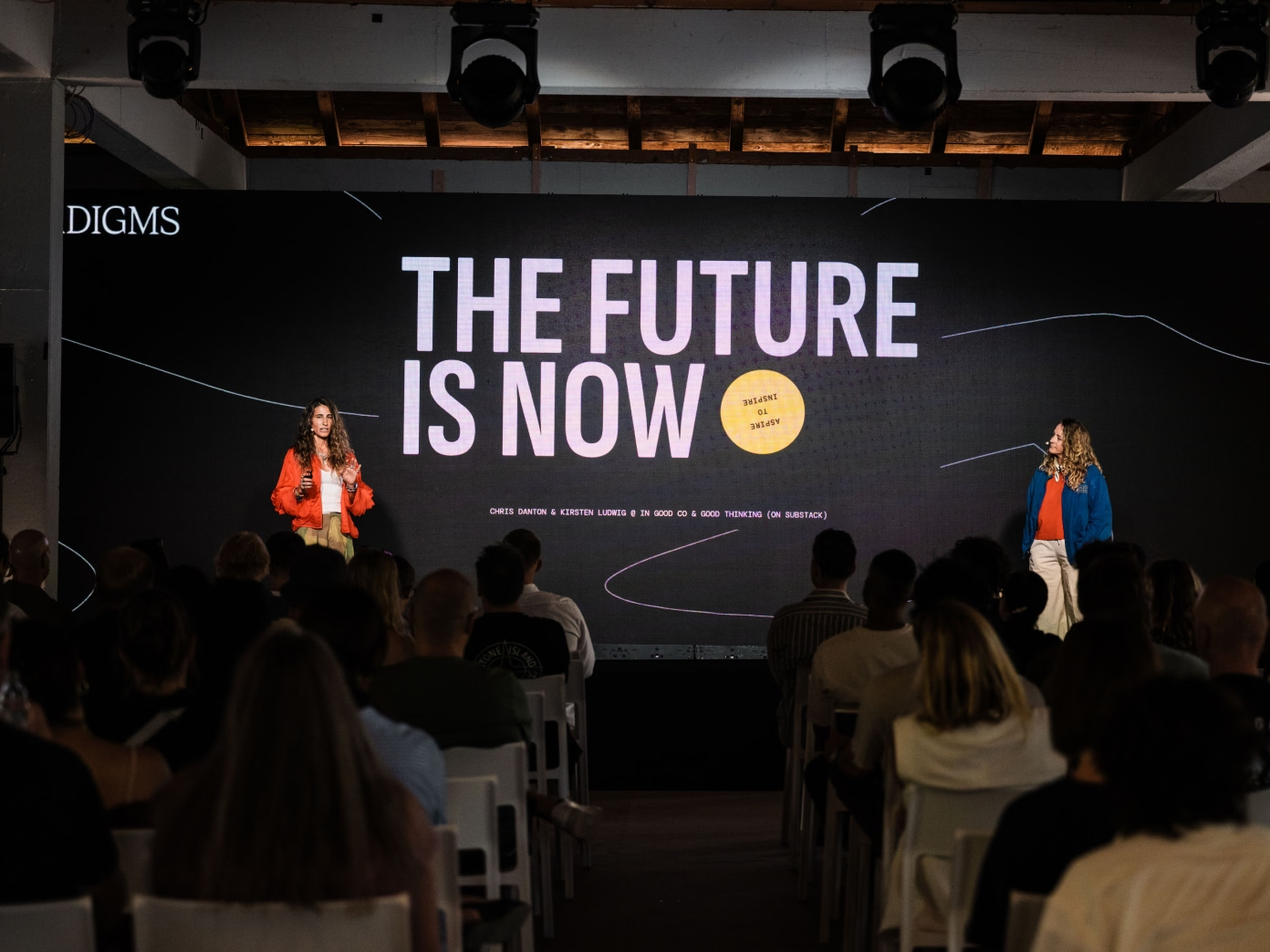
Chris Danton and Kirsten Ludwig of IN GOOD CO explored how brands interact with communities, extolling the need for an additive approach to engagement. It was striking that many of the stories we heard from the likes of YETI, Red Bull, and NASA showcased exactly that kind of approach in action.
Community takes many forms. As he told it, Vishal Kapoor’s creative leadership role at Lloyds Bank was focused on creating conditions for community to happen. Elizabeth Andia from The Wall Street Journal knew she needed to build a participatory, in-house community to name its new Scotch Roman typeface. And of course, community requires hosting, the very role that Brian Collins and Alex Athanasiou of COLLINS advocated brands take in order to create distinction.
"Participation is paramount to everything we do."
— Shannon Jager, OpenAI
Nurture the obsessive
Shane Hagerty and Austin McKenna of YETI, along with On’s Laurence Stoffel, reminded us that obsession doesn’t just kick-start a brand narrative. Carefully nurtured, it can turn a niche favorite into a global success story.
In evangelizing nerds, defined as having an unreasonable desire to get better at something, Laurence made a compelling argument for design to help protect that unreasonable thinking in order to deliver the memorable.
Time and time again, the work shared at Paradigms showcased perfectly what an obsessive honing of our craft looks like in real life. Genuine differentiation.
“An idea only matters if people feel it.”
— Lisa Smith, Uncommon Creative Studio
Participation requires letting go
Shannon Jager from OpenAI asked what ‘being open’ means for design and encouraged us to trust those engaging with our work, advocating that a creative system should learn from the people who use it. The pride with which David Rager from NASA shared the versions of the Artemis II mission logo that appeared within hours of the official reveal — including one drawn by hand, from memory, by a six-year-old — suggested an implicit faith in his community.
According to IN GOOD CO, the ‘Age of Authorship’ requires a mindset shift to let your brand be what your audiences want it to be. As Jay said from the beginning — brands that are meaningful are living brands.
"Being universal doesn't mean you need to be uniform."
— Chris Nott, Studio DRAMA
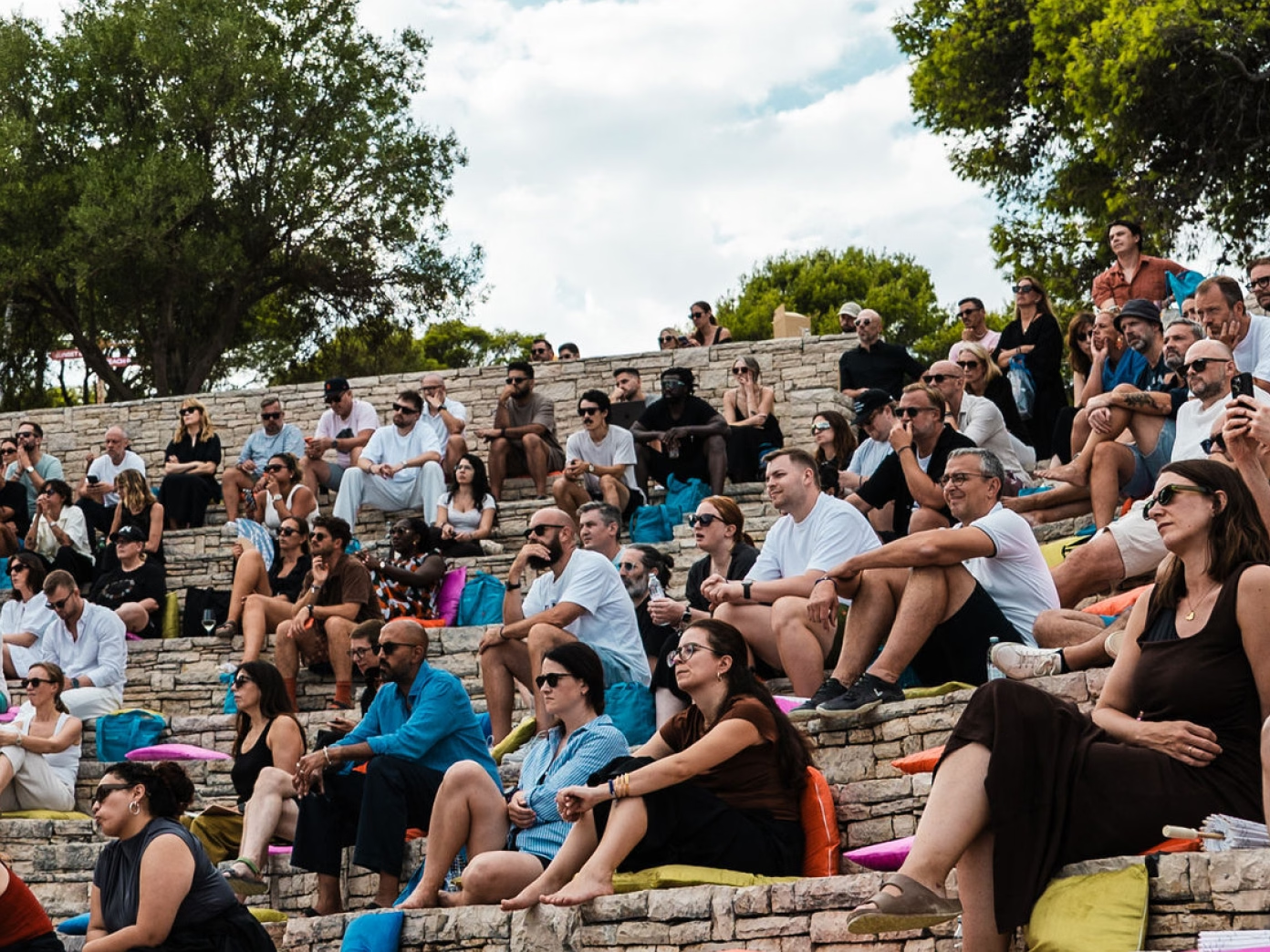
We are the work
Perhaps the most revealing, and most defining, lesson was seeing the power of craft, taste, and discernment take center stage.
The last year has been dominated by conversations around AI — how it’s transforming the industry, its power to build faster and scale further. Take IN GOOD CO’s enlightened prophecy that your biggest competitor is the teenager sitting on your couch, coding from their phone.
Though the technological shift is undeniably changing how we build, the talks we heard at Paradigms foregrounded communities, hosting, exploration, and bravery. The things we do together. The people required to make it happen. Paradigms made it clear that human judgment, inspiration, and creative exploration are still the engines powering the incredible work we do, even as the technical infrastructure changes.
Elizabeth’s poetic musings on the conditions needed to create good work reminded us that good work often comes from the tension between honoring heritage while moving it forward through time. We saw that play out gloriously at Paradigms 2026.
"The most important thing is what happens when a picture, a fact, a human achievement lands and quietly changes how we understand our place in the universe.”
— David Rager, NASA