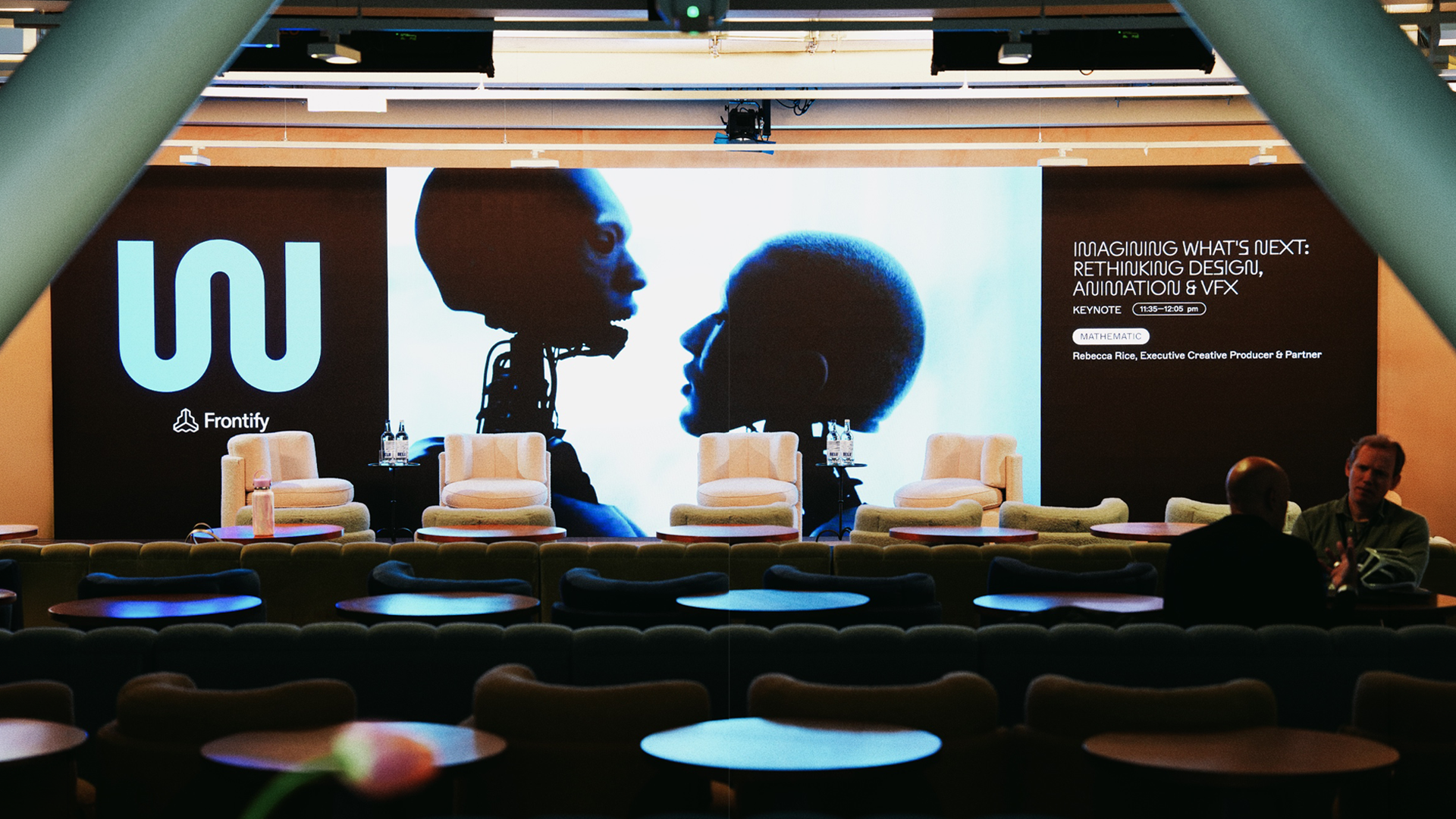
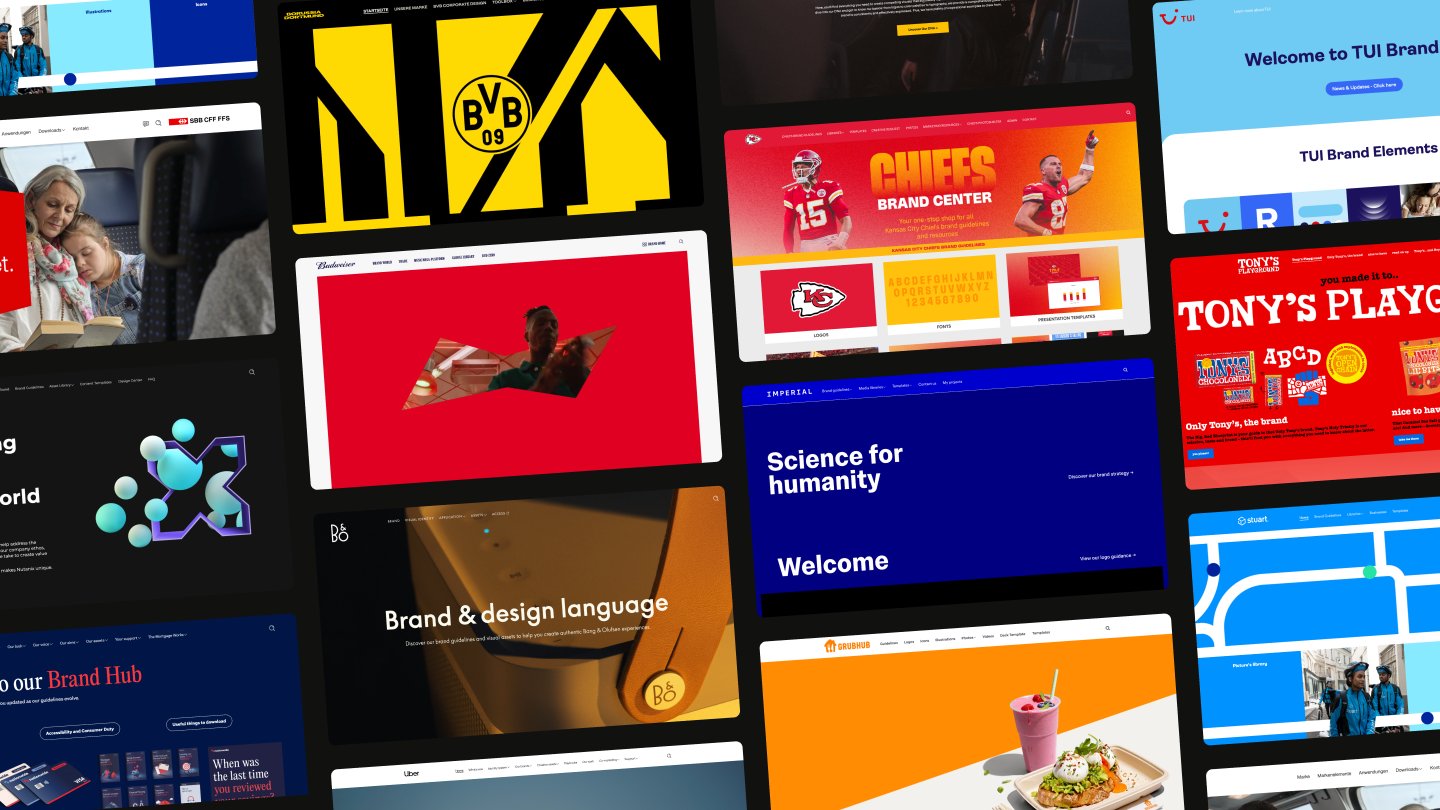

At a moment when discourse about AI and creativity swings between hype and panic, Pioneering Tomorrow: London Edition offered something more nuanced: a space for thoughtful, practice-led discussion. Hosted by W International and Frontify at 180 Studios on 23rd April, the invite-only summit brought together senior brand leaders and studios to examine how we can shape the future of brand, craft and creativity.
Rather than asking whether artificial intelligence is simply ‘good’ or ‘bad’, speakers focused on a more productive question: how should these tools be used, and what still needs to remain firmly human?
The overarching consensus was clear: Yes, AI is a transformative tool, but it’s not a replacement for human discernment.
AI is changing workflows, not replacing creativity
A central theme throughout the day was that AI is already reshaping creative workflows. As image quality, resolution and output speed improve, AI-generated content is becoming more viable in professional contexts – accelerating expectations around speed, experimentation, and delivery.
But speakers were careful not to view this through black-and-white thinking. “I don’t think it’s a binary choice,” said Bray Leino’s Chief Creative Officer, Wayne Deakin. “I don’t think AI is gonna take over the world… and I also don’t think it’s the solution for everything.”
Across the sessions, AI was framed as a speed and automation layer, useful for ideation, iteration, and removing repetitive tasks. But far less dependable when precision, nuance, feedback, and final production control are at stake.
That distinction was especially clear in discussions around advertising and brand production.
Framestore’s William Bartlett noted that while the technology is advancing fast, making an advert still demands human judgment across every layer – from casting and wardrobe to editing, pacing and performance. In brand work, the details don’t have to just work; they have to be exactly right – “there’s always going to be a need for people.”
Taste, craft and control are becoming the real differentiators
If access to creative tools is widening, then the competitive edge is shifting elsewhere. And when more people can generate polished-looking work, what matters is not just the ability to make something, but the ability to know what is worth making.
R/GA’s Rob Northam positioned this as a question of taste and strategic clarity: making high-craft decisions rooted in a strong understanding of the brand. Without that, even technically correct work can feel empty. “You could tick all the boxes,” he said, “but it doesn’t have a heart. Or it doesn’t have a soul.”
BBH’s Steve Ledger-Lomas echoed the point, suggesting that “taste is coming to the fore in a really spectacular way.” As polished outputs are easier than ever to generate, discernment becomes the real skill. “The ability to create is one thing,” he said, “but the ability to really refine the taste of what a brand is a totally different thing. That takes muscle memory, time, and experience.”
This aligned with a wider discussion about friction versus ease. Mills Leonard challenged the idea that every creative process should be made seamless, arguing that constraints are often what make the work stronger. “If you don’t have friction,” he said, you lose “the challenge that allows creativity.” People need something to push against; “that’s probably where the best creative work is done.”
Why human craft still matters
That pushback against frictionless automation also appeared in the renewed value placed on physical making and lived experience.
Wayne Deakin recalled a project for a Ubisoft games company where a blacksmith was commissioned to make the logo by hand – a deliberate decision rooted in the world of the game itself, which centred on craft. Here, he emphasises that it is often easy to take the easy path, but harder to do the right thing.
As digital content becomes easier to generate, several speakers suggested that audiences may place greater value on work that feels tangible, embodied and human.
For institutions like the V&A, as Evonne Mackenzie noted, creativity is not only about personalisation or automation. It is about bringing “many, many people around the one single shared thing.” Its value lies in the fact that “a lot of what we do is really physical. It’s really real, and that’s kind of the whole point of it.”
WeTransfer Co-Founder and CCO Damian Bradfield also argued that people may become more drawn to work they can see, touch and trust. “I’m gonna be much, much more interested in seeing things with my own eyes, touching things with my own hands,” he said. “And I would reward those that make things physically themselves far more than anyone creating something digital.”
From faster content to adaptive brand experiences
The event also pointed toward a more forward-looking vision of AI-enabled creativity – one less focused on faster content production, and more focused on responsive, adaptive brand experiences.
Astral City’s keynote suggested that the next shift may move beyond screens and fixed interfaces toward more natural, context-aware interactions. Justin Crook of FIELD.IO expanded on this through the example of 113 Spring, describing a retail environment where technology is absorbed into the fabric of the store rather than presented as a visible interface.
In his words, the store’s physicality becomes connective tissue – a living, breathing space that reacts to how people behave.
In retail and experience design, this points to environments that “feel and understand and listen” to people, creating calmer, more responsive experiences rather than “technology talking at you”. For Crook, the foundation for this future is not simply intelligent retail or adaptive environments in isolation, but “a very strong brand system” that forms “the bedrock for everything that’s gonna come next” – one that can “evolve and adapt” depending on the application.
The future still needs people
Across the day, one message came through consistently: the future of creativity will not be defined by automation alone, but by the people shaping how those tools are used.
As Rebecca Rice of Mathematic put it, teams are “technicians as well as artists,” responsible for judging both “what’s coming” out of AI tools and what they are “feeding into these programs.”
Human perspective matters more, not less. And the future belongs to teams that can combine technological fluency with strong creative standards, clear brand thinking and a distinct point of view.