- Category killers reshape sectors, not just their visuals
- Strategic disruption requires solving real human needs
- Successful brands tackle taboos and remove barriers
- Focus on behavioral change over superficial difference
- Build long-term community over short-term distinction
Key takeaway: True differentiation comes from fundamentally remaking categories with purpose, not just disrupting their surface conventions.
In a risk-averse market, data-driven decision-making and client caution risk homogenizing branding across all sectors. We must urgently redefine what makes a brand truly distinctive.
After a decade chairing the Brand Impact Awards (BIA), where work is uniquely judged within its market sector context, I’ve observed a crucial pattern: True category killers don't just resist visual blandification — they fundamentally reshape their sectors through strategic disruption. Looking at a cross-section of BIA winners from the past five years, we can see this principle in action across diverse sectors.
1Robinhood challenged a conservative investment category, replacing fear and opacity with clarity and access.
Consider Robinhood, 1 COLLINS' Financial Services Gold winner and Best of Show contender from 2021. Retail banking has seen its share of humanization — from First Direct in 1989 to Monzo and a wave of more recent fintech challengers. But the investment world remained remarkably conservative. High barriers to entry and opaque language have created a system that thrives on fear and confusion.
For Robinhood, COLLINS imagined the world in 50 years 2, where society has embraced a more collective, inclusive view of investment. Imaginative illustrations translate abstract concepts like ETFs (exchange-traded funds) into relatable metaphors, and infographics make complex matters accessible to new investors. BIA judge Johanna Drewe, partner at Studio Output, called it a “game-changer for the finance category” for its “simplification of bamboozling topics.”

2By imagining a more inclusive future, Robinhood made complex investment concepts feel human, relatable, and accessible
3Bodyform showed how confronting taboo can unlock both cultural impact and category leadership.
In healthcare, we've seen a wider movement toward tackling long-established taboos. This evolution reflects a fundamental shift in how brands approach sensitive topics, driven by changing consumer expectations and the need for more authentic connections. For instance, Bodyform revolutionized period-care marketing with multi-award-winning narratives normalizing menstrual blood 3, with other brands following — while The Gut Stuff opened conversations about digestive health.
Elmwood's BIA Silver-winning rebrand of Preparation H (2022) continues this momentum. By bringing unexpected warmth and wit to the awkward world of hemorrhoids 4, the brand achieved cut-through in a traditionally clinical category while defending against challengers. BIA judge Spencer Buck, CCO at Taxi Studio, noted that it “tackles a sensitive physical and emotional subject with humility, humor, and de-stigmatizing design.”
4Preparation H challenged clinical category conventions by approaching a sensitive subject with warmth and wit.
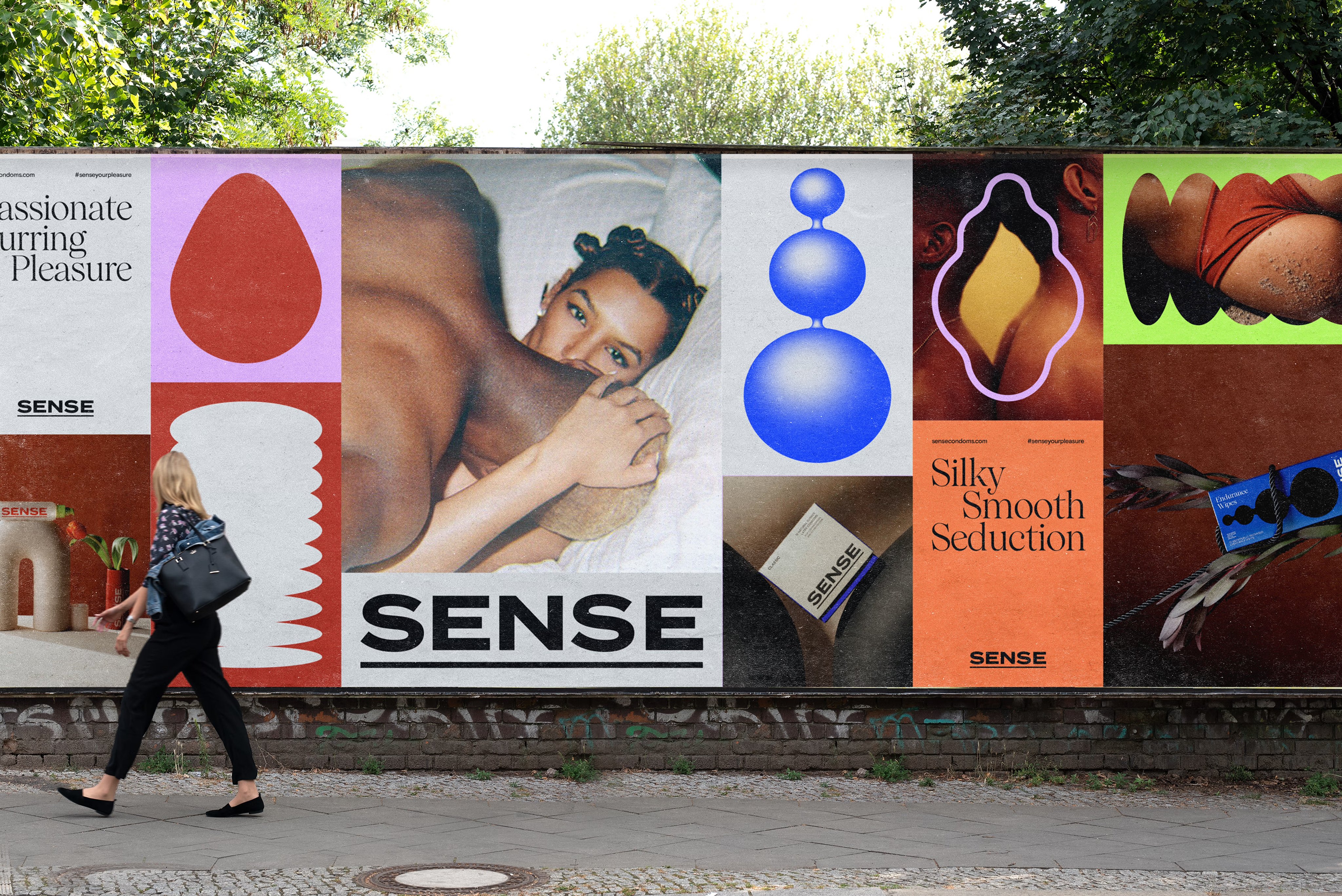
5By aligning with Gen Z’s evolving views on intimacy, Sense made shelf stand-out feel culturally fluent.
Two years later, BUCK's BIA Silver-winning work for Sense (2024) responds to Gen Z's evolving relationship with physical intimacy 5, creating a cheeky-yet-sophisticated brand that acknowledges changing attitudes while maximizing shelf standout in a typically discrete category.
Coffee Foundation, a Bronze winner in the not-for-profit category in 2024 and shortlisted for the Social Impact Award, demonstrates how category-breaking thinking can tackle profound social challenges. In Switzerland, 48% of people see mental health as one of the country’s biggest issues — but enduring cultural stigma stifles open discussion. The Mental Health Association Switzerland identified coffee’s universal role as a conversation starter, creating the country's first-ever mental health awareness brand to spark nationwide debate and help diffuse the taboo 6.
Looking to 2026 and beyond, visual distinction alone won’t cut through. Brands must focus on behavioral innovation, creating new patterns of interaction that solve real human needs. Superficial disruption without strategic purpose risks damaging trust, while over-automation can strip away the human elements that make brands meaningful.Success requires balancing several factors:
- Cultural understanding over category conventions
- Behavioral and attitudinal change over visual difference
- Long-term community building over short-term differentiation
As market pressures and technological tools push brands toward safe, predictable solutions, success depends on elevating category disruption from a creative exercise to a core strategic capability. The future belongs to brands that don't just break categories — they remake them with purpose.
6Coffee became a catalyst for mental-health conversation through Coffee Foundation’s category-breaking approach.