Your marketing team launches their big seasonal campaign, while sales rolls out some new lead nurture series, but each team is using slightly different fonts, color palettes, and core messages. As a result, your brand looks unprofessional and your teams lose hours redoing work to bring both projects into alignment.
The bigger companies get, with distributed teams working across different timezones and in different locations, it becomes increasingly important to document your brand standards. Without them, you risk inconsistencies and confusing potential customers as well as your partners and investors.
The best brand standards are living resources rather than static documents, and they exist alongside your guidelines, brand assets, and templates as part of a holistic brand ecosystem. Here’s what to include in your brand standards guide to make sure it’s an informative and practical resource for your teams.
What are brand standards (and why do they matter)?
Brand standards are comprehensive documentation that defines how a brand looks, sounds, and behaves across every touchpoint. They go far beyond basic guidelines, which typically focus on visual design elements like logos, colors, and typography.
Strong brand standards outline visual identity, messaging frameworks, usage rules, and operational procedures that keep teams aligned so they can execute consistently at scale. They give internal teams and external partners clear direction, reducing guesswork, and eliminating the risk of inconsistent execution.
Brand standards vs. brand guidelines: understanding the difference
Many teams use “brand standards” and “brand guidelines” interchangeably, and if you search on Google you’ll see the same thing. Both terms are used to describe a company’s brand documentation efforts, but in general:
- Brand guidelines usually cover a company’s visual identity and creative direction
- Brand standards cover visuals and creative identity, but then go deeper into core values, operational procedures, compliance requirements, and governance criteria.
While both terms are often used interchangeably, drawing a clear line between them can help your organization communicate expectations more effectively. Choose the term that best sets expectations for the level of detail and oversight your brand needs.
For example, if your brand needs quick creative direction for designers or agencies, “brand guidelines” may feel familiar and accessible. If you’re aligning large teams, managing regulated markets, or scaling globally, “brand standards” suggest depth, rigor, and accountability. Enterprise organizations often prefer the more comprehensive framing of “brand standards”, while small businesses may prefer guidelines which may sound more accessible to stakeholders.
The hidden costs of incomplete brand standards
Even small gaps in brand documentation affect your organization, creating unexpected (and expensive) problems. Ignoring these gaps creates reputational risk, drains resources, confuses teams, and chips away at the brand identity you’ve worked hard to build.
External brand reputation damage
Inconsistent brand application erodes trust faster than you think. It weakens your competitive positioning because prospects struggle to understand what you stand for. Investors and partners also read misalignment as a sign of operational immaturity. Over time, this weakens your market position and undermines your brand’s credibility.
A fragmented visual identity, such as varying logos and colors across multiple channels, erodes brand recognition and recall, making it harder for your brand to stand out in a crowded market. Mixed messaging confuses customers and reduces sales conversions because people don’t recognise or believe the brand promise. And when proposal decks or RFP presentations look or sound different from your website, you lose the confident, professional impression that builds trust and closes deals.
Internal operational inefficiencies
Incomplete brand standards create internal friction, draining time and resources.
Teams spend hours debating color codes or typography choices that should already be defined. And creative or brand teams become bottlenecks, spending hours each week answering repetitive questions about basic brand information, or re-creating assets that already exist elsewhere.
These inefficiencies compound and cause delays to crucial initiatives, such as pushing campaign launches back or limiting the organization’s ability to respond quickly to market opportunities.
Legal and compliance vulnerabilities
Incomplete or unclear brand standards expose organizations to legal and regulatory risk that can be costly and reputation-damaging, particularly in highly regulated industries.
Without precise usage guidelines, teams may inadvertently misuse trademarks, logos, or proprietary messaging, creating potential infringement claims. In regulated industries, inconsistent messaging, such as incorrect product claims or labelling, can trigger fines, audits, or even enforcement from authorities.
Partner organizations using your brand incorrectly amplify these risks. Without detailed brand standards, partner and co-branding mistakes pose legal risks when third-party collaborators apply the brand incorrectly, potentially harming both parties’ reputations and creating liability.
What to include in your brand standards guide
A strong brand standards guide outlines every element your teams need to execute your brand consistently at scale. Clear documentation should explain what each element is as well as how to apply them in real work — from messaging and marketing campaigns to product experiences.
Brand foundations
Your brand foundations section should document the core elements that define who your brand is and why you exist: mission, vision, values, positioning, and personality. These foundational components anchor every creative, strategic, and operational decision, ensuring every team understands the core beliefs and direction that shape your brand.
Create positioning statements to explain your brand’s personality — how it shows up emotionally and stylistically. An easy way to represent this is using tone sliders to guide your brand voice and visualize your brand’s personality:
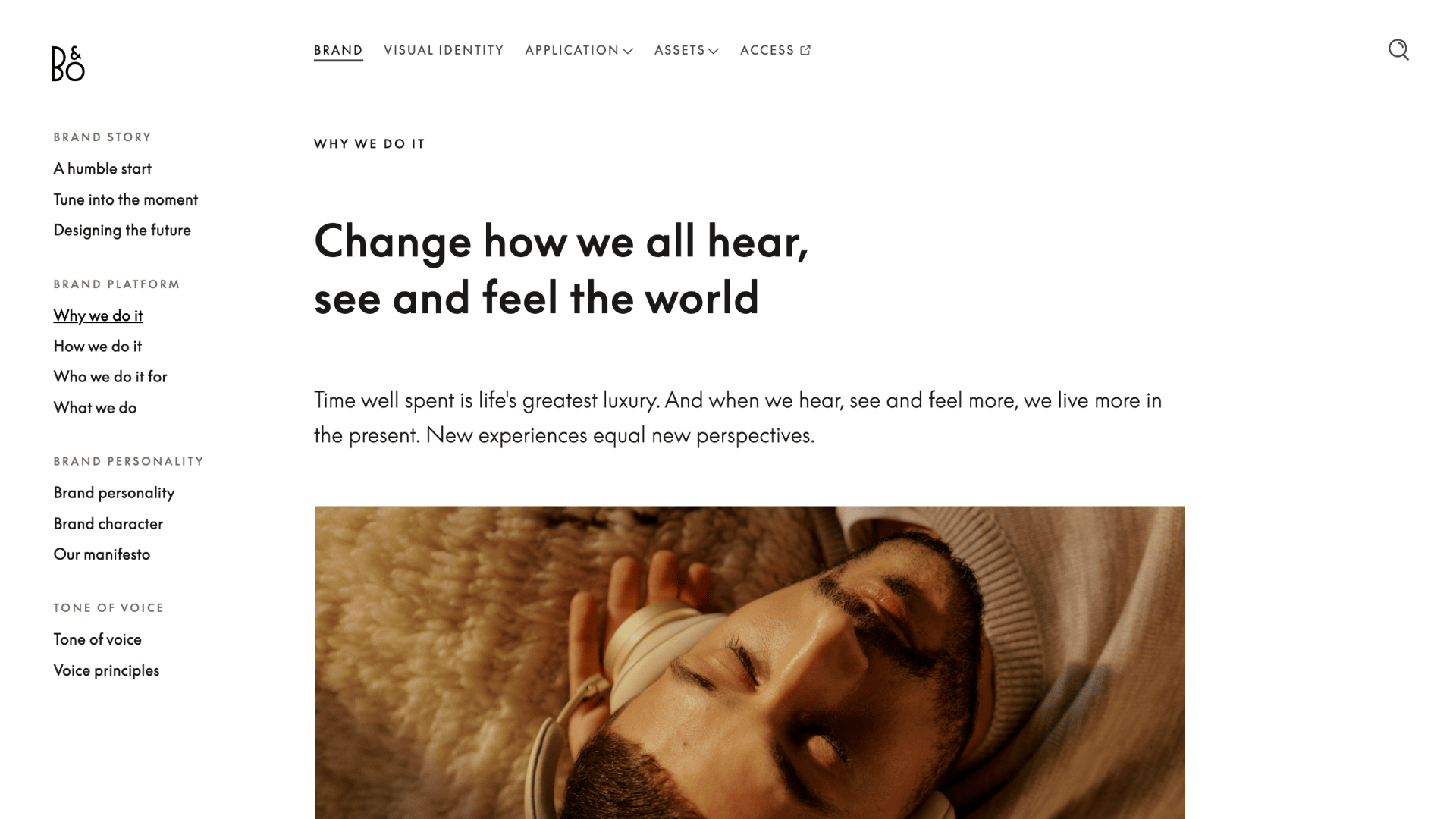
These will help teams bring your brand to life for different channels and contexts without introducing inconsistencies or causing confusion.
Logo system
Your logo usage guidelines should clearly document every approved logo variation, from primary and secondary marks to horizontal, vertical, black-and-white, and icon-only formats. This helps teams understand when and how to use each version so the brand logo stays consistent and recognizable across all touchpoints and digital platforms.
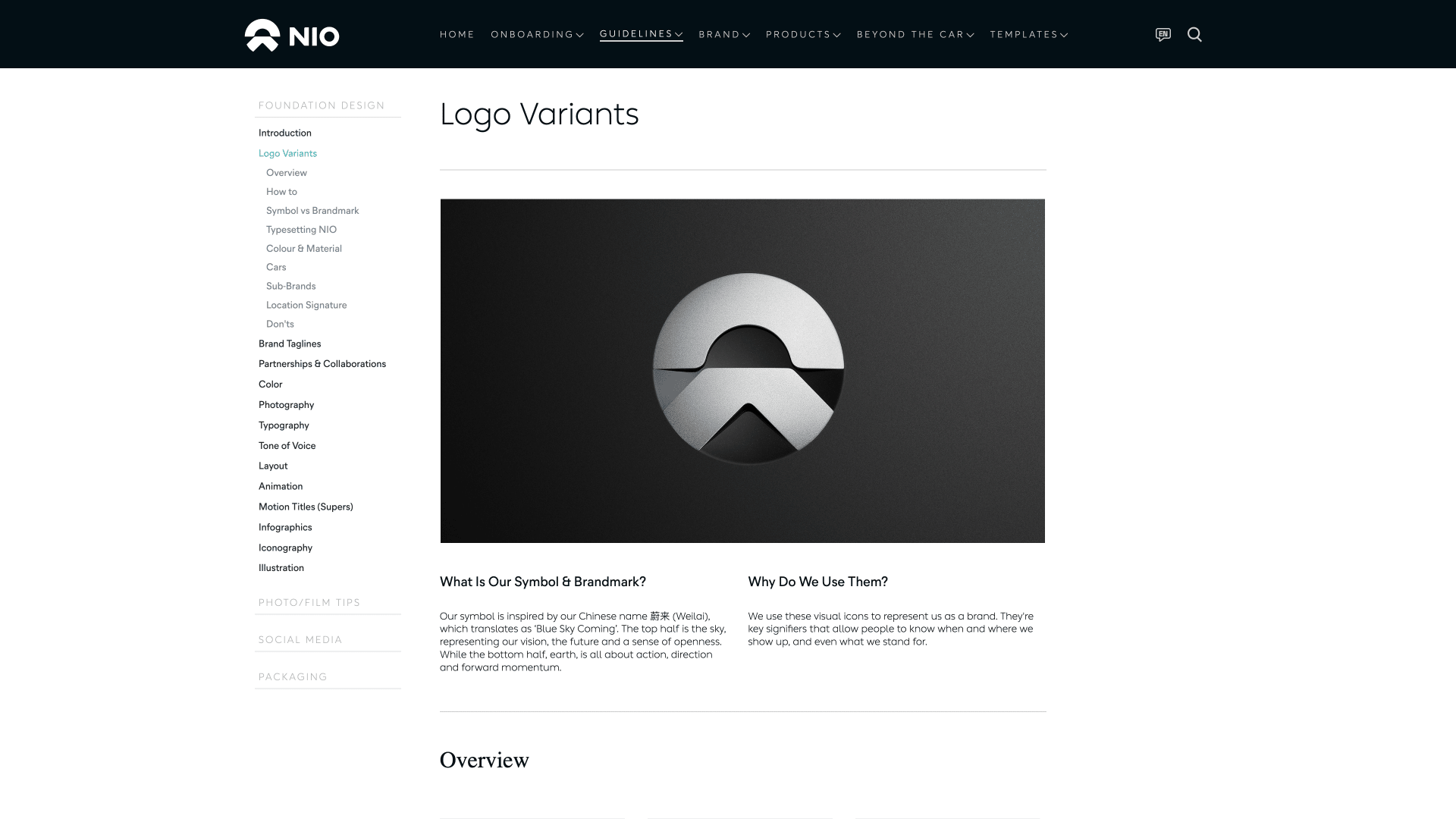
Your brand standards should also define clear space rules, minimum size requirements, and placement guidelines so designers and non-designers can use your logo consistently. Include easy-to-find download links so users can download the correct logo versions directly, rather than having to search through multiple folders to find the right files.
To make your brand standards even more helpful, include examples of visual “don’ts” that demonstrate common mistakes — like stretching, recoloring, adding effects, or placing the logo on low-contrast backgrounds.
Color palette
The color palette section should include all your brand colors with precise HEX, RGB, and CMYK values so teams can apply them accurately across digital and print channels. In digital brand standard documentation, you can embed interactive color chips so that teams can easily copy the exact values.
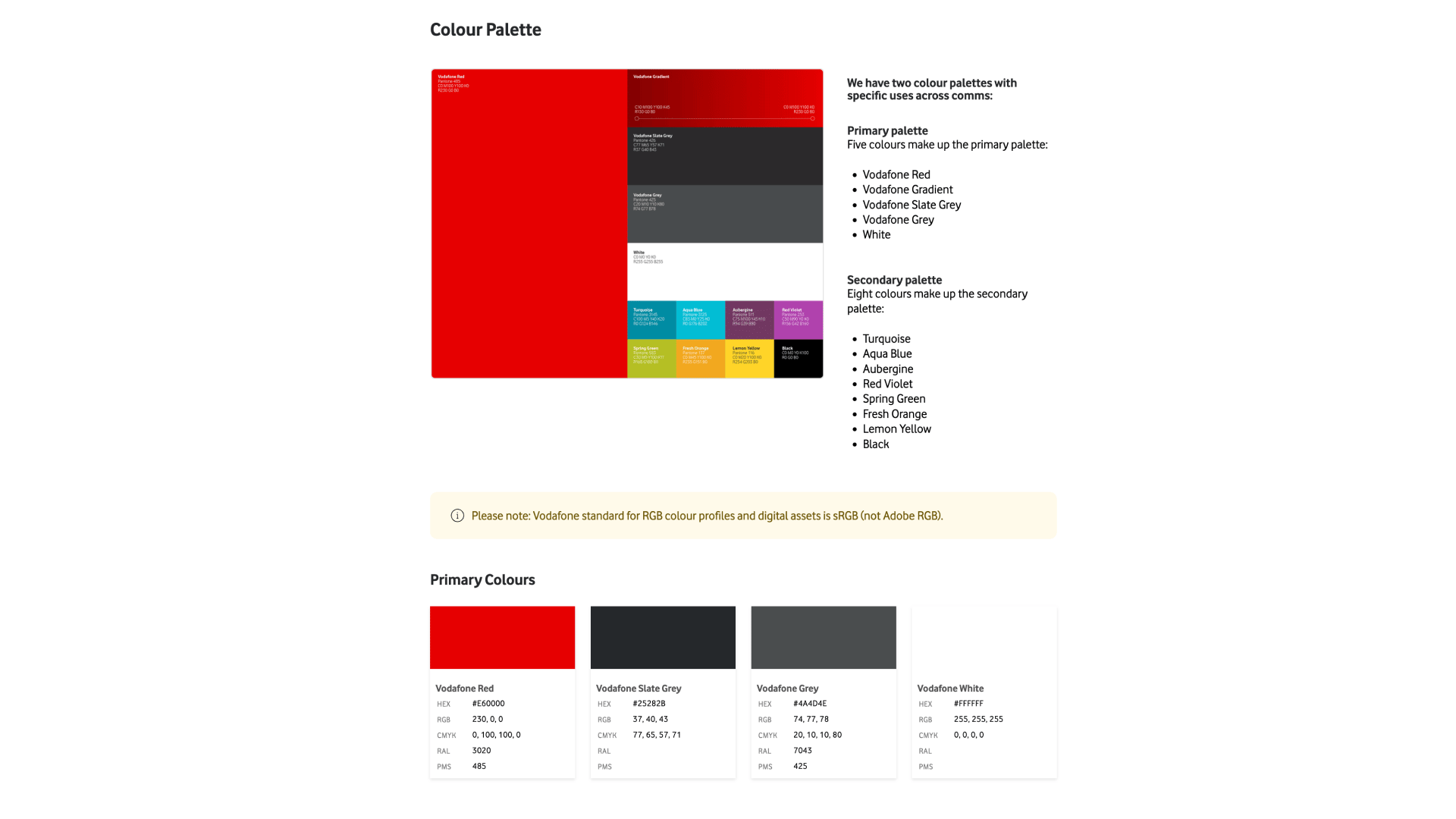
Define usage hierarchies, including primary, secondary, accent, and background colors, so teams know how to use brand colors in different applications. You should also include accessibility contrast ratios for key color combinations, text, and backgrounds, to ensure brand content is legible and complies with WCAG standards.
Typography
Your typography section should clearly document every approved typeface, including display, headline, and body fonts. Clear typography documentation helps teams avoid mismatched or unprofessional-looking documents.
Your brand standards should also specify fallback fonts for print and digital media to ensure consistency across different platforms and devices, preventing inconsistent substitutions. Include sample pairings and hierarchy examples so teams understand how fonts work together in headers, body text, captions, and calls-to-action. Highlight usage rules such as font weights, sizes, line spacing, and alignment to help teams maintain visual balance and readability.
Layout and spacing
The layout and spacing section should provide guidance to create a clear structure for visual materials. Well-documented layout standards reduce trial-and-error and create a cohesive visual experience across all media and touchpoints.
Document grid layouts, margin sizes, padding, and design tokens so designers and non-designers alike can maintain a cohesive look across all materials. Provide guidelines on how elements should align in different layouts for web, mobile, and print, including responsive adjustments for digital formats to ensure layouts scale effectively across devices.

Your brand standards could also include example layouts and templates that demonstrate proper spacing, alignment, and hierarchy across different types of collateral, such as web pages, emails, printed brochures, and social media posts.
Imagery and illustration
This section should explain how to use imagery to create a consistent visual identity and mood for your brand. A consistent image style strengthens brand recognition and ensures visuals support your brand identity. Well-documented visual rules and guidelines help creative teams maintain quality and consistency, and ensure every image feels unmistakably like your brand.
Define your brand’s preferred subject matter, lighting style, and illustration or iconography preferences. Include example images and illustrations that show correct visual styles, such as preferred composition, proportions, filters, or color treatment.

Explain any industry-specific restrictions around imagery, and provide guidance around copyright and licensing requirements to help users comply with industry or legal regulations. You could also include a “dont’s” list highlighting common mistakes like overused stock images, misusing copyrighted material, poor lighting, or inconsistent illustration styles.
Voice and tone
Tone of voice documentation helps translate your brand personality into writing that sounds consistent across every channel. Clearly-defined standards ensure that every email, social post, or ad sounds unmistakably like your brand, building trust and recognition over time.
Provide guidance for grammar, punctuation, and specific phrases that reflect your brand personality. Include concrete examples and rewrites that show the same message in multiple tones, and how to adapt your brand voice for different channels, audiences, touchpoints, and situations. This will help teams communicate your brand via written media without losing authenticity or creating misaligned content that doesn’t connect with your customers.
Messaging and copy
This section should provide reusable copy blocks such as taglines, CTAs, headlines, product descriptions, and company elevator pitches to save time and maintain consistency across written content. These boilerplate copy blocks empower marketing, sales, and other teams to communicate clearly at every touchpoint, creating a cohesive and consistent customer experience.
Include a “terms to avoid” list to prevent language that contradicts your positioning or weakens your brand voice. Explain how to adapt messaging for different channels, use cases, and audiences, and provide examples of on-brand vs off-brand copy. This guidance helps teams feel confident when drafting customer-facing copy.
Motion and interaction
This section is optional but increasingly important for digital-first brands. Document how your brand elements move and respond across digital touchpoints, including animation principles such as duration, transition, easing curves and timings. These will ensure smooth and consistent motion and interactive elements across websites, apps, and digital campaigns.
Your brand standards could include use cases for hover states, load animations, transitions between screens, and micro-interactions so teams know when and how to apply movement in a cohesive way. Provide examples and specifications for common interactive components like buttons, menus, and notifications. These guidelines will help you create engaging, polished digital experiences without undermining your brand.
Real-world applications
End your brand standards with a library of visual examples that show your brand in action. This section helps make your brand rules tangible and actionable. It also serves as inspiration, and can become a point of pride for teams when their latest campaign or slide deck gets used as an example for the rest of the business.
Look for real examples of brand content produced by different teams, such as social posts, presentation decks, billboard ads, email campaigns, marketing materials, and product packaging. Show examples from a variety of channels, regions, and formats to represent the breadth of brand applications within your organization. Add notes or a short description explaining what works, why it aligns with your brand standards, and what makes it so successful.
3 brand standards examples (from leading global brands)
There’s a lot of information to include in your brand standards. Here’s how leading brands document their standards in a way that’s engaging and still accessible to their teams, helping them understand and implement their brand without getting overwhelmed by all the details.
Kansas City Chiefs
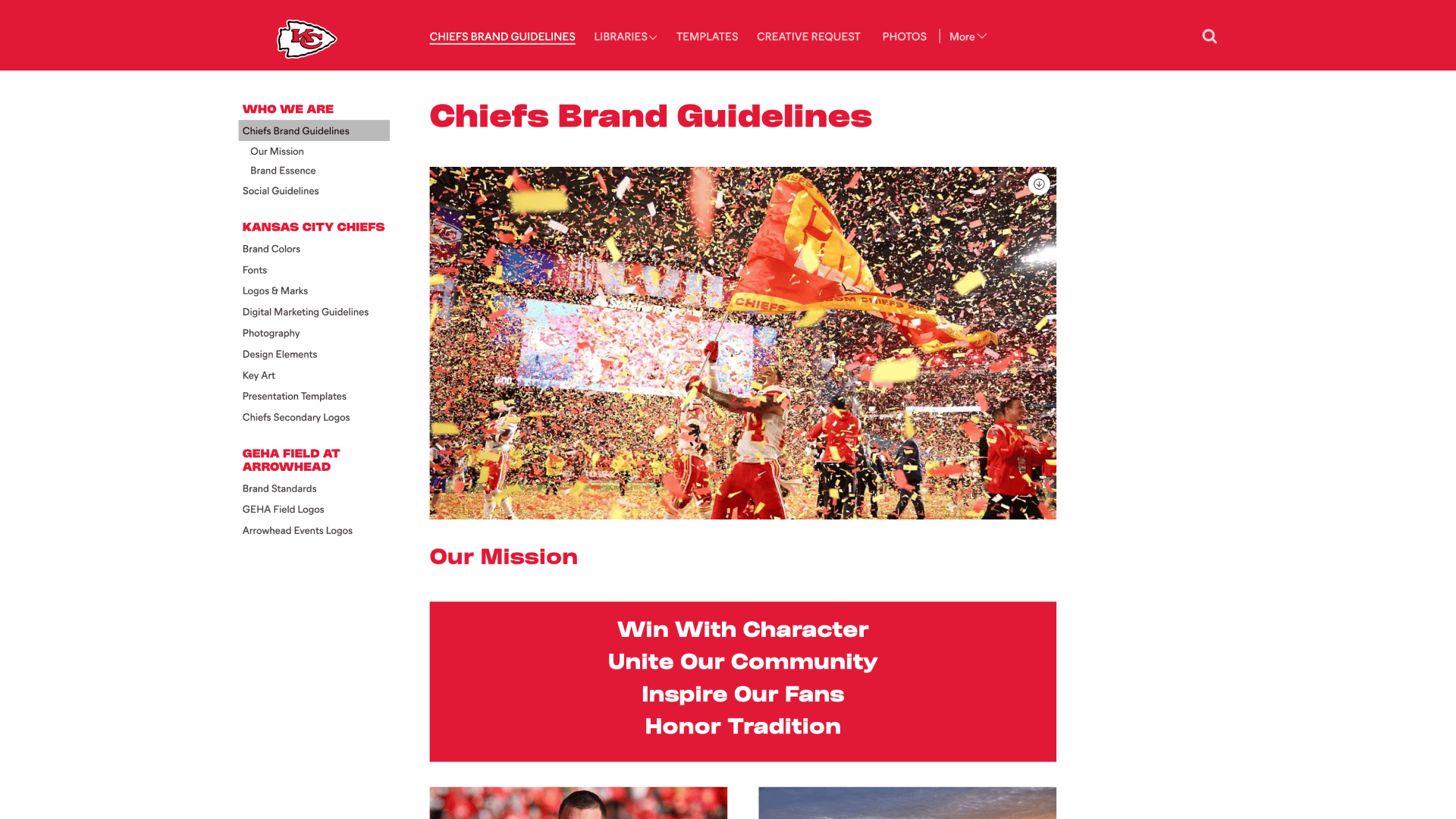
Kansas City Chiefs has created detailed brand standards to help their brand and creative teams deliver memorable experiences across all touchpoints. This example shows their image and illustration guidelines, documenting their preferred subject matter, color profile, and visual style. Their brand standards have helped Kansas City Chiefs present a cohesive brand image across multiple physical and digital channels — and saved the brand team 10 hours a week that was previously spent fielding ad-hoc design requests.
Telefonica
Telefónica has documented brand standards for multiple sub-brands in different countries. This example shows the color standards for the main Telefónica brand. As well as explaining how and when to use its primary and secondary colors, Telefónica has created interactive color chips so that creative teams can copy the exact values of their HEX, RGB, or CMYK color codes.

Nestle
Nestlé centralizes its brand standards and core brand elements in one online portal. This example shows its brand foundations, documenting its visual identity and core brand elements including logo, typefaces, color palettes, and key messaging. These foundational elements introduce its more detailed guidelines and standards, giving teams a useful toolkit for implementing its brand identity with confidence.

Bring your brand standards to life with Frontify
Strong brand standards unify your voice, visuals, and values into a single, centralized system that keeps teams aligned and enables them to create on-brand work with confidence. They reduce costly inconsistencies and prevent wasted time and resources spent correcting off-brand work.
As companies scale, maintaining a consistent brand identity becomes increasingly complex, with remote teams, global sub-brands, and multiple agency partners to keep aligned. Static PDF documents make it difficult to ensure alignment, as they’re hard to keep updated and ensure everyone works from the latest version. Teams need a centralized, online system that automatically updates to keep everyone in sync.
Frontify’s Brand Guidelines does just that. It provides a single, central location to create, update, and share brand standards, that automatically updates for all users when you make a change. The platform lets teams create, update, and share brand rules dynamically, along with templates and downloadable assets. This makes it simple to enforce visual and messaging rules, track usage, and keep everyone on the same page when it comes to bringing your brand to life.
Learn more about Frontify’s Brand Guidelines, and see how leading brands like Kansas City Chiefs, Telefónica, and Nestlé use it to build, govern, and scale their brand standards in one central platform.